Security Magazine logo
search
cart
facebook twitter linkedin youtube
  • Sign In
  • Create Account
  • Sign Out
  • My Account
Security Magazine logo
  • NEWS
    • Security Newswire
    • Technologies & Solutions
  • MANAGEMENT
    • Leadership Management
    • Enterprise Services
    • Security Education & Training
    • Logical Security
    • Security & Business Resilience
    • Profiles in Excellence
  • PHYSICAL
    • Access Management
    • Fire & Life Safety
    • Identity Management
    • Physical Security
    • Video Surveillance
    • Case Studies (Physical)
  • CYBER
    • Cybersecurity News
    • More
  • BLOG
  • COLUMNS
    • Career Intelligence
    • Cyber Tactics
    • Cybersecurity Education & Training
    • Leadership & Management
    • Security Talk
  • EXCLUSIVES
    • Annual Guarding Report
    • Most Influential People in Security
    • The Security Benchmark Report
    • Top Guard and Security Officer Companies
    • Top Cybersecurity Leaders
    • Women in Security
  • SECTORS
    • Arenas / Stadiums / Leagues / Entertainment
    • Banking/Finance/Insurance
    • Construction, Real Estate, Property Management
    • Education: K-12
    • Education: University
    • Government: Federal, State and Local
    • Hospitality & Casinos
    • Hospitals & Medical Centers
    • Infrastructure:Electric,Gas & Water
    • Ports: Sea, Land, & Air
    • Retail/Restaurants/Convenience
    • Transportation/Logistics/Supply Chain/Distribution/ Warehousing
  • EVENTS
    • Industry Events
    • Webinars
    • Solutions by Sector
    • Security 500 Conference
  • MEDIA
    • Interactive Spotlight
    • Photo Galleries
    • Podcasts
    • Polls
    • Videos
      • Cybersecurity & Geopolitical Discussion
      • Ask Me Anything (AMA) Series
  • MORE
    • Call for Entries
    • Classifieds & Job Listings
    • Continuing Education
    • Newsletter
    • Sponsor Insights
    • Store
    • White Papers
  • EMAG
    • eMagazine
    • This Month's Content
    • Advertise
  • SIGN UP!
ManagementPhysicalSecurity Enterprise ServicesSecurity Leadership and ManagementLogical SecuritySecurity & Business ResilienceSecurity Education & TrainingAccess ManagementFire & Life SafetyIdentity ManagementPhysical SecurityEnterprise Services

Protective intelligence lessons from the U.S. Capitol riot for companies
By Fred Burton, Contributing Writer
us-capitol
April 23, 2021

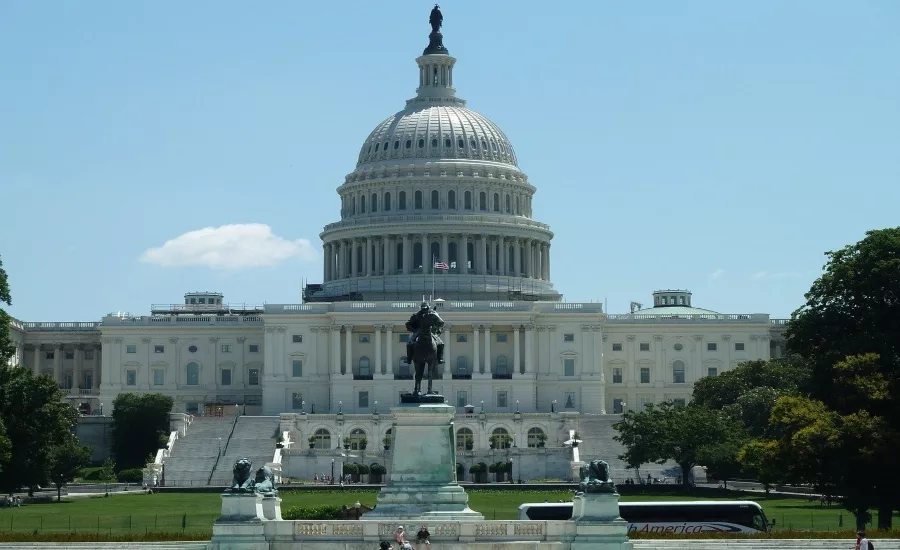
After a lifetime in the protection business, the one constant in Washington that I’ve learned is that it takes tragedy to force change. The January 6 Capitol riot is not an enigma. This was a clear protective intelligence failure.   

The key finding of Retired Army LTG. Russel Honore’s report reviewing how the pillar of U.S. democracy could have been so easily infiltrated is that the U.S. Capitol Police (USCP) must better integrate intelligence into its operations through improved awareness, assessment, sharing, and response capabilities. We can look at effective protective intelligence as a three-part story: Act I is identifying threats; Act II is building those threats into a cohesive profile; Act III is sharing and acting on that information in order to make nothing happen. Applying this framework to January 6 helps us understand how we can and must do better and provides important takeaways for corporations.


Act I: Observe, Listen

Rising extremism, continuing fallout from the pandemic, racial injustice and political issues are all driving an increase in violent threats towards institutions of all kinds, especially high-value U.S. government targets. Given the disparate sources and nature of physical threats, it can be difficult to separate hollow posturing from real danger. One of the most salient recommendations from the Honore Report outlines how to overcome this challenge: 

“USCP leadership must actively integrate intelligence functions into the USCP’s daily operations, force protection decisions, and future planning. This will require additional intelligence research specialists and supervisory analysts, training on analytic methodologies and software tools, and the procurement of equipment to accommodate a more robust team.”

Corporate security leaders should also note these recommendations. As compared to the prior year, 69% of security, legal and compliance executives agreed that their company is experiencing a dramatic increase in physical threat activity, according to the 2021 State of Protective Intelligence Report. Mass shootings in Boulder, Atlanta and Orange County, CA just this year highlight how businesses and their customers can become unwitting targets for horrific attacks, ones that have usually been staked out and planned in advance. Companies should also be actively transforming their physical security operations with trained analysts, technology resources and crisis planning in order to protect employees, executives and customers. 


Act II: Where’s Waldo?

Ever tried to find Waldo? He’s the red stripe-shirted children’s book character hidden in plain sight within dense illustrations of dozens of people doing dozens of things. Waldo is not difficult to find because he is camouflaged — the challenge is context. Waldo is often surrounded by people and things that do not fit together -- tennis balls, ironing boards and school supplies -- casually confident the noisy page will provide “cover.”

Bad actors are difficult to spot for similar reasons. Piecing together a string of threats to form a cohesive profile is harder still. Fortunately, advances in data intelligence and automated technologies have made it easier to glean a clearer picture from the noise. But only if they’re put to use. Many companies are hampered by legacy systems designed to be nothing more than an investigative tool after an incident has occurred at the facility. The future is proactive systems to help forecast and identify threats.  

Honore Report investigators determined “USCP is not postured to track, assess, plan against, or respond to the plethora of threats due to significant capacity shortfalls, inadequate training, immature processes, and an operating culture that is not intelligence-driven.” This is a damning statement this many years after 9-11. As a nation, we need to do better.  

Identifying physical threats is not enough. To foster safe operations, security teams must analyze the threat, its connections to other factors, share findings with relevant partners, and formulate a response strategy.   

Corporate enterprises need similar protective intelligence capabilities. Based on our research, 91% of security, legal and compliance executives agree that physical security needs a technology-driven industry standard for actively identifying, investigating, assessing, monitoring and managing physical security threats.  


Act III: Shared Knowledge is Power 


On a practical level, this wasn’t an intelligence collection problem; this was a failure to act on the intelligence collected. This point was further amplified in a USCP Inspector General (IG) report, which found that a Capitol Police intelligence assessment circulated three days before the attack warned Congress was a target and that “Stop the Steal’s propensity to attract white supremacists, militia members, and others who actively promote violence may lead to a significantly dangerous situation for law enforcement and the general public alike.” Yet, the January 5 USCP plan for the protest said that there were “no specific known threats related to the joint session of Congress.” This disconnect from the intelligence collected shows a failure of imagination. Threat assessments are written for the purpose of understanding and preparing for the threat landscape.


Historically, when security failures occur, the protective analysis doesn’t translate into proactive measures. There are lots of contributing factors: culture, optics, internal politics, and the lack of effective physical security measures. At the end of the day, the system alerted, but nobody listened -- which is not surprising in the least. From the 1970s and well into the 1980s, the State Department suffered many similar systemic security failures. Changing mindsets in the protection space is always hard.  


January 6 must be a wake-up call not only to government officials but to corporate leaders across the country too. Companies must not wait for threat intelligence to fall in their laps but proactively look for threats and share critical information across stakeholders. To protect employees in their community, business leaders must utilize technology-driven protective intelligence to identify, understand and act to mitigate threats before they become unmanageable.  

KEYWORDS: Capitol law enforcement physical security assessment protective intelligence public safety riots risk management

Share This Story

Looking for a reprint of this article?
From high-res PDFs to custom plaques, order your copy today!


Fredburton

Fred Burton is one of the world’s foremost authorities on protective intelligence, security and counterterrorism. He is a member of The Ontic Center for Connected Intelligence, working closely with security leaders at major corporations to help them optimize their programs, streamline protective intelligence initiatives and keep their people safe.

Recommended Content

JOIN TODAY
To unlock your recommendations.

Already have an account? Sign In

  • Iintegration and use of emerging tools

    Future Proof Your Security Career with AI Skills

    AI’s evolution demands security leaders master...
    Columns
    By: Jerry J. Brennan and Joanne R. Pollock
  • The 2025 Security Benchmark Report

    The 2025 Security Benchmark Report

    The 2025 Security Benchmark Report surveys enterprise...
    The Security Benchmark Report
    By: Rachelle Blair-Frasier
  • The Most Influential People in Security 2025

    Security’s Most Influential People in Security 2025

    Security Magazine’s 2025 Most Influential People in...
    Most Influential People in Security
    By: Security Staff
Manage My Account
  • Security Newsletter
  • eMagazine Subscriptions
  • Manage My Preferences
  • Online Registration
  • Mobile App
  • Subscription Customer Service

More Videos

Sponsored Content

Sponsored Content is a special paid section where industry companies provide high quality, objective, non-commercial content around topics of interest to the Security audience. All Sponsored Content is supplied by the advertising company and any opinions expressed in this article are those of the author and not necessarily reflect the views of Security or its parent company, BNP Media. Interested in participating in our Sponsored Content section? Contact your local rep!

close
  • critical event management
    Sponsored byEverbridge

    Why a Unified View Across IT, Continuity, and Security Makes or Breaks Crisis Response

  • Charlotte Star Room
    Sponsored byAMAROK

    In an Uncertain Economy, Security Is a Necessity - Not an Afterthought

  • Sureview screen
    Sponsored bySureView Systems

    The Evolution of Automation in the Command Center

Popular Stories

Cybersecurity trends of 2025

3 Top Cybersecurity Trends from 2025

Red laptop

Security Leaders Discuss SitusAMC Cyberattack

Green code

Logitech Confirms Data Breach, Security Leaders Respond

Neon human and android hands

65% of the Forbes AI 50 List Leaked Sensitive Information

The Louvre

After the Theft: Why Camera Upgrades Should Begin With a Risk Assessment

Top Cybersecurity Leaders

Events

September 18, 2025

Security Under Fire: Insights on Active Shooter Preparedness and Recovery

ON DEMAND: In today’s complex threat environment, active shooter incidents demand swift, coordinated and well-informed responses.

December 11, 2025

Responding to Evolving Threats in Retail Environments

Retail security professionals are facing an increasingly complex array of security challenges — everything from organized retail crime to evolving cyber-physical threats and public safety concerns.

View All Submit An Event

Products

Security Culture: A How-to Guide for Improving Security Culture and Dealing with People Risk in Your Organisation

Security Culture: A How-to Guide for Improving Security Culture and Dealing with People Risk in Your Organisation

See More Products

Related Articles

  • cybersecurity

    Limiting business liabilities through a new era of protective intelligence

    See More
  • What to Look for in Travel Security and Executive Protection Services - Security Magazine

    Why physical security is the business of many

    See More
  • Retail Crime Money

    Organized retail crime in focus

    See More

Related Products

See More Products
  • Physical Security and Safety: A Field Guide for the Practitioner

  • security culture.webp

    Security Culture: A How-to Guide for Improving Security Culture and Dealing with People Risk in Your Organisation

  • Photonic Sensing: Principles and Applications for Safety and Security Monitoring

See More Products

Events

View AllSubmit An Event
  • November 19, 2025

    From Chaos to Clarity: How Real-Time, Location-Aware Intelligence Strengthens Security Programs

    ON DEMAND: When disruptive events hit, security teams must move fast to protect people, executives, and assets. Every minute of delay can mean operational losses, safety risks, and reputational impact. 
View AllSubmit An Event
×

Sign-up to receive top management & result-driven techniques in the industry.

Join over 20,000+ industry leaders who receive our premium content.

SIGN UP TODAY!
  • RESOURCES
    • Advertise
    • Contact Us
    • Store
    • Want More
  • SIGN UP TODAY
    • Create Account
    • eMagazine
    • Newsletter
    • Customer Service
    • Manage Preferences
  • SERVICES
    • Marketing Services
    • Reprints
    • Market Research
    • List Rental
    • Survey/Respondent Access
  • STAY CONNECTED
    • LinkedIn
    • Facebook
    • YouTube
    • X (Twitter)
  • PRIVACY
    • PRIVACY POLICY
    • TERMS & CONDITIONS
    • DO NOT SELL MY PERSONAL INFORMATION
    • PRIVACY REQUEST
    • ACCESSIBILITY

Copyright ©2025. All Rights Reserved BNP Media.

Design, CMS, Hosting & Web Development :: ePublishing