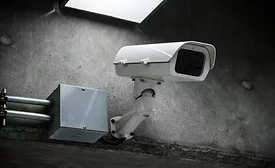
When it comes to perimeter security, strong upfront planning and swift real-time reactions supported by technology can go a long way in helping an enterprise secure its outermost layer.
How can security leaders be sure to shore up that outermost barrier at their organizations? When it comes to perimeter security, strong upfront planning and swift real-time reactions supported by technology can go a long way in helping an enterprise secure their most important assets.
The year 2020 presented society and the campus community with very difficult and unique challenges. Let’s take a look at a practical, fiscally responsible approach that security leaders can implement to maintain traditional services and respond to unique challenges, all while preparing for the unexpected.
Campus police and security teams are tasked with not only providing a professional and measured response to volatile and politically charged issues, but must still maintain traditional, expected and valuable services, all within budgets that, for many campus security teams, will probably not be increasing. Let’s take a look at practical security practices campus safety leaders can implement.
Third specification from OSSA prescribes leading measures to mitigate cybersecurity camera threats and vulnerabilities; New app developer council involves essential entrepreneurs and small businesses in the alliance ecosystem
March 4, 2021
The Open Security & Safety Alliance (OSSA), an industry body comprised of stakeholders from all facets of the security, safety and building automation space, announced two important developments to help pave the road towards trustworthy and innovative security and safety solutions. First, a new specification is now available to members that focuses on camera cybersecurity measures. OSSA also introduces a new App Developer Council designed to attract and involve app developers in the Alliance’s ever-growing ecosystem of security and safety industry players.
Unfortunately, diversity is still underrepresented in security. Our profession continues to struggle to attract and/or advance diverse candidates into leadership ranks in numbers that accurately represent a cross section of the working population.
Left attempting to optimize security teams while struggling to cope with multiple crises simultaneously, security leaders feel as if almost 75% of the workday is spent battling internal bureaucracy, while 25% is spent dedicated to the issues that require attention. But you’re not alone. To start, have some real conversations with your staff, and don’t forget to focus on yourself and your own well-being.
Emergency operations centers (EOCs) are critical decision-making environments. It is vital that these centers have effective, reliable, intuitive technology to allow organizations to collate and interpret data, as well as plan and execute an appropriate emergency response to situations that can pose a danger to life, often with multi-agency involvement. So, when carrying out systems integration in an EOC space where the stakes are so high, how do you ensure you make the correct technology choices? Jon Litt, Senior Manager, Business Development, Government Solutions (US) at Christie highlights how the mission of the EOC is the number one factor to keep in mind.
Tulane University police officer who was working security for the George Washington Carver High School basketball team this weekend was shot and killed after he went to help another staff member that was punched by a man trying to enter the game without a mask on.
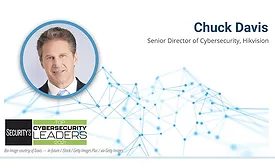
Chuck Davis, MSIA, CISSP-ISSAP, is Senior Director of Cybersecurity at Hikvision, a global company with more than 40,000 employees and 59 branch offices and subsidiaries around the world. Based in the U.S., Davis leads the global cybersecurity team and, under his leadership, Hikvision has achieved several cybersecurity milestones to include the establishment of the Source Code Transparency Center at Hikvision USA’s Los Angeles headquarters, where government and law enforcement officials may examine the source code for Hikvision’s cameras and NVRs.
The Cybersecurity and Infrastructure Security Agency (CISA) and AVANGRID, a sustainable energy company providing services in 24 states, conducted a virtual tabletop exercise to test and identify the safety procedures AVANGRID has implemented since the beginning of the COVID-19 pandemic and identify additional procedures necessary to ensure employee safety operations and business continuity in the out years.