The National Institute of Standards and Technology (NIST) has a new document, Artificial Intelligence and User Trust (NISTIR 8332), that is now open for public comment until July 30, 2021. The document's goal is to stimulate a discussion about how humans trust artificial intelligence (AI) systems.
C2MI, the largest electronic systems research center in Canada, is implementing an AI-driven thermal screening technology to increase occupant safety at its facilities and allow security staff to focus on other critical tasks.
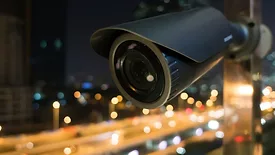
Repurposing video surveillance and artificial intelligence and analytics traditionally used for security initiatives within the healthcare space can increase positive patient interactions and bring additional value to your current electronic physical security solutions.
Technology company Clearview AI’s scraping of billions of images of people from across the Internet represented mass surveillance and was a clear violation of the privacy rights of Canadians, the Office of the Privacy Commissioner of Canada has found after conducting an investigation into the matter.
Organizations need to enhance current technical security controls to mitigate against the threat of deepfakes to the business. Training and awareness will also need revamping with special attention paid to this highly believable threat.
Where disinformation was once communicated by telegram, the modern version of vast, coordinated campaigns are now disseminated through social media with bots, Twitterbots, and bot farms—at a scale humans could never perform. Now, disinformation campaigns can be lodged by a government to influence stock prices in another country, or by a private company to degrade brand presence and consumer confidence. What’s worse is that bots can facilitate these campaigns en masse.
Lots of security vendors talk about integrating innovative techniques using Artificial Intelligence. In cybersecurity, this often boils down to supervised or unsupervised anomaly detection of measures attributes. However, in many cases there is a big gap between the identification of anomalies and transforming them into actionable data.
There are lots of buzzwords floating around cybersecurity: machine learning, artificial intelligence, supervised and unsupervised learning … In many cases these advanced technologies are based on anomaly detection.
With the CDN market expected to reach $25B by 2025, the entire concept of a Content Delivery Network is evolving as AI and machine learning technologies continue to improve.
Many compliance teams in the financial services industry are struggling with limited human resources to oversee the fast-changing electronic communications compliance landscape.