California Attorney General Xavier Becerra filed a petition in the San Francisco Superior Court requesting that the court order Facebook Inc. to comply with an outstanding subpoena and investigative interrogatories issued by the Attorney General on behalf of the People of California.
An app developed by professors at Purdue University allows first responders to monitor social media posts to find people in need of help during disasters.
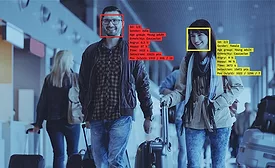
Anxious feelings towards facial recognition can, if unchecked, reach a point where they undermine common sense and our ability to leverage new technologies in the protection of the innocent and prosecution of the guilty.
In an effort to tighten data storage practices and data breaches, a bipartisan legislation introduced by Sens. Mark Warner, D-Va., and Josh Hawley, R-Mo, Designing Accounting Safeguards to Help Broaden Oversight And Regulations on Data (DASHBOARD) Act, will require data harvesting companies such as social media platforms to tell consumers and financial regulators exactly what data they are collecting from consumers, and how it is being leveraged by the platform for profit.
The use of AI assistants, social media, public wi-fi, and more – are leaving identity and privacy in a state of critical risk and U.S. elections and critical infrastructure compromises may be at risk.
The confluence of social media, digital mobile devices, sensors and location-based technology is generating unprecedented volumes of information about society and individuals.
Almost all visa applicants to the United States will now be required to submit the social media usernames, email addresses and phone numbers they’ve used in the past five years.
Think back to 2009 and the phone you owned. While the phone you carry today might not look that different, a smartphone or its equivalent is far more powerful than it was just 10 years ago. While it is relatively easy for businesses to track the evolution of phone technology, have they similarly considered how their own corporate security departments have changed during the same period?