Ransomware attacks were on the rise long before the pandemic. Over the last two years, ransomware attacks have risen by 200% – they are becoming more frequent, more expensive, and more sophisticated. This issue is anticipated to continue throughout 2021 and why businesses must be proactive to manage threats and other actionable steps to mitigate any damage.
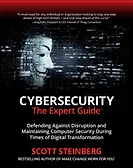
How can you protect yourself and your business from digital dangers – and safeguard your privacy and data against a rising wave of online concerns? Inside Scott Steinberg’s new book Cybersecurity: The Expert Guide, readers will discover how to defend against cybercrime – today’s fastest-growing form of criminal activity – and implement best practices and high-tech safeguards that can help them stay one step ahead of hacks, data breaches, phishing attempts, identity theft, online fraud, and other common high-tech threats.
In 2020, ESET researchers observed several attacks exclusively targeting Colombian entities, which have collectively been dubbed Operation Spalax. These attacks are ongoing and are focused on both government institutions and private companies, especially in the energy and metallurgical industries. The attackers rely on the use of remote access trojans, most likely to conduct cyber-espionage activities.
A Mimecast-issued certificate provided to certain customers to authenticate Mimecast Sync and Recover, Continuity Monitor, and IEP products to Microsoft 365 Exchange Web Services has been compromised by a sophisticated threat actor.
By the end of 2020, it is expected that more than 59 zettabytes of data will be generated globally. With access to data from sources such as social media, news and the dark web, encrypted connected security systems, and public and company-proprietary records and communications, physical security and safety professionals are challenged not only with parsing through this “big” data but transforming it into actionable intelligence.
Competition will put professionals through hyper-realistic attack simulations
Cyberbit announced the launch of the International Cyber League (ICL), a first-of-its-kind competition that will determine the world’s best cyber defense team. The League will begin with America’s Cyber Cup, with registration opening today and closing on Monday, February 22. To determine the world’s best team, qualifying teams will face off against simulated cyberattacks in Cyberbit’s hyper-realistic cyber range, crowning the winning team as North America’s best.
President-elect Joe Biden has tapped Anne Neuberger for the cybersecurity slot on the National Security Council (NSC). Neuberger, who joined the NSA more than a decade ago and has been serving as the agency’s director of cybersecurity since 2019, will be named deputy national security adviser for cybersecurity in the incoming NSC, according to Politico.
RingCentral announced that industry security veteran, Heather Hinton has joined as the company’s Chief Information Security Officer (CISO). Hinton joins RingCentral from IBM, where she spent 13 years in various leadership positions, most recently as vice president and IBM distinguished engineer, and CISO for the company’s Cloud and Cognitive Software business unit.
A company’s in-house chief information security officer (CISO) is a key component to making sure the risk of a cyberattack or security breach is greatly reduced. The responsibilities of this position are critical for businesses working to protect themselves against cyberthreats, but the reality is, some companies can’t afford to add another member to the c-suite with an average salary of up to $250K. However, there’s another option: a virtual CISO or vCISO.
While the rough seas may be behind businesses, now is not the time to rest. It’s important for security leaders to remain diligent about their company’s security posture and adapt to the latest state of the world. Focusing on people, processes, and technology is not only the foundation to a solid cybersecurity strategy, but also absolutely critical at a time where workers have never been further from security teams’ protection.