Security Magazine logo
search
cart
facebook twitter linkedin youtube
  • Sign In
  • Create Account
  • Sign Out
  • My Account
Security Magazine logo
  • NEWS
    • Security Newswire
    • Technologies & Solutions
  • MANAGEMENT
    • Leadership Management
    • Enterprise Services
    • Security Education & Training
    • Logical Security
    • Security & Business Resilience
    • Profiles in Excellence
  • PHYSICAL
    • Access Management
    • Fire & Life Safety
    • Identity Management
    • Physical Security
    • Video Surveillance
    • Case Studies (Physical)
  • CYBER
    • Cybersecurity News
    • More
  • BLOG
  • COLUMNS
    • Career Intelligence
    • Cyber Tactics
    • Cybersecurity Education & Training
    • Leadership & Management
    • Security Talk
  • EXCLUSIVES
    • Annual Guarding Report
    • Most Influential People in Security
    • The Security Benchmark Report
    • Top Guard and Security Officer Companies
    • Top Cybersecurity Leaders
    • Women in Security
  • SECTORS
    • Arenas / Stadiums / Leagues / Entertainment
    • Banking/Finance/Insurance
    • Construction, Real Estate, Property Management
    • Education: K-12
    • Education: University
    • Government: Federal, State and Local
    • Hospitality & Casinos
    • Hospitals & Medical Centers
    • Infrastructure:Electric,Gas & Water
    • Ports: Sea, Land, & Air
    • Retail/Restaurants/Convenience
    • Transportation/Logistics/Supply Chain/Distribution/ Warehousing
  • EVENTS
    • Industry Events
    • Webinars
    • Solutions by Sector
    • Security 500 Conference
  • MEDIA
    • Interactive Spotlight
    • Photo Galleries
    • Podcasts
    • Polls
    • Videos
      • Cybersecurity & Geopolitical Discussion
      • Ask Me Anything (AMA) Series
  • MORE
    • Call for Entries
    • Classifieds & Job Listings
    • Continuing Education
    • Newsletter
    • Sponsor Insights
    • Store
    • White Papers
  • EMAG
    • eMagazine
    • This Month's Content
    • Advertise
  • SIGN UP!
ManagementPhysicalSecurity Enterprise ServicesSecurity Leadership and ManagementSecurity & Business ResilienceSecurity Education & TrainingFire & Life SafetyPhysical Security

Education & Training

Considerations for security officer training in healthcare facilities

Well-trained security officers can proactively deter and de-escalate healthcare security incidents to maintain a safe environment.
By Lisa Terry
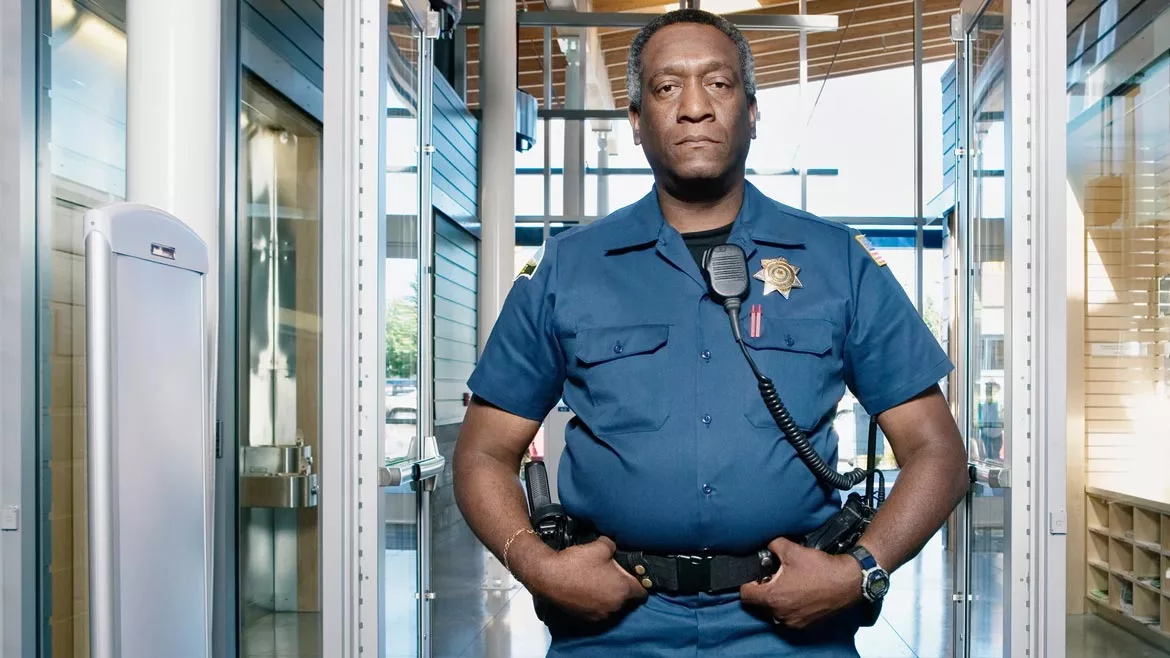
Campus security officer
January 13, 2023

Henry Ford is credited with saying, “The only thing worse than training your employees and having them leave is not training them and having them stay.”

This thought certainly evokes emotion and reminds security leaders that the industry needs to invest in people, even if it increases the risk of them leaving their current organization in the future. A high level of training for security officers is required in many sectors, including healthcare environments.

Healthcare professionals must recognize the significance of early intervention when handling patients. Whether it’s a trauma victim in the emergency department, a patient with a chronic illness, or an individual with cancer, early intervention is effective in navigating healthcare resources for the best patient outcome.

Security professionals have a range of compounding responsibilities in the healthcare environment, including protecting people, property and information, as well as providing customer service and upholding the organization’s reputation and mission.


The importance of healthcare security officer training

Healthcare security is most effective when security staff can put their experience and training to use at the earliest signs of concerning behavior. The quality of security officer training is critical to the overall success of the healthcare organization’s security program. Individuals performing security services should be appropriately trained to meet and maintain compliance with regulatory and industry-leading practices.

Trained security professionals are a hospital’s most valuable asset in managing workplace violence instigated by patients, family members, visitors, staff or others. Trained security professionals, for example, are able to identify potential signs of violence, intervene quickly, and mitigate potential safety risks. More importantly, trained officers contribute to a safe and secure environment by demonstrating calm, respectful and non-escalating behavior in stressful situations.

How much frontline security officer training is enough to bring value and benefit the organization, patients, visitors and staff? The answer to this question varies by many factors, including the facility’s geographic location and crime statistics, patient mix (level of trauma/behavioral healthcare), armed versus unarmed officers, and more.


Developing a strong healthcare security training program

Poorly trained security officers may fail to protect patients and staff or unintentionally escalate a situation, which is why a comprehensive security training program is imperative.

  1. Healthcare security leaders must be sure to answer these key questions when building a security training program at their organization:
  2. Are there state training requirements for healthcare security officers?
  3. What training is required for healthcare security officer licensure?
  4. What training supports the regulatory/accreditation requirements, such as those set forth by the Centers for Medicare and Medicaid Services (CMS), the Health Insurance Portability and Accountability Act (HIPAA), the Emergency Medical Treatment and Active Labor Act (EMTALA), the Patient Safety and Quality Improvement Act of 2005 (PSQIA), the Center for Improvement in Healthcare Quality (CIHQ), Healthcare Facilities Accreditation Program (HFAP), and others?
  5. What is the emergency department’s patient mix (trauma level, behavioral health, forensic, etc.)?
  6. Do all officers require certification or specialized training?
  7. What are the risks of violence based on recent security risk assessments?
  8. What non-traditional roles will security professionals fill throughout the facility (concierge, patient experience, patient escort, high-risk patient watches, etc.)?
  9. How are other healthcare organizations in the area delivering security officer training?

The International Association of Healthcare Security & Safety (IAHSS) security officer training guidelines include some of the following recommendations:

  • Healthcare security officer job descriptions should identify specific skill levels required as defined by the organization and the security program policies and procedures.
  • Training should be relevant to include defined performance objectives and a method to verify competency.
  • A healthcare security officer training program should have clearly identified learning outcomes.
  • Training should provide a foundation of knowledge in the areas of protection, customer service, public relations, response to calls for service, and proper documentation of security-related events.
  • Such training should include verbal de-escalation and voluntary compliance training, as well as detail the organization’s use-of-force policy and related training.
  • Security professionals should receive ongoing training, including drills and exercises, to address changes in the environment as well as to learn, improve and further develop their professional skills.
  • Off-duty law enforcement providing a security function for the healthcare organization should receive an equivalent level of training. This is particularly important in areas of use of force.

The most effective approach to healthcare security training is to ensure that it is comprehensive, dynamic and relevant. Comprehensive training in the healthcare environment may include training the clinical and security staff together to facilitate team building.

Well-trained security professionals portray a strong sense of confidence and safety to patients, visitors and staff. One thing is for sure, as Henry Ford pointed out, the benefits of training far outweigh the costs.

KEYWORDS: de-escalation training healthcare risk management security management security operations

Share This Story

Looking for a reprint of this article?
From high-res PDFs to custom plaques, order your copy today!


Lisa

Lisa Terry, CHPA, CPP, has extensive experience in healthcare security and police management. Terry currently serves as the Vice President, Vertical Markets — Healthcare for Allied Universal. Prior to that, she served as Director of Hospital Police and Transportation at the University of North Carolina in Chapel Hill. Columnist image courtesy of Terry

Recommended Content

JOIN TODAY
To unlock your recommendations.

Already have an account? Sign In

  • Iintegration and use of emerging tools

    Future Proof Your Security Career with AI Skills

    AI’s evolution demands security leaders master...
    Columns
    By: Jerry J. Brennan and Joanne R. Pollock
  • The 2025 Security Benchmark Report

    The 2025 Security Benchmark Report

    The 2025 Security Benchmark Report surveys enterprise...
    The Security Benchmark Report
    By: Rachelle Blair-Frasier
  • The Most Influential People in Security 2025

    Security’s Most Influential People in Security 2025

    Security Magazine’s 2025 Most Influential People in...
    Most Influential People in Security
    By: Security Staff
Manage My Account
  • Security Newsletter
  • eMagazine Subscriptions
  • Manage My Preferences
  • Online Registration
  • Mobile App
  • Subscription Customer Service

More Videos

Sponsored Content

Sponsored Content is a special paid section where industry companies provide high quality, objective, non-commercial content around topics of interest to the Security audience. All Sponsored Content is supplied by the advertising company and any opinions expressed in this article are those of the author and not necessarily reflect the views of Security or its parent company, BNP Media. Interested in participating in our Sponsored Content section? Contact your local rep!

close
  • critical event management
    Sponsored byEverbridge

    Why a Unified View Across IT, Continuity, and Security Makes or Breaks Crisis Response

  • Charlotte Star Room
    Sponsored byAMAROK

    In an Uncertain Economy, Security Is a Necessity - Not an Afterthought

  • Sureview screen
    Sponsored bySureView Systems

    The Evolution of Automation in the Command Center

Popular Stories

Cybersecurity trends of 2025

3 Top Cybersecurity Trends from 2025

Red laptop

Security Leaders Discuss SitusAMC Cyberattack

Green code

Logitech Confirms Data Breach, Security Leaders Respond

Neon human and android hands

65% of the Forbes AI 50 List Leaked Sensitive Information

The Louvre

After the Theft: Why Camera Upgrades Should Begin With a Risk Assessment

Top Cybersecurity Leaders

Events

September 18, 2025

Security Under Fire: Insights on Active Shooter Preparedness and Recovery

ON DEMAND: In today’s complex threat environment, active shooter incidents demand swift, coordinated and well-informed responses.

December 11, 2025

Responding to Evolving Threats in Retail Environments

Retail security professionals are facing an increasingly complex array of security challenges — everything from organized retail crime to evolving cyber-physical threats and public safety concerns.

View All Submit An Event

Products

Security Culture: A How-to Guide for Improving Security Culture and Dealing with People Risk in Your Organisation

Security Culture: A How-to Guide for Improving Security Culture and Dealing with People Risk in Your Organisation

See More Products

Related Articles

  • Nurse wearing badge gives child vaccine

    Badging considerations for healthcare facilities

    See More
  • healthcare security

    Putting the pride into healthcare security officer training

    See More
  • Hospital Security Lapses in 2013 Turn Spotlight on Security Officer Training

    See More

Related Products

See More Products
  • security culture.webp

    Security Culture: A How-to Guide for Improving Security Culture and Dealing with People Risk in Your Organisation

  • Physical Security and Safety: A Field Guide for the Practitioner

  • Hospitality Security: Managing Security in Today's Hotel, Lodging, Entertainment, and Tourism Environment

See More Products
×

Sign-up to receive top management & result-driven techniques in the industry.

Join over 20,000+ industry leaders who receive our premium content.

SIGN UP TODAY!
  • RESOURCES
    • Advertise
    • Contact Us
    • Store
    • Want More
  • SIGN UP TODAY
    • Create Account
    • eMagazine
    • Newsletter
    • Customer Service
    • Manage Preferences
  • SERVICES
    • Marketing Services
    • Reprints
    • Market Research
    • List Rental
    • Survey/Respondent Access
  • STAY CONNECTED
    • LinkedIn
    • Facebook
    • YouTube
    • X (Twitter)
  • PRIVACY
    • PRIVACY POLICY
    • TERMS & CONDITIONS
    • DO NOT SELL MY PERSONAL INFORMATION
    • PRIVACY REQUEST
    • ACCESSIBILITY

Copyright ©2025. All Rights Reserved BNP Media.

Design, CMS, Hosting & Web Development :: ePublishing