Security Magazine logo
search
cart
facebook twitter linkedin youtube
  • Sign In
  • Join Today
  • Sign Out
  • My Account
Security Magazine logo
  • NEWS
    • Security Newswire
    • Technologies & Solutions
  • MANAGEMENT
    • Leadership Management
    • Enterprise Services
    • Security Education & Training
    • Logical Security
    • Security & Business Resilience
    • Profiles in Excellence
  • PHYSICAL
    • Access Management
    • Fire & Life Safety
    • Identity Management
    • Physical Security
    • Video Surveillance
    • Case Studies (Physical)
  • CYBER
    • Cybersecurity News
    • More
  • BLOG
  • COLUMNS
    • Career Intelligence
    • Cyber Tactics
    • Cybersecurity Education & Training
    • Leadership & Management
    • Security Talk
  • EXCLUSIVES
    • Annual Guarding Report
    • Most Influential People in Security
    • The Security Benchmark Report
    • Top Guard and Security Officer Companies
    • Top Cybersecurity Leaders
    • Women in Security
  • SECTORS
    • Arenas / Stadiums / Leagues / Entertainment
    • Banking/Finance/Insurance
    • Construction, Real Estate, Property Management
    • Education: K-12
    • Education: University
    • Government: Federal, State and Local
    • Hospitality & Casinos
    • Hospitals & Medical Centers
    • Infrastructure:Electric,Gas & Water
    • Ports: Sea, Land, & Air
    • Retail/Restaurants/Convenience
    • Transportation/Logistics/Supply Chain/Distribution/ Warehousing
  • EVENTS
    • Industry Events
    • Webinars
    • Solutions by Sector
    • Security 500 Conference
  • MEDIA
    • Interactive Spotlight
    • Photo Galleries
    • Podcasts
    • Polls
    • Videos
      • Cybersecurity & Geopolitical Discussion
      • Ask Me Anything (AMA) Series
  • MORE
    • Call for Entries
    • Classifieds & Job Listings
    • Newsletter
    • Sponsor Insights
    • Store
    • White Papers
  • EMAG
    • eMagazine
    • This Month's Content
    • Advertise
  • JOIN
ManagementPhysicalSecurity Newswire

New report on Peak Hour Travel on public transportation to aid security planning
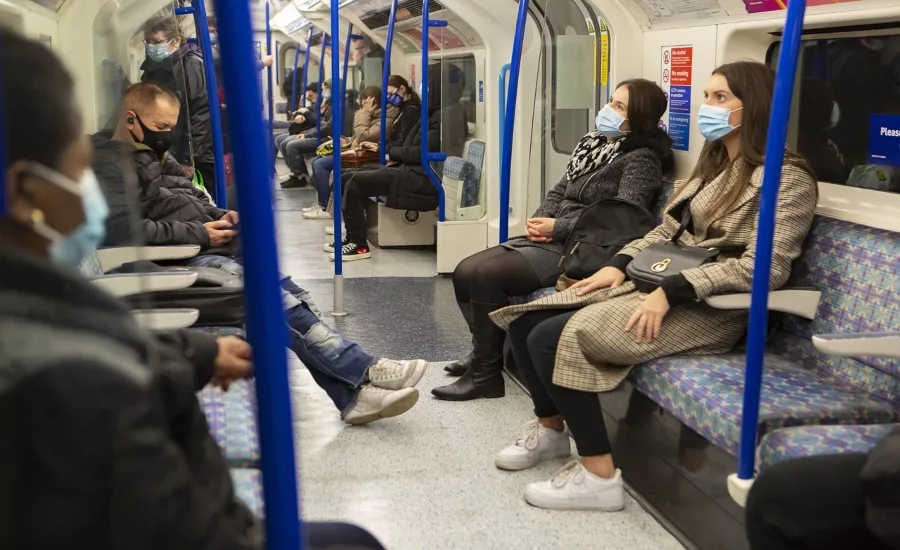
passengers-public transport
June 4, 2021

The authors of a new study by the Mineta Transportation Institute hope their findings will assist those responsible for security planning around travel on public transport. In their latest Peak Hour Study, Brian Michael Jenkins and Bruce R Butterworth analyzed more than 500 attacks on passenger rail and bus systems in modern developed countries between 1970 and 2020. They found that more than 60% of the attacks occurred in off-peak hours, as opposed to only 19% occurring during peak hours. However, the peak-hour attacks were 4.5 times more lethal. (The timing of the remaining attacks is unknown so they could not make a determination.)

Brian explained, “It seems logical that terrorists seeking to cause maximum disruption or mass casualties would launch their attacks during times of day when passenger traffic is at its height. Right-wing extremists and jihadists are the most lethal attackers, even without considering the five attacks that killed so many, such as Bologna in 1980, Madrid in 2004 and London in 2005. If we include those attacks, peak hours become 34 times more lethal than non-peak hours. However, some attackers - left-wing groups and Basque separatists, for example - have avoided large-scale casualties and have generally carried out their attacks during off-peak hours, often at night to avoid detection. Although the Provisional Wing of the Irish Republican Army (PIRA) was capable of carrying out deadly attacks, PIRA bombings of transportation systems, were aimed primarily at disruption.”

Terrorists time their attacks to occur not only during weekday rush hours, but also during peak travel times associated with holidays and vacation travel. The 1980 bombing of the Bologna train station was the most dramatic example. The bombing occurred on a Saturday at the beginning of the traditional August holiday, when the station was filled with holidaymakers heading for the seashore or the mountains. Eighty people were killed in the attack.

The pattern of attacks on train targets is quite different from that of attacks on bus targets, with far more bus attacks occurring during non-peak hours. However, similar to weekday train attacks, almost all fatalities in weekday bus attacks occur in the peak traffic hours. In contrast to train attacks, attacks on bus targets in the afternoon rush hour are more lethal than those in the morning rush hour. The study found that the United Kingdom has the highest frequency of attacks (19% of the total), followed by Spain (16% of the total), clearly reflecting the terrorist campaigns by the Provisional Wing of the Irish Republican Army (PIRA) and the Basque separatists (ETA).  

Most of the attacks in the United States, the third-ranking country (with 11%), were carried out by criminals or mentally unstable attackers rather than terrorists. Bruce said, “Attacks by mentally unstable individuals may have no discernible pattern and in general, the perpetrators are far more likely to be victims than victimi[z]ers. There is a need for far more proactive alerts and treatments for these individuals, rather than punishment.”

Not surprisingly, given the ability to acquire automatic and semi-automatic weapons in the United States, 14 of the attacks were armed assaults, explosives were used in 11 attacks, and 8 involved stabbings, representing more than 60% of all attacks. 

Rather than a terrorist wave, the study identifies what appears to be a growing level of anti-social violence carried out with physical force, knives and automatic or semi-automatic weapons on trains and buses and at stations and stops. “This is a disturbing trend that U.S. authorities must contend with while keeping an eye on terrorists,” said Brian.

As for attacks on operating staff and security personnel, they constituted a very small percentage of the total attacks (there were only 19 such attacks), so it was difficult to confidently draw conclusions concerning them. However, the distribution between peak and non-peak hour attacks is similar to that for all attacks: a quarter during peak hours and just over half during non-peak hours. This reflects a common scenario in which adversaries enter a station or depot and then attack a staff member or security official.

Bruce concluded, “We hope that the forensic detail and the way in which we have analy[z]ed and quantified the data associated with attacks on public transport during rush hours, will help anyone involved in ensuring that passengers are safe. “

The full report can be read here: transweb.sjsu.edu/SP0521

KEYWORDS: bus security crime prevention public safety Terrorism transportation security

Share This Story

Looking for a reprint of this article?
From high-res PDFs to custom plaques, order your copy today!

Recommended Content

JOIN TODAY
To unlock your recommendations.

Already have an account? Sign In

  • SEC 2026 Benchmark Report

    2026 Security Benchmark Report

    The 2026 Security Benchmark Report surveys enterprise...
    The Security Benchmark Report
    By: Rachelle Blair-Frasier
  • Cyber tech background

    Security’s Top Cybersecurity Leaders 2026

    Security magazine’s Top Cybersecurity Leaders 2026 award...
    Security Leadership and Management
  • Iintegration and use of emerging tools

    Future Proof Your Security Career with AI Skills

    AI’s evolution demands security leaders master...
    Security Education & Training
    By: Jerry J. Brennan and Joanne R. Pollock
Manage My Account
  • Join Security
  • Manage My Preferences
  • Customer Service

More Videos

Sponsored Content

Sponsored Content is a special paid section where industry companies provide high quality, objective, non-commercial content around topics of interest to the Security audience. All Sponsored Content is supplied by the advertising company and any opinions expressed in this article are those of the author and not necessarily reflect the views of Security or its parent company, BNP Media. Interested in participating in our Sponsored Content section? Contact your local rep!

close
  • Vivotek AI Hybrid Cloud
    Sponsored byVIVOTEK Inc.

    Beyond Camera Coverage: How AI and Hybrid Cloud Redefine Security Performance

  • Northland Controls sponsored content
    Sponsored byNorthland Controls

    The Execution Gap: Why Great Security Design Doesn't Always Deliver Great Security

Popular Stories

ship in the water

Tariffs and Supply Chain Security: An Emerging Security Challenge

career intelligence

Are You the Insider Threat?

SEC 2026 Benchmark Report

2026 Security Benchmark Report

Surveillance

Cameras Only Deter People Who Believe They’re Being Watched

Code

Authentication Shouldn’t End After MFA Succeeds


2026 Security Benchmark Report

Events

November 18, 2026

How Agentic AI Transforms Incident Response from Alert to Evidence

LIVE: November 18, 2026 at 2 PM EST Learn how FTK Central, FTK Connect, APIs, SOAR integrations, endpoint agents, and ARMOUR can work together to move from security alert to defensible evidence with dramatically less manual intervention. 

December 2, 2026

Stopping Violence Before It Starts: Building a Prevention-First Security Program

LIVE: December 2, 2026 at 2 PM EST Learn strategic framework for building a comprehensive workplace violence prevention program from the ground up. Explore how organizations can shift resources toward prevention, preparation, and early intervention.

View All Submit An Event

Products

Security Culture: A How-to Guide for Improving Security Culture and Dealing with People Risk in Your Organisation

Security Culture: A How-to Guide for Improving Security Culture and Dealing with People Risk in Your Organisation

See More Products

Related Articles

  • Unprepared Companies Vulnerable to Ransomware Attacks

    New Report on Doxxing Exposes Cybersecurity Threat Actors Trends

    See More
  • Public transportation system

    Ensuring safety on the move: Strengthening security in public transportation

    See More
  • Person-walking-at-train-station.jpg

    Women alter behavior to feel safe on public transport

    See More

Related Products

See More Products
  • security culture.webp

    Security Culture: A How-to Guide for Improving Security Culture and Dealing with People Risk in Your Organisation

See More Products
×

Sign-up to receive top management & result-driven techniques in the industry.

Join over 20,000+ industry leaders who receive our premium content.

JOIN TODAY!
  • RESOURCES
    • Advertise
    • Contact Us
    • Store
  • JOIN TODAY
    • Create Account
    • eMagazine
    • Newsletter
    • Customer Service
    • Manage Preferences
  • SERVICES
    • Marketing Services
    • Reprints
    • Market Research
    • List Rental
    • Survey/Respondent Access
  • STAY CONNECTED
    • LinkedIn
    • Facebook
    • YouTube
    • X (Twitter)
  • PRIVACY
    • PRIVACY POLICY
    • TERMS & CONDITIONS
    • DO NOT SELL MY PERSONAL INFORMATION
    • PRIVACY REQUEST
    • ACCESSIBILITY

Copyright ©2026. All Rights Reserved BNP Media, Inc. and BNP Media II, LLC.

Design, CMS, Hosting & Web Development :: ePublishing