Security Magazine logo
search
cart
facebook twitter linkedin youtube
  • Sign In
  • Create Account
  • Sign Out
  • My Account
Security Magazine logo
  • NEWS
    • Security Newswire
    • Technologies & Solutions
  • MANAGEMENT
    • Leadership Management
    • Enterprise Services
    • Security Education & Training
    • Logical Security
    • Security & Business Resilience
    • Profiles in Excellence
  • PHYSICAL
    • Access Management
    • Fire & Life Safety
    • Identity Management
    • Physical Security
    • Video Surveillance
    • Case Studies (Physical)
  • CYBER
    • Cybersecurity News
    • More
  • BLOG
  • COLUMNS
    • Career Intelligence
    • Cyber Tactics
    • Cybersecurity Education & Training
    • Leadership & Management
    • Security Talk
  • EXCLUSIVES
    • Annual Guarding Report
    • Most Influential People in Security
    • The Security Benchmark Report
    • Top Guard and Security Officer Companies
    • Top Cybersecurity Leaders
    • Women in Security
  • SECTORS
    • Arenas / Stadiums / Leagues / Entertainment
    • Banking/Finance/Insurance
    • Construction, Real Estate, Property Management
    • Education: K-12
    • Education: University
    • Government: Federal, State and Local
    • Hospitality & Casinos
    • Hospitals & Medical Centers
    • Infrastructure:Electric,Gas & Water
    • Ports: Sea, Land, & Air
    • Retail/Restaurants/Convenience
    • Transportation/Logistics/Supply Chain/Distribution/ Warehousing
  • EVENTS
    • Industry Events
    • Webinars
    • Solutions by Sector
    • Security 500 Conference
  • MEDIA
    • Interactive Spotlight
    • Photo Galleries
    • Podcasts
    • Polls
    • Videos
      • Cybersecurity & Geopolitical Discussion
      • Ask Me Anything (AMA) Series
  • MORE
    • Call for Entries
    • Classifieds & Job Listings
    • Newsletter
    • Sponsor Insights
    • Store
    • White Papers
  • EMAG
    • eMagazine
    • This Month's Content
    • Advertise
  • SIGN UP!
CybersecuritySecurity NewswireIdentity ManagementCybersecurity News

Authentication and Passwords Concerns Top New Ponemon Institute Report
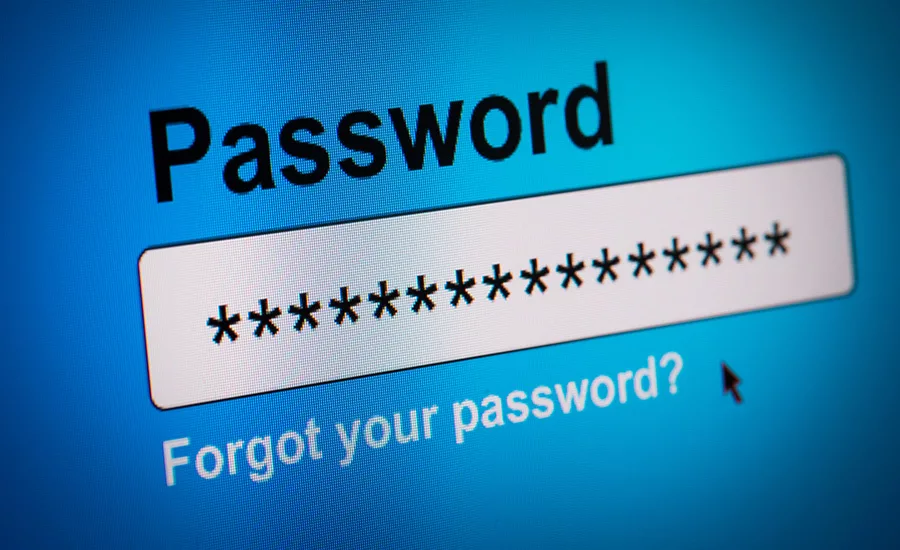
Cybersecurity passwords
February 20, 2020

IT security practitioners are aware of good habits when it comes to strong authentication and password management, yet often fail to implement them due to poor usability or inconvenience, says the 2020 State of Password and Authentication Security Behaviors Report by Yubico and Ponemon Institute.

According to the report,IT security practitioners and individuals are both engaging in risky password and authentication practices, yet expectation and reality are often misaligned when it comes to the implementation of usable and desirable security solutions. The tools and processes that organizations put in place are not widely adopted by employees or customers, making it abundantly clear that new technologies are needed for enterprises and individuals to reach a safer future together.

“IT professional or not, people do not want to be burdened with security — it has to be usable, simple, and work instantly,” said Stina Ehrensvärd, CEO and Co-Founder, Yubico. “For years, achieving a balance between high security and ease of use was near impossible, but new authentication technologies are finally bridging the gap. With the availability of passwordless login and security keys, it’s time for businesses to step up their security options. Organizations can do far better than passwords; in fact, users are demanding it.”

Other findings from the research include:

  • Individuals report better security practices in some instances compared to IT professionals. Out of the 35% of individuals who report that they have been victim of an account takeover, 76% changed how they managed their passwords or protected their accounts. Of the 20% of IT security respondents who have been a victim of an account takeover, 65% changed how they managed their passwords or protected their accounts. Both individuals and IT security respondents have reused passwords on an average of 10 of their personal accounts, but individual users (39%) are less likely to reuse passwords across workplace accounts than IT professionals (50%).
  • Fifty-one percent of IT security respondents say their organizations have experienced a phishing attack, with another 12% of respondents stating that their organizations experienced credential theft, and 8% say it was a man-in-the-middle attack. Yet, only 53% of IT security respondents say their organizations have changed how passwords or protected corporate accounts were managed. Interestingly enough, individuals reuse passwords across an average of 16 workplace accounts and IT security respondents say they reuse passwords across an average of 12 workplace accounts.
  • Additionally, mobile use is on the rise. Fifty-five percent of IT security respondents report that the use of personal mobile devices is permitted at work and an average of 45% of employees in the organizations represented are using their mobile device for work. Alarmingly, 62% of IT security respondents say their organizations don’t take necessary steps to protect information on mobile phones. Fifty-one percent of individuals use their personal mobile device to access work related items, and of these, 56% don’t use two-factor authentication (2FA).
  • Given the complexities of securing a modern, mobile workforce, organizations struggle to find simple, yet effective ways of protecting employee access to corporate accounts. Roughly half of all respondents (49% of IT security and 51% of individuals) share passwords with colleagues to access business accounts. Fifty-nine percent of IT security respondents report that their organization relies on human memory to manage passwords, while 42% say sticky notes are used. Only 31% of IT security respondents say that their organization uses a password manager, which are effective tools to securely create, manage, and store passwords.
  • IT security respondents say they are most concerned about protecting customer information and personally identifiable information (PII). However, 59% of IT security respondents say customer accounts have been subject to an account takeover. Despite this, 25% of IT security respondents say their organizations have no plans to adopt 2FA for customers. Of these 25% of IT security respondents, 60% say their organizations believe usernames and passwords provide sufficient security and 47% say their organizations are not going to provide 2FA because it will affect convenience by adding an extra step during login. When businesses are choosing to protect customer accounts and data, the 2FA options that are used most often do not offer adequate protection for users.
  • IT security respondents report that SMS codes (41%), backup codes (40%), or mobile authentication apps (37%) are the three main 2FA methods that they support or plan to support for customers. SMS codes and mobile authenticator apps are typically tied to only one device. Additionally, 23% of individuals find 2FA methods like SMS and mobile authentication apps to be very inconvenient. A majority of individuals rate security (56%), affordability (57%), and ease of use (35%) as very important.
  • It is clear that new technologies are needed for enterprises and individuals to reach a safer future together. Across the board, passwords are cumbersome, mobile use introduces a new set of security challenges, and the security tools that organizations have put in place are not being widely adopted by employees or customers. In fact, 49% of individuals say that they would like to improve the security of their accounts and have already added extra layers of protection beyond a username and password. However, 56% of individuals will only adopt new technologies that are easy to use and significantly improve account security. Here’s what is preferred: biometrics, security keys, and password-free login.
  • A majority of IT security respondents and individuals (55%) would prefer a method of protecting accounts that doesn’t involve passwords. Both IT security (65%) and individual users (53%) believe the use of biometrics would increase the security of their organization or accounts. And lastly, 56% of individuals and 52% of IT security professionals believe a hardware token would offer better security.


KEYWORDS: cyber security cybersecurity identity (ID) management passwords

Share This Story

Looking for a reprint of this article?
From high-res PDFs to custom plaques, order your copy today!

Recommended Content

JOIN TODAY
To unlock your recommendations.

Already have an account? Sign In

  • Cyber tech background

    Security’s Top Cybersecurity Leaders 2026

    Security magazine’s Top Cybersecurity Leaders 2026 award...
    Cybersecurity
  • Iintegration and use of emerging tools

    Future Proof Your Security Career with AI Skills

    AI’s evolution demands security leaders master...
    Security Education & Training
    By: Jerry J. Brennan and Joanne R. Pollock
  • The 2025 Security Benchmark Report

    The 2025 Security Benchmark Report

    The 2025 Security Benchmark Report surveys enterprise...
    The Security Benchmark Report
    By: Rachelle Blair-Frasier
Manage My Account
  • Security Newsletter
  • eMagazine Subscriptions
  • Manage My Preferences
  • Online Registration
  • Mobile App
  • Subscription Customer Service

More Videos

Popular Stories

Opened padlock on computer keyboard

10 Data Breaches to Know About (April 2026)

Laptop with desktop screen showing

Research: Microsoft Edge Loads Stored Passwords in Cleartext

SEC Podcast Header Podcast

Credential Management in High Turnover Environments

Glowing police siren

Security Isn’t a Commodity. Neither Is Off-Duty Law Enforcement

Laptop in darkness

Reframing MFA Bypass: Four Identity Gaps Attackers Exploit

SEC 2026 Benchmark Banner

Events

June 3, 2026

The Role of AI and Video in Measuring Health, Safety, and Security Standards

OSHA fines grab headlines, but most compliance issues start with everyday operational gaps: missed protocols, unsecured areas, or slow response. Learn how emerging technologies & AI can be leveraged towards a more proactive model of compliance.

June 10, 2026

Applying Agentic AI in Security Operations for Faster Decisions & Better Outcomes

Security teams have never had more visibility. We’ll explore how a new decision layer is helping security teams move from detection to decision. Turn alerts into decision-ready context, reducing reliance on manual triage and enabling faster action.

View All Submit An Event

Products

Security Culture: A How-to Guide for Improving Security Culture and Dealing with People Risk in Your Organisation

Security Culture: A How-to Guide for Improving Security Culture and Dealing with People Risk in Your Organisation

See More Products


The Role of AI and Video - Free Webinar - June 3, 2026

Related Articles

  • password

    Consumers Prefer Biometric Authentication to Passwords

    See More
  • Top New York Cop Dismisses Big Brother Concerns Over Cameras

    See More
  • Put Password Pain in the Past with Multi-Factor Authentication - Security Magazine

    More Enterprises Use Multi-factor Authentication to Secure Passwords

    See More

Related Products

See More Products
  • 9780815378068.jpg.jpg

    Biometrics, Crime and Security

  • A Leaders Guide Book Cover_Nicholson_29Sept2023.jpg

    A Leader’s Guide to Evaluating an Executive Protection Program

See More Products
×

Sign-up to receive top management & result-driven techniques in the industry.

Join over 20,000+ industry leaders who receive our premium content.

SIGN UP TODAY!
  • RESOURCES
    • Advertise
    • Contact Us
    • Store
    • Want More
  • SIGN UP TODAY
    • Create Account
    • eMagazine
    • Newsletter
    • Customer Service
    • Manage Preferences
  • SERVICES
    • Marketing Services
    • Reprints
    • Market Research
    • List Rental
    • Survey/Respondent Access
  • STAY CONNECTED
    • LinkedIn
    • Facebook
    • YouTube
    • X (Twitter)
  • PRIVACY
    • PRIVACY POLICY
    • TERMS & CONDITIONS
    • DO NOT SELL MY PERSONAL INFORMATION
    • PRIVACY REQUEST
    • ACCESSIBILITY

Copyright ©2026. All Rights Reserved BNP Media, Inc. and BNP Media II, LLC.

Design, CMS, Hosting & Web Development :: ePublishing