Critical Communications
In the event of a disaster, social media can spread essential messages near and far, but how do official communications outlets cut through the noise?
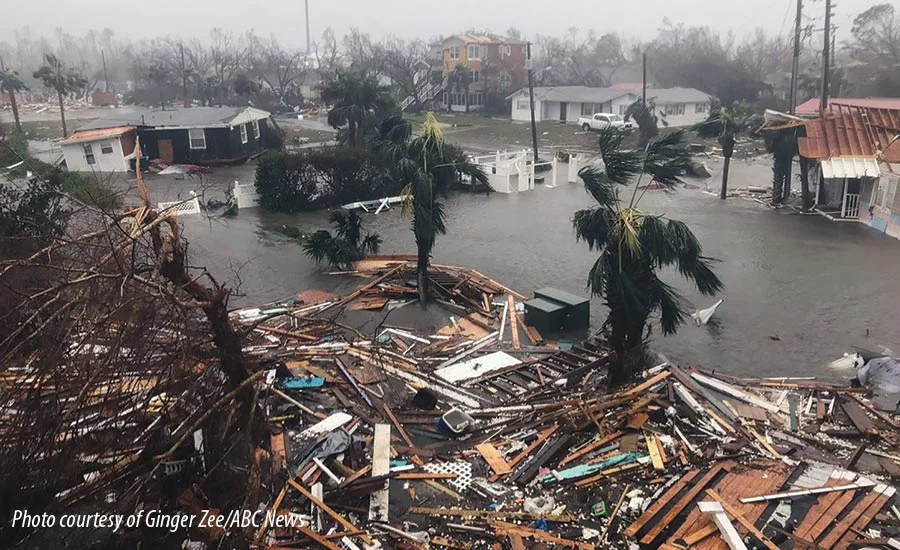
ABC News Chief Meteorologist Ginger Zee tweeted out this photo during Hurricane Michael, leveraging social media to show the extent of the destruction in Mexico Beach.
Photo courtesy of Ginger Zee/ABC News
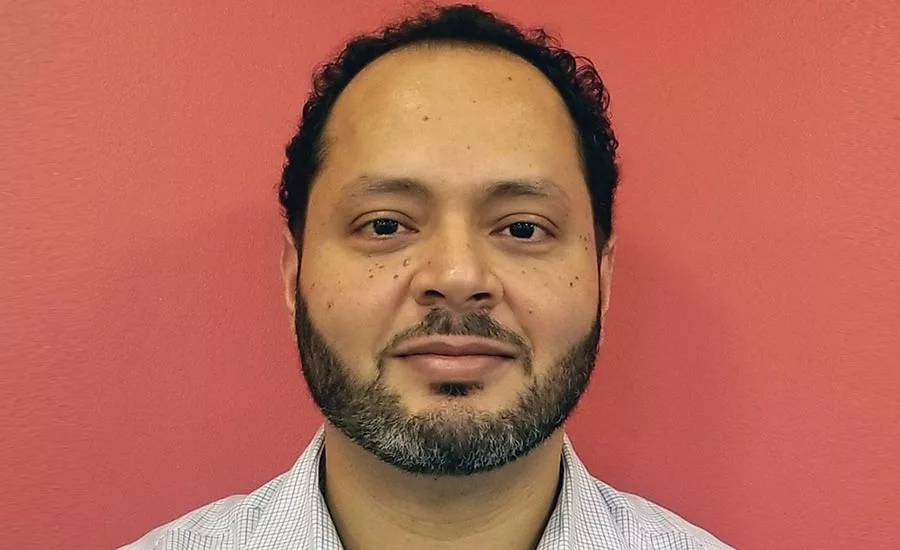
When the N.Y. Post released the name of an Ebola patient ahead of the NYC Department of Health and Mental Hygiene, “We discovered that on Twitter, and it really turned everything upside down,” says Tamer Hadi, director of strategic technology in the department’s Office of Emergency Preparedness and Response. “We hadn’t planned on releasing that to the public so soon, and discovering the leak really changed the timeline.”
Photo courtesy of Tamer Hadi
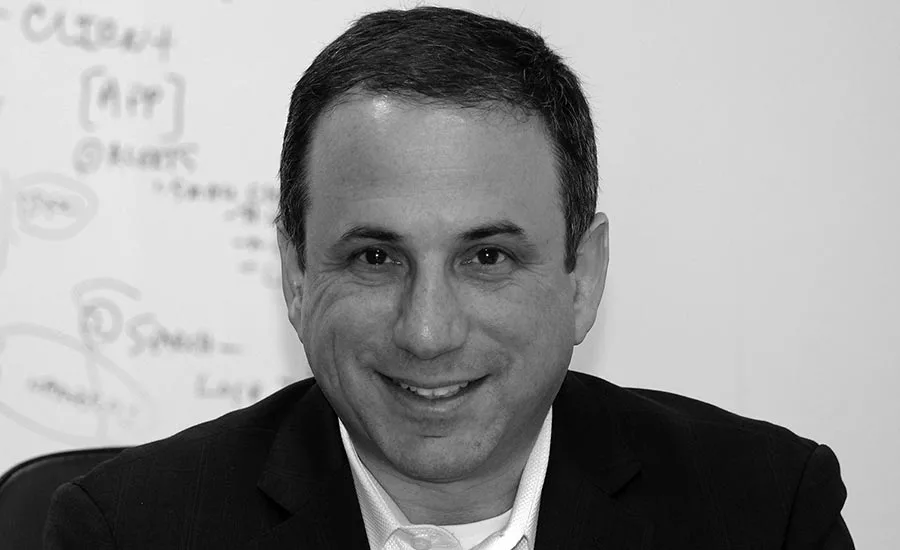
Given the complex nature of crowd-sourced communications, “you need to have the staff with expertise to identify signal through a massive amount of noise,” says David Riker, VP and mass notification expert at WorldAware.
Photo courtesy of David Riker
When the Cold Springs Fire tore through 528 acres of Boulder County, Colo., Director of Emergency Management Mike Chard took to social media.
“We had to evacuate 1,700 people and put 20,000 more people on pre-evacuation notice, so our public information officers started putting out tweets. It was road closures, evacuation areas, shelter locations,” he says. “Everyone’s got a smart phone, so this is a great way to stay connected at a time when people are worried and need to know what’s going on.”
It works the other way too: In addition to extending the mass notification function beyond conventional media, social channels offer emergency officials a powerful situational-awareness tool, a way to get the scoop at ground level.
When the N.Y. Post released the name of an Ebola patient ahead of the NYC Department of Health and Mental Hygiene, “We discovered that on Twitter, and it really turned everything upside down,” says Tamer Hadi, director of strategic technology in the department’s Office of Emergency Preparedness and Response. “We hadn’t planned on releasing that to the public so soon, and discovering the leak really changed the timeline.”
For security professionals and government officials, natural disasters and emergency events – from hurricanes to wildfires to active shooters – set a high communications bar. Here, we’ll consider best practices for leveraging Twitter, Facebook, et al for mass notifications, and also explore some of the challenges inherent in using publicly-sourced information to guide emergency response.
Early and Often
When it comes to broadcasting emergency information on social channels, the first rule of thumb is to get in early and often.
“You can’t don’t wait for an incident to start,” says Jeffrey A. Slotnick, CPP, PSP, a senior regional vice president of ASIS International. “Social media should be part of your day-to-day operations, so that people are used to getting information from you in that way.”
Social media is a crowded space, with many voices vying for attention. For government officials and first responders to claim their share of the airwaves, they need to build up a presence over time. “It takes years to build a social media persona. If you wait until the emergency happens, people won’t know you exist. They won’t know where to find you,” says Slotnick, president of Setracon Enterprise Security Risk Management Services.
At International SOS, Regional Security Director Matthew Bradley suggests a number of practical steps for effective mass notification on social media:
- Consistency: “You want just one Twitter feed where people can follow you, rather than creating Twitter handles for different incidents. If you use @HurricaneIsComing, people may not see that.”
- Hashtags: “Not everyone who needs you will be following you at the moment you put that message out there. Use a hashtag to flag your messages so people can find them more easily.”
- Set expectations: “When an incident is happening over a couple of days, say a hurricane or a wildfire, you want to be consistent in when you communicate: There’s always an update at the top of the hour. Or at least you tell people when the next update is coming, so they know when to come back and look.”
- Microsite: “Your social messages should refer people back to a microsite for more details. Put all the information there, and then once the event is over the microsite goes away, so you are not clogging up your regular page with what is now outdated information.”
Even those who follow best practices may find themselves struggling to capture the full potential of social media. Forums like Facebook, Snapchat and Twitter move at lightening velocity compared to the relatively sluggish pace of government operations. In a crisis, emergency officials may find themselves hobbled by their own processes.
As an assistant professor of intelligence analysis at James Madison University, Kathleen Moore analyzed some three million tweets posted in the days prior to Hurricane Sandy. Only 1,800 came from government and first responders.
“For government, there often isn’t an efficient way to do it,” she says. “Typically, you are not allowed to communicate on social media without approval. It has to be triaged and scripted and maybe someone higher up needs to formulate or approve that response. It just takes a lot of time to get through all those bureaucratic measures.”
She urges emergency officials to loosen the reins in times of crisis, to empower front-line staff to respond to emerging concerns on social media with less vetting from above. “Control is a myth. You cannot control the message. You have to embrace the chaos,” she says. “If someone misspeaks and gets called out on it, people tend to be altruistic in a crisis. They aren’t going to beat you up for a low-level mistake: They will likely give you a pass.”
Others contend that the best way to stay both timely and accurate in social communications is to double down on the hierarchy. “Under the incident command structure there is a public information officer,” Slotnick says. “You put the social media team under that person, so that there is a unified messaging with a single communication strategy. Then you don’t have competing concepts going out there, and you can still act quickly.”
Managing the mass notification aspect of social is just half the game. Security experts say that in a natural disaster or other large-scale emergency, it’s equally important to use social media as a listening tool. But that’s a challenging proposition.
Eyes on Scene
Social media can extend your situational awareness, giving you eyes on the ground. But can those reports be trusted?
“There was the case of a massive water main break in Los Angeles, with millions of gallons of water being dispersed,” says David Riker, VP and mass notification expert at WorldAware. “The city was monitoring social media, and it was very hard for them to identify what was really happening. There were UCLA students posting pictures of themselves body-surfing in the parking lot at the same time the National Guard was deploying swift-water rescue.”
Training is key here. Given the complex nature of crowd-sourced communications, “You need to have the staff with expertise to identify signal through a massive amount of noise,” Riker says.
Technology can help. Social media monitoring software can track public sentiment around an unfolding event, rapidly parsing tens of thousands of messages based on key words, concepts and geolocation. Emergency officials say such tools can be a boon, when supported by hands-on human intelligence.
“The tools are very good in terms of discovering the relevant content,” Hadi says. “That’s a good start, but then you need to put together a summary of what is happening for leadership, give them something consumable. Leadership just wants to know what is happening and what they should do, so there is a manual reporting component to this.”
Groups such as the Virtual Operations Support Teams and the Digital Humanitarian Network also can help, by analyzing the social media data generated during natural disasters.
In the absence of software, a quick rule of thumb for interpreting social sentiment is to look for volume. One person saying something may be worthy of note; if 100 people say it, that probably merits some action. Corroboration helps, too: A social post accompanied by photo or video documentation may carry extra weight for security professionals deciding where to deploy resources.
Certainly there are risks inherent in looking to Facebook for situational awareness, but many experts contend that the potential benefits justify whatever efforts may be needed to turn hazy social sentiment into concrete intelligence.
“In a natural disaster you need to understand the situation on the ground,” Bradley says. “There are never enough resources to cover all the territory, and you want to get into the hardest hit areas first. With social media you have thousands of data points out there that can help you to identify those needs.”
Looking for a reprint of this article?
From high-res PDFs to custom plaques, order your copy today!