Security Magazine logo
search
cart
facebook twitter linkedin youtube
  • Sign In
  • Create Account
  • Sign Out
  • My Account
Security Magazine logo
  • NEWS
    • Security Newswire
    • Technologies & Solutions
  • MANAGEMENT
    • Leadership Management
    • Enterprise Services
    • Security Education & Training
    • Logical Security
    • Security & Business Resilience
    • Profiles in Excellence
  • PHYSICAL
    • Access Management
    • Fire & Life Safety
    • Identity Management
    • Physical Security
    • Video Surveillance
    • Case Studies (Physical)
  • CYBER
    • Cybersecurity News
    • More
  • BLOG
  • COLUMNS
    • Career Intelligence
    • Cyber Tactics
    • Cybersecurity Education & Training
    • Leadership & Management
    • Security Talk
  • EXCLUSIVES
    • Annual Guarding Report
    • Most Influential People in Security
    • The Security Benchmark Report
    • Top Guard and Security Officer Companies
    • Top Cybersecurity Leaders
    • Women in Security
  • SECTORS
    • Arenas / Stadiums / Leagues / Entertainment
    • Banking/Finance/Insurance
    • Construction, Real Estate, Property Management
    • Education: K-12
    • Education: University
    • Government: Federal, State and Local
    • Hospitality & Casinos
    • Hospitals & Medical Centers
    • Infrastructure:Electric,Gas & Water
    • Ports: Sea, Land, & Air
    • Retail/Restaurants/Convenience
    • Transportation/Logistics/Supply Chain/Distribution/ Warehousing
  • EVENTS
    • Industry Events
    • Webinars
    • Solutions by Sector
    • Security 500 Conference
  • MEDIA
    • Interactive Spotlight
    • Photo Galleries
    • Podcasts
    • Polls
    • Videos
      • Cybersecurity & Geopolitical Discussion
      • Ask Me Anything (AMA) Series
  • MORE
    • Call for Entries
    • Classifieds & Job Listings
    • Continuing Education
    • Newsletter
    • Sponsor Insights
    • Store
    • White Papers
  • EMAG
    • eMagazine
    • This Month's Content
    • Advertise
  • SIGN UP!
Cybersecurity News

How to Protect Against Human Vulnerabilities in Your Security Program
By Atif Mushtaq
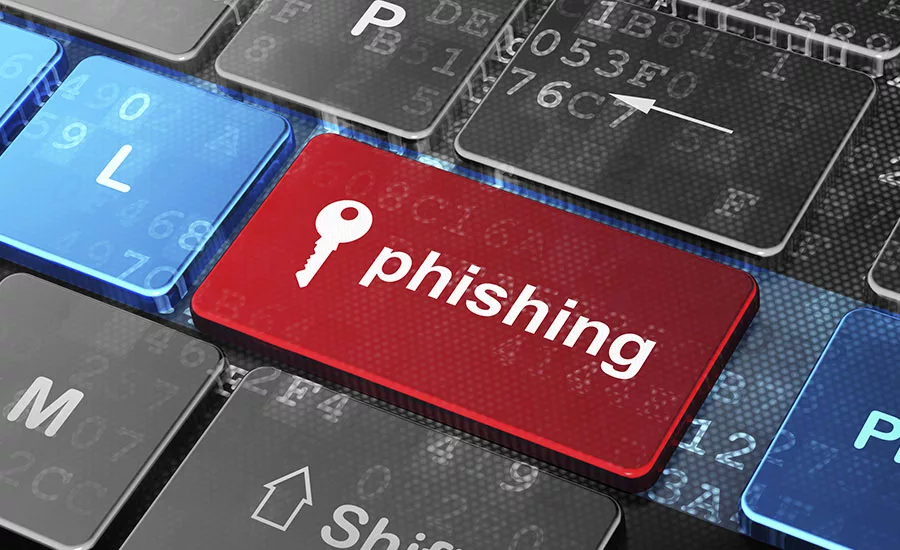
phishing
September 6, 2018

When it comes to cybersecurity, no doubt humans are the weakest link. No matter how many layers are added to your security stack, nor how much phishing education and awareness training you do, threat actors continue to develop more sophisticated ways to exploit the human vulnerabilities with socially engineered attacks. In fact, as security defenses keep improving, hackers are compelled to develop more clever and convincing ways to exploit the human attack surface to gain access to sensitive assets.

The prime manner for exploiting human vulnerabilities is via phishing, which is the cause of over 90% of breaches. Phishing attacks continue to occur in email. However, improved defenses and employee awareness around phishing emails has caused hackers to use additional attack vectors, including ads, pop-ups, instant messaging, social media, rogue browser extensions and freeware. Phishing attacks are moving in droves to these web-based tactics where users’ guards are down, deploying all manner of techniques to target human weakness. In the end, it doesn’t matter which attack vector is used to get through to your employees. What matters is whether they “take the bait” by clicking on the link and what happens next. 

According to Webroot, 95% of web-based attacks now use social engineering to trick users. And the methods that they use are becoming increasingly sophisticated, in large part because users are getting trained to recognize security risks, as well as owing to improvements in network, application and browser security. A key challenge with the phishing threat landscape is short-lived attacks. Most phishing websites hook users within hours of going live and are quickly taken down and move to another URL. Attacks appear and move faster than most organizations’ defenses can be updated to block them. To strengthen defenses against this new threat landscape, organizations must evolve how they plan and implement their defenses against these more sophisticated socially engineered attacks.

New Methods to Tackle the Phishing Problem

Traditional security defenses and employee training are proving insufficient to guard against today’s more sophisticated, short-lived attacks that prey on human nature. The problem is that many traditional technologies such as antivirus controls, sandboxes, secure email and web gateways and next-gen firewalls were designed to protect against attacks directly targeting the network, such as detecting the use of malicious binaries, Exe’s, and early browser exploits. But attackers have moved on and are now targeting users directly with more sophisticated attacks that bypass defenses to get a link in front of their intended victims.

New kinds of strategies are required to deal with these web-based phishing attacks that target employees. What is needed is a combination of employee awareness training, secure email and Web gateways, URL filtration, and now real-time phishing site detection to catch live, previously unknown attacks so they can be automatically blocked by existing infrastructure. Blocking attacks at the start of the kill chain is critically important to stop further damage and breaches.

Because modern phishing attacks target human vulnerabilities, a system is required that can take human vulnerabilities into account. Humans have the ability to visually inspect things, read text, apply context to a situation, and learn from experience by remembering what has happened in the past. To detect active phishing websites, the security controls must mimic this behavior, replicating the capabilities of human intuition, particularly that of highly trained cybersecurity researchers. The system must be capable of analyzing, predicting and blocking cyber threats through self-learning capabilities, honed through analysis of millions of phishing attacks, to determine whether the behavior being seen in a new attack is malicious or not. When it’s determined to be malicious, it must be blocked quickly and automatically, before it can impact users, their machines, or the network.

People are the weakest link in cybersecurity, the last and most fruitful attack surface for cybercriminals. Phishing attack vectors are expanding widely beyond email with ever more convincing phishing websites and tricks to deceive users with their guards down, deploying all manner of techniques to target inherent weaknesses. The good news is that new technologies with real-time phishing detection are becoming available to address this situation, and every organization should take note.


This article originally ran in Today’s Cybersecurity Leader, a monthly cybersecurity-focused eNewsletter for security end users, brought to you by Security magazine. Subscribe here.


KEYWORDS: cyberattack email security hackers phishing security education social engineering

Share This Story

Looking for a reprint of this article?
From high-res PDFs to custom plaques, order your copy today!

Atif Mushtaq has spent most of his career on the front lines of the war against cybercrime. Before founding SlashNext, he spent nine years as a senior scientist at FireEye where he was one of the main architects of its core malware detection system. Mushtaq has worked with law enforcement and other global agencies to take down some of the world’s biggest malware networks including Rustock, Srizbi, Pushdo and Grum botnets.

Recommended Content

JOIN TODAY
To unlock your recommendations.

Already have an account? Sign In

  • Iintegration and use of emerging tools

    Future Proof Your Security Career with AI Skills

    AI’s evolution demands security leaders master...
    Career Intelligence
    By: Jerry J. Brennan and Joanne R. Pollock
  • The 2025 Security Benchmark Report

    The 2025 Security Benchmark Report

    The 2025 Security Benchmark Report surveys enterprise...
    The Security Benchmark Report
    By: Rachelle Blair-Frasier
  • The Most Influential People in Security 2025

    Security’s Most Influential People in Security 2025

    Security Magazine’s 2025 Most Influential People in...
    Most Influential People in Security
    By: Security Staff
Manage My Account
  • Security Newsletter
  • eMagazine Subscriptions
  • Manage My Preferences
  • Online Registration
  • Mobile App
  • Subscription Customer Service

More Videos

Sponsored Content

Sponsored Content is a special paid section where industry companies provide high quality, objective, non-commercial content around topics of interest to the Security audience. All Sponsored Content is supplied by the advertising company and any opinions expressed in this article are those of the author and not necessarily reflect the views of Security or its parent company, BNP Media. Interested in participating in our Sponsored Content section? Contact your local rep!

close
  • critical event management
    Sponsored byEverbridge

    Why a Unified View Across IT, Continuity, and Security Makes or Breaks Crisis Response

  • Charlotte Star Room
    Sponsored byAMAROK

    In an Uncertain Economy, Security Is a Necessity - Not an Afterthought

  • Sureview screen
    Sponsored bySureView Systems

    The Evolution of Automation in the Command Center

Popular Stories

Red laptop

Security Leaders Discuss SitusAMC Cyberattack

Cybersecurity trends of 2025

3 Top Cybersecurity Trends from 2025

Green code

Logitech Confirms Data Breach, Security Leaders Respond

Neon human and android hands

65% of the Forbes AI 50 List Leaked Sensitive Information

The Louvre

After the Theft: Why Camera Upgrades Should Begin With a Risk Assessment

Top Cybersecurity Leaders

Events

September 18, 2025

Security Under Fire: Insights on Active Shooter Preparedness and Recovery

ON DEMAND: In today’s complex threat environment, active shooter incidents demand swift, coordinated and well-informed responses.

December 11, 2025

Responding to Evolving Threats in Retail Environments

Retail security professionals are facing an increasingly complex array of security challenges — everything from organized retail crime to evolving cyber-physical threats and public safety concerns.

View All Submit An Event

Products

Security Culture: A How-to Guide for Improving Security Culture and Dealing with People Risk in Your Organisation

Security Culture: A How-to Guide for Improving Security Culture and Dealing with People Risk in Your Organisation

See More Products

Related Articles

  • access card

    How to Protect Your Access Control System Against Cybercrime

    See More
  • 5 mins with Prout

    5 minutes with Jeremy Prout - How to protect the workforce against security risks in 2021

    See More
  • hackers

    How to defend against human operated ransomware

    See More

Related Products

See More Products
  • security culture.webp

    Security Culture: A How-to Guide for Improving Security Culture and Dealing with People Risk in Your Organisation

  • school security.jpg

    School Security: How to Build and Strengthen a School Safety Program

  • A Leaders Guide Book Cover_Nicholson_29Sept2023.jpg

    A Leader’s Guide to Evaluating an Executive Protection Program

See More Products
×

Sign-up to receive top management & result-driven techniques in the industry.

Join over 20,000+ industry leaders who receive our premium content.

SIGN UP TODAY!
  • RESOURCES
    • Advertise
    • Contact Us
    • Store
    • Want More
  • SIGN UP TODAY
    • Create Account
    • eMagazine
    • Newsletter
    • Customer Service
    • Manage Preferences
  • SERVICES
    • Marketing Services
    • Reprints
    • Market Research
    • List Rental
    • Survey/Respondent Access
  • STAY CONNECTED
    • LinkedIn
    • Facebook
    • YouTube
    • X (Twitter)
  • PRIVACY
    • PRIVACY POLICY
    • TERMS & CONDITIONS
    • DO NOT SELL MY PERSONAL INFORMATION
    • PRIVACY REQUEST
    • ACCESSIBILITY

Copyright ©2025. All Rights Reserved BNP Media.

Design, CMS, Hosting & Web Development :: ePublishing