Security Magazine logo
search
cart
facebook twitter linkedin youtube
  • Sign In
  • Create Account
  • Sign Out
  • My Account
Security Magazine logo
  • NEWS
    • Security Newswire
    • Technologies & Solutions
  • MANAGEMENT
    • Leadership Management
    • Enterprise Services
    • Security Education & Training
    • Logical Security
    • Security & Business Resilience
    • Profiles in Excellence
  • PHYSICAL
    • Access Management
    • Fire & Life Safety
    • Identity Management
    • Physical Security
    • Video Surveillance
    • Case Studies (Physical)
  • CYBER
    • Cybersecurity News
    • More
  • BLOG
  • COLUMNS
    • Career Intelligence
    • Cyber Tactics
    • Cybersecurity Education & Training
    • Leadership & Management
    • Security Talk
  • EXCLUSIVES
    • Annual Guarding Report
    • Most Influential People in Security
    • The Security Benchmark Report
    • Top Guard and Security Officer Companies
    • Top Cybersecurity Leaders
    • Women in Security
  • SECTORS
    • Arenas / Stadiums / Leagues / Entertainment
    • Banking/Finance/Insurance
    • Construction, Real Estate, Property Management
    • Education: K-12
    • Education: University
    • Government: Federal, State and Local
    • Hospitality & Casinos
    • Hospitals & Medical Centers
    • Infrastructure:Electric,Gas & Water
    • Ports: Sea, Land, & Air
    • Retail/Restaurants/Convenience
    • Transportation/Logistics/Supply Chain/Distribution/ Warehousing
  • EVENTS
    • Industry Events
    • Webinars
    • Solutions by Sector
    • Security 500 Conference
  • MEDIA
    • Interactive Spotlight
    • Photo Galleries
    • Podcasts
    • Polls
    • Videos
      • Cybersecurity & Geopolitical Discussion
      • Ask Me Anything (AMA) Series
  • MORE
    • Call for Entries
    • Classifieds & Job Listings
    • Continuing Education
    • Newsletter
    • Sponsor Insights
    • Store
    • White Papers
  • EMAG
    • eMagazine
    • This Month's Content
    • Advertise
  • SIGN UP!
Security Leadership and ManagementSecurity Education & TrainingPorts: Sea, Land, & Air

Expecting the Unexpected in Aviation Terrorism

By Dean C. Alexander, Andrew Hyland
Expecting the Unexpected in Aviation Terrorism
August 1, 2016

In April 2016, a drone struck an Airbus A320 British Airways flight as it approached its destination, London Heathrow, following a departure from Geneva. While the jet and its 132 passengers and five crewmen landed safely, the incident is being investigated for possible criminal links, including terrorism. The possibly deadly outcome of this collision merits a closer look at air and land-based threats against civil aviation targets.

Terrorist groups’ use of drones is not new. In August 2002, the Colombian military found nine drones, including one fitted with plastic explosives, at a FARC base. In November 2004, Hezbollah launched an Iranian-made drone, Mirsad-1, from Lebanon into Israel, which returned without incident. Subsequently, including in August 2006, Hezbollah armed an Ababil drone with a warhead containing some 100 pounds of explosives. In September 2014, Hezbollah reportedly armed a drone, which bombed an al Nusra Front building along the Lebanese-Syrian border.

Since 2014, ISIS has used drones for military reconnaissance. Among drones used by ISIS in 2015 include X-UAV Talon, costing some $100. Likewise, in 2016, ISIS uses variant drones in reconnaissance operations, with mixed success. During Spring 2016, the Israeli government accelerated it efforts to stymie Hamas’s intentions to smuggle commercial drones for use in surveillance, launching missiles, and crashing into targets.

In November 2012, Rezwan Ferdaus was sentenced to 17 years in prison in relation to a plot to attack the Pentagon and U.S. Capitol with remote-controlled, picnic-table-sized model airplanes (i.e., scale model of F-4 Phantom and F-86 Sabre fighter jets) packed with plastic explosives.  While there was speculation as to likelihood of success against such a scenario, other targets could have suffered to a larger degree. In April 2016, Doug Hughes was sentenced to four months in prison for landing a 250-pound gyrocopter on the Capitol lawn the previous year.

Too, the prospect of using aircraft – unmanned or otherwise – to crash into a target has many antecedents before 9/11. Beginning in 1944, and up until the end of World War II, more than 5,000 Japanese pilots conducted kamikaze raids. In December 1994, an Air France flight from Algeria to France was hijacked by a sub-group of the Armed Islamic Group (GIA), which sought to crash the plane over Paris or into the Eiffel Tower.

In January 1995, Filipino authorities detained and interrogated Abdul Hakim Murad, surmising his plans to crash a plane into CIA Headquarters. Too, they discover that Murad had conspired with 9/11 mastermind Khalid Sheikh Mohammed and Ramzi Yousef, bomb-maker of 1993 World Trade Center attack, to bomb a dozen flights from Asia to the U.S. (Boijinka plot).

In February 2009, the air wing of the Tamil Tigers attempted two kamikaze missions with Czech-made planes that were assembled in Sri Lanka by the terror group. Stateside, in September 1994, Frank Corder stole a Cessna 150, and crashed it into the White House, killing himself. That incident was determined not have been terrorism related. In February 2010, Joe Stack, an anti-government adherent, crashed his single-engine Piper Dakota light aircraft into an office building in Austin, Texas, which housed the IRS, among other tenants.

Due to enforced cockpit doors, terrorist tactics against civilian airlines have evolved, including: the deployment of explosives hidden in the clothing of operatives (i.e. 2001 attempted shoe bomber Richard Reid and 2009 failed underwear bomber Umar Farouk Abdulmutallab) and the plan to detonate peroxide-based explosives aboard multiple targeted planes (i.e., 2006 transatlantic plots).

Airports have been targeted by multiple means including suicide bombings at baggage- claim areas (i.e., January 2011 attack at Domodedovo International Airport in Moscow, which killed 37 people and injured more than 170). In March 2016, two suicide bombers killed 16 people, and wounded 18 others at a departure area at Brussels Airport in Zaventem. A third explosive device in a suitcase was later discovered and destroyed.

Terror attacks conducted with gunfire at airports have ranged from the May 1972 attack at Israel’s Lod International Airport by three gunmen, who killed 26 people and injured 80, to the June 2014 multi-pronged attack by 10 gunmen, including some with suicide bomb vests, who  killed 16 people and injured 18 others at Pakistan’s Karachi International Airport.

In the United States in July 2002, lone wolf Heshman Hedayat shot and killed two people and injured four at the El Al Israeli Airline check-in counter at Los Angeles International Airport before he was killed by a security guard. At the same airport, but at a security screening area in November 2013, another sole operative, Paul Ciancia, shot and killed a TSA employee and injured three others. Ciancia was shot and captured by law enforcement.

Another terror tactic was used in the June 2007 attack at Glasgow International Airport in Scotland. There, a Jeep Cherokee filled with propane gas canisters and petrol containers crashed into the main entrance, causing an explosion. Only five members of the public were injured, partly due to security bollards that impeded the vehicle from advancing. One of the two co-conspirators died a month later from severe burns, while the other was convicted of conspiracy to commit murder.

Prior to the use of drones, crashing planes into targets and other modes, traditional modus operandi included: hijackings seeking demands such as an exchange of prisoners, and the placement of unaccompanied bombs. The December 1988 Pan Am 103 bombing over Lockerbie, Scotland, was particularly prominent of the latter type of terror mode. Sadly, this type of carnage continues, as in October 2015 when ISIS claimed responsibility for the explosion of a Russian charter flight from the Sinai, which killed 224 people on board.

In May 2002, National Security Advisor Condoleezza Rice said: “I don’t think anybody could have predicted that these people would take an airplane and slam it into the World Trade Center, take another one and slam it into the Pentagon; that they would try to use an airplane as a missile, a hijacked airplane as a missile. All of this reporting about hijacking was about traditional hijacking.” In light of the evolution – or metastasizing – of attacks against aircraft and airports, as well as future uses of variant manned and unmanned aerial vehicles thereon, there is no reason for us to be surprised by any future terror attack in this sector.

KEYWORDS: counterterrorism global security news security education security risk management Terrorism

Share This Story

Looking for a reprint of this article?
From high-res PDFs to custom plaques, order your copy today!


Dean C. Alexander is Director of the Homeland Security Research Program and Professor at the School of Law Enforcement and Justice Administration at Western Illinois University. He is the author of the new book, Family Terror Networks (2019), available at Amazon.com. He is also a valued member of Security’s Editorial Advisory Board.

Sec0816 edu slide3 900px

Andrew Hyland is completing his B.S. degree at the university.

Recommended Content

JOIN TODAY
To unlock your recommendations.

Already have an account? Sign In

  • Iintegration and use of emerging tools

    Future Proof Your Security Career with AI Skills

    AI’s evolution demands security leaders master...
    Columns
    By: Jerry J. Brennan and Joanne R. Pollock
  • The 2025 Security Benchmark Report

    The 2025 Security Benchmark Report

    The 2025 Security Benchmark Report surveys enterprise...
    The Security Benchmark Report
    By: Rachelle Blair-Frasier
  • The Most Influential People in Security 2025

    Security’s Most Influential People in Security 2025

    Security Magazine’s 2025 Most Influential People in...
    Most Influential People in Security
    By: Security Staff
Manage My Account
  • Security Newsletter
  • eMagazine Subscriptions
  • Manage My Preferences
  • Online Registration
  • Mobile App
  • Subscription Customer Service

More Videos

Sponsored Content

Sponsored Content is a special paid section where industry companies provide high quality, objective, non-commercial content around topics of interest to the Security audience. All Sponsored Content is supplied by the advertising company and any opinions expressed in this article are those of the author and not necessarily reflect the views of Security or its parent company, BNP Media. Interested in participating in our Sponsored Content section? Contact your local rep!

close
  • critical event management
    Sponsored byEverbridge

    Why a Unified View Across IT, Continuity, and Security Makes or Breaks Crisis Response

  • Charlotte Star Room
    Sponsored byAMAROK

    In an Uncertain Economy, Security Is a Necessity - Not an Afterthought

  • Sureview screen
    Sponsored bySureView Systems

    The Evolution of Automation in the Command Center

Popular Stories

Cybersecurity trends of 2025

3 Top Cybersecurity Trends from 2025

Red laptop

Security Leaders Discuss SitusAMC Cyberattack

Green code

Logitech Confirms Data Breach, Security Leaders Respond

Neon human and android hands

65% of the Forbes AI 50 List Leaked Sensitive Information

The Louvre

After the Theft: Why Camera Upgrades Should Begin With a Risk Assessment

Top Cybersecurity Leaders

Events

September 18, 2025

Security Under Fire: Insights on Active Shooter Preparedness and Recovery

ON DEMAND: In today’s complex threat environment, active shooter incidents demand swift, coordinated and well-informed responses.

December 11, 2025

Responding to Evolving Threats in Retail Environments

Retail security professionals are facing an increasingly complex array of security challenges — everything from organized retail crime to evolving cyber-physical threats and public safety concerns.

View All Submit An Event

Products

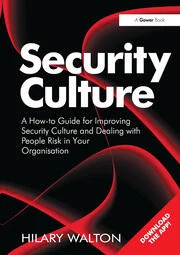
Security Culture: A How-to Guide for Improving Security Culture and Dealing with People Risk in Your Organisation

Security Culture: A How-to Guide for Improving Security Culture and Dealing with People Risk in Your Organisation

See More Products

Related Articles

  • Expecting the Unexpected in Aviation Terrorism

    See More
  • The Public’s Role in Preventing Terrorism

    See More
  • Terrorism Challenges Facing the Trump Administration

    Terrorism Challenges Facing the Trump Administration

    See More

Related Products

See More Products
  • Risk Analysis and the Security Survey, 4th Edition

  • s in europe.jpg

    Surveillance in Europe

  • security culture.webp

    Security Culture: A How-to Guide for Improving Security Culture and Dealing with People Risk in Your Organisation

See More Products
×

Sign-up to receive top management & result-driven techniques in the industry.

Join over 20,000+ industry leaders who receive our premium content.

SIGN UP TODAY!
  • RESOURCES
    • Advertise
    • Contact Us
    • Store
    • Want More
  • SIGN UP TODAY
    • Create Account
    • eMagazine
    • Newsletter
    • Customer Service
    • Manage Preferences
  • SERVICES
    • Marketing Services
    • Reprints
    • Market Research
    • List Rental
    • Survey/Respondent Access
  • STAY CONNECTED
    • LinkedIn
    • Facebook
    • YouTube
    • X (Twitter)
  • PRIVACY
    • PRIVACY POLICY
    • TERMS & CONDITIONS
    • DO NOT SELL MY PERSONAL INFORMATION
    • PRIVACY REQUEST
    • ACCESSIBILITY

Copyright ©2025. All Rights Reserved BNP Media.

Design, CMS, Hosting & Web Development :: ePublishing