Security Magazine logo
search
cart
facebook twitter linkedin youtube
  • Sign In
  • Create Account
  • Sign Out
  • My Account
Security Magazine logo
  • NEWS
    • Security Newswire
    • Technologies & Solutions
  • MANAGEMENT
    • Leadership Management
    • Enterprise Services
    • Security Education & Training
    • Logical Security
    • Security & Business Resilience
    • Profiles in Excellence
  • PHYSICAL
    • Access Management
    • Fire & Life Safety
    • Identity Management
    • Physical Security
    • Video Surveillance
    • Case Studies (Physical)
  • CYBER
    • Cybersecurity News
    • More
  • BLOG
  • COLUMNS
    • Career Intelligence
    • Cyber Tactics
    • Cybersecurity Education & Training
    • Leadership & Management
    • Security Talk
  • EXCLUSIVES
    • Annual Guarding Report
    • Most Influential People in Security
    • The Security Benchmark Report
    • Top Guard and Security Officer Companies
    • Top Cybersecurity Leaders
    • Women in Security
  • SECTORS
    • Arenas / Stadiums / Leagues / Entertainment
    • Banking/Finance/Insurance
    • Construction, Real Estate, Property Management
    • Education: K-12
    • Education: University
    • Government: Federal, State and Local
    • Hospitality & Casinos
    • Hospitals & Medical Centers
    • Infrastructure:Electric,Gas & Water
    • Ports: Sea, Land, & Air
    • Retail/Restaurants/Convenience
    • Transportation/Logistics/Supply Chain/Distribution/ Warehousing
  • EVENTS
    • Industry Events
    • Webinars
    • Solutions by Sector
    • Security 500 Conference
  • MEDIA
    • Interactive Spotlight
    • Photo Galleries
    • Podcasts
    • Polls
    • Videos
      • Cybersecurity & Geopolitical Discussion
      • Ask Me Anything (AMA) Series
  • MORE
    • Call for Entries
    • Classifieds & Job Listings
    • Continuing Education
    • Newsletter
    • Sponsor Insights
    • Store
    • White Papers
  • EMAG
    • eMagazine
    • This Month's Content
    • Advertise
  • SIGN UP!
Access Management

Angling for Fraud Detection Buy-In

September 1, 2015

The typical enterprise loses five percent of revenues to fraud each year, according to the ACFE 2014 Report to the Nations .

“The gap between criminals’ capabilities and businesses’ detection capabilities gets wider every day,” says Walt Manning, founder of Investigations MD. Digital forensics and fraud investigations are being fundamentally changed by technology, especially cloud computing and Bring Your Own Device (BYOD) policies, he says.

“We might have new problems, but the old doesn’t go away either,” says Jim Ratley, President and CEO of the Association of Certified Fraud Examiners (ACFE). “Now, detection is key. Every fraud that can be committed has been committed already. The methods are what may change.”

According to the 2014 Report to the Nations , the median duration of fraud cases reported (the time from when the fraud commenced until it was detected) was 18 months. The median loss was $145,000, but 22 percent of cases involved losses of at least $1 million. Cases involving a person in a higher level of authority, such as an owner or executive, caused a median loss of $500,000 before the fraud was detected.

“There are no small frauds, just frauds that have not reached maturity,” Ratley says.

However, many investigations are stymied by enterprise resources. According to Manning, who is also a faculty member with the Association of Certified Fraud Examiners (ACFE), “There are restrictions on the time and money that can be spent on an investigation, and your success depends on your resources.”

Buy-in from upper management is key to fraud detection and prevention, adds Ratley. “You should always start with a solid, well-tested fraud prevention program. Most fraud perpetrators don’t think they’ll be caught, so begin with creating a perception of prevention – make people aware of the program. Make employees aware of your detection programs early, and enlist their help.” The problem, he says, is that enterprise security leaders have to spend money to implement these programs, finding room in the budget for outreach and education, tip hotlines and reporting procedures.

Organizations with hotlines are much more likely to catch fraud by a tip, which is the most effective way to detect fraud. According to the ACFE study, more than 40 percent of all cases were detected by a tip, and employees accounted for nearly half of all tips that led to the discovery of fraud. Enterprises with tip lines experienced frauds that were 41 percent less costly, and fraud schemes were detected 50 percent more quickly.

Immediately after a fraud, funding suddenly opens up, but the memory fades, he says, and old habits return. “You must get upper management involved in the fraud prevention process, and then other employees with take their lead. The sooner you bring employees into this program and culture, the less likely it is that they’ll be involved with fraud,” Ratley says.

The ACFE study also notes that enterprises that had implemented any of several common anti-fraud controls experienced frauds that were significantly less costly and detected much more quickly than frauds at organizations lacking these controls.

When it comes to digital frauds, data theft and investigations, however, the rules and best practices are still vague. According to Manning, current legislation for Internet-based crime would have been applicable 20 years ago, but little change has been made to ensure legislation and regulations keep up with the rapidly changing pace of technology, which serves to further widen the gap between detection capabilities and criminals’ potential actions. Court rulings are not much help as well, as judges and officials often don’t understand the technology well enough to make a well-informed decision. He suggests that enterprise security leaders take proactive steps within the business to educate employees and mitigate technology risks and loopholes instead of waiting for compliance requirements.

CSOs should work with IT, Compliance, HR and Legal departments to develop guidelines for employee data access, privacy rights, confidentiality agreements and BYOD policies. (If there is an investigation, for example, can the company confiscate an employee’s personal device for forensics? Ensure the employee knows before giving them remote access.)

For the time being, Ratley suggests looking to the past to secure the future. Review where your enterprise has had fraud incidents in the past. Seventy-seven percent of the frauds in the ACFE study were committed by individuals working in one of seven departments: accounting, operations, sales, upper/executive management, customer service, purchasing and finance. If there is cash-handling in-house, those employees should be in sharp focus.

The biggest hindrance to fraud detection is getting buy-in, and metrics – and often in-house experience – are a CSO’s best tool to get the C-Suite’s attention.

“You must realize that people will steal, but the thief doesn’t wear a mask,” Ratley says. “The thief is someone you went to lunch with yesterday, and that’s a hard reality to face. But every company with assets has the probability of fraud, and ignoring it is not going to do anybody any good.”

KEYWORDS: fraud detection security buy-in security leadership security risk management white collar crime

Share This Story

Looking for a reprint of this article?
From high-res PDFs to custom plaques, order your copy today!

Recommended Content

JOIN TODAY
To unlock your recommendations.

Already have an account? Sign In

  • Iintegration and use of emerging tools

    Future Proof Your Security Career with AI Skills

    AI’s evolution demands security leaders master...
    Columns
    By: Jerry J. Brennan and Joanne R. Pollock
  • The 2025 Security Benchmark Report

    The 2025 Security Benchmark Report

    The 2025 Security Benchmark Report surveys enterprise...
    The Security Benchmark Report
    By: Rachelle Blair-Frasier
  • The Most Influential People in Security 2025

    Security’s Most Influential People in Security 2025

    Security Magazine’s 2025 Most Influential People in...
    Most Influential People in Security
    By: Security Staff
Manage My Account
  • Security Newsletter
  • eMagazine Subscriptions
  • Manage My Preferences
  • Online Registration
  • Mobile App
  • Subscription Customer Service

More Videos

Sponsored Content

Sponsored Content is a special paid section where industry companies provide high quality, objective, non-commercial content around topics of interest to the Security audience. All Sponsored Content is supplied by the advertising company and any opinions expressed in this article are those of the author and not necessarily reflect the views of Security or its parent company, BNP Media. Interested in participating in our Sponsored Content section? Contact your local rep!

close
  • critical event management
    Sponsored byEverbridge

    Why a Unified View Across IT, Continuity, and Security Makes or Breaks Crisis Response

  • Charlotte Star Room
    Sponsored byAMAROK

    In an Uncertain Economy, Security Is a Necessity - Not an Afterthought

  • Sureview screen
    Sponsored bySureView Systems

    The Evolution of Automation in the Command Center

Popular Stories

Red laptop

Security Leaders Discuss SitusAMC Cyberattack

Cybersecurity trends of 2025

3 Top Cybersecurity Trends from 2025

Green code

Logitech Confirms Data Breach, Security Leaders Respond

Neon human and android hands

65% of the Forbes AI 50 List Leaked Sensitive Information

The Louvre

After the Theft: Why Camera Upgrades Should Begin With a Risk Assessment

Top Cybersecurity Leaders

Events

September 18, 2025

Security Under Fire: Insights on Active Shooter Preparedness and Recovery

ON DEMAND: In today’s complex threat environment, active shooter incidents demand swift, coordinated and well-informed responses.

December 11, 2025

Responding to Evolving Threats in Retail Environments

Retail security professionals are facing an increasingly complex array of security challenges — everything from organized retail crime to evolving cyber-physical threats and public safety concerns.

View All Submit An Event

Products

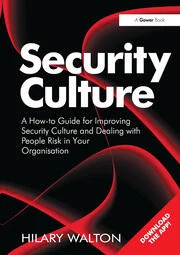
Security Culture: A How-to Guide for Improving Security Culture and Dealing with People Risk in Your Organisation

Security Culture: A How-to Guide for Improving Security Culture and Dealing with People Risk in Your Organisation

See More Products

Related Articles

  • Making a Difference in Fraud Detection

    See More
  • Driver’s License Scanner for Fraud Detection, Authentication

    See More
  • Getting Buy-In for Remote Access

    See More

Related Products

See More Products
  • security culture.webp

    Security Culture: A How-to Guide for Improving Security Culture and Dealing with People Risk in Your Organisation

  • threat and detection.jpg

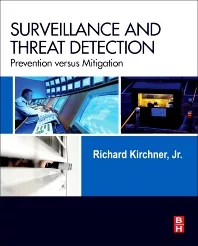
    Surveillance and Threat Detection

  • Photonic Sensing: Principles and Applications for Safety and Security Monitoring

See More Products

Events

View AllSubmit An Event
  • June 24, 2025

    Inside a Modern GSOC: How Anthropic Benchmarks Risk Detection Tools for Speed and Accuracy

    ON DEMAND: For today's security teams, making informed decisions in the first moments of a crisis is critical.
View AllSubmit An Event
×

Sign-up to receive top management & result-driven techniques in the industry.

Join over 20,000+ industry leaders who receive our premium content.

SIGN UP TODAY!
  • RESOURCES
    • Advertise
    • Contact Us
    • Store
    • Want More
  • SIGN UP TODAY
    • Create Account
    • eMagazine
    • Newsletter
    • Customer Service
    • Manage Preferences
  • SERVICES
    • Marketing Services
    • Reprints
    • Market Research
    • List Rental
    • Survey/Respondent Access
  • STAY CONNECTED
    • LinkedIn
    • Facebook
    • YouTube
    • X (Twitter)
  • PRIVACY
    • PRIVACY POLICY
    • TERMS & CONDITIONS
    • DO NOT SELL MY PERSONAL INFORMATION
    • PRIVACY REQUEST
    • ACCESSIBILITY

Copyright ©2025. All Rights Reserved BNP Media.

Design, CMS, Hosting & Web Development :: ePublishing