Integrated Solutions
Partners in Protection: How to Utilize a Canine Security Force
Organizations of all sizes are looking for innovative ways, including canine teams, to advance their security programs.
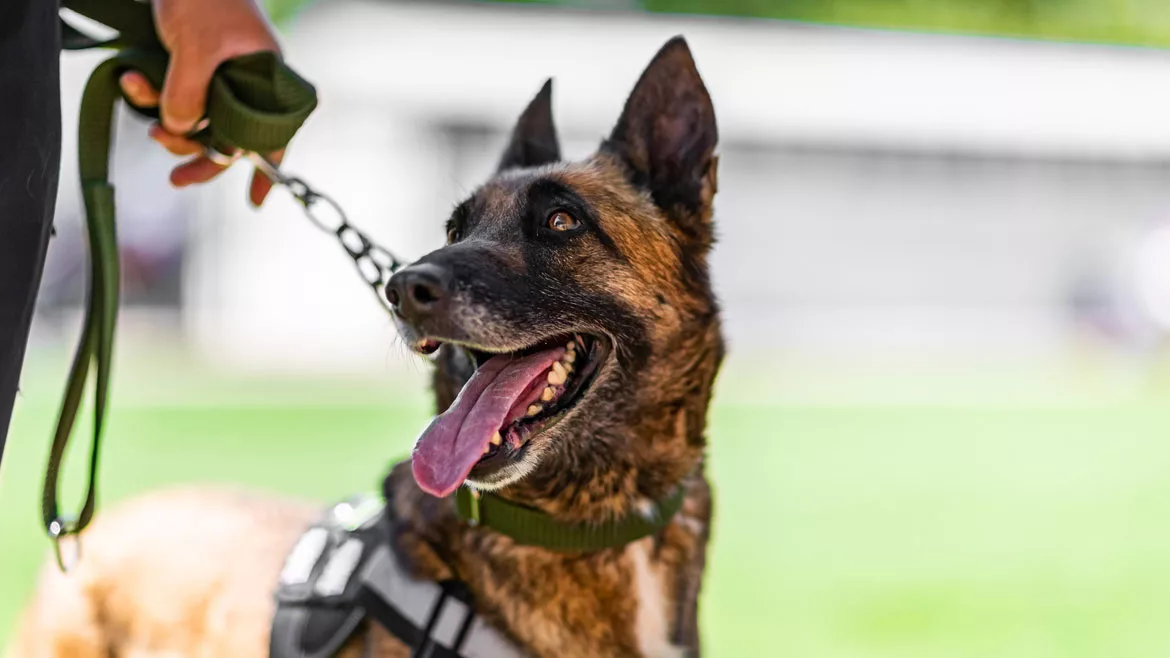
With an ever-evolving threat environment, organizations large and small are looking for innovative ways to advance their security programs. This can come in many forms — and not always technological. In fact, one of the most effective tactics employed by world-class security organizations is canine units. Canine teams are adaptable, mobile and capable of evolving with new threats in ways other resources cannot. Here’s a look at the resources necessary for establishing canine security teams, why canine units are an effective deterrent, and how to successfully deploy and utilize these partners in an effective security strategy.
Foundations for Success
Just like with any successful team, it all starts with the personnel. In the case of canine units, that means the dog and the handler. A healthy, capable dog that has been certified by a trusted training organization for the specific task at hand (detection of narcotics, firearms, explosives, etc.) is the foundation for success. Programs such as the North American Police Work Dog Association offer third-party validation that certifies dogs under a predefined testing methodology which requires the canines to show high performance and dependability.
Pairing the canine with the right handler is also critical. The job of a canine handler is a complex one that truly requires a unique level of commitment, because the canines live with their handlers. This ensures continuity in training and cements the bond between the handler and the dog. The handler develops an intuitive understanding of the dog’s unique behaviors, translating them into accurate, timely security decisions. This trust and communication between dog and handler define the effectiveness of the team. The most successful programs rely on professional handlers with law enforcement or military backgrounds. These professionals are trained to operate in high-stakes environments, remain calm under pressure, and apply disciplined judgment when subtle cues matter most.
One of the advantages of canines is their ability to deter bad actors. The mere presence of a canine is often enough to cause those with bad intentions to leave the area.
Ongoing training to keep skills sharp is also critical to success. Best-in-class canine programs ensure regular training of both the handler and the canine while incorporating qualified trainer oversight. Continual protocol updates to match the evolving threat landscape are also critical to a quality program.
Advantages of Canine Teams
Canine teams serve as a formidable security solution by combining high-speed detection with a powerful physical presence. Integrating adaptability, mobility and psychological deterrence offer a versatile defense that often proves more cost-effective than traditional security hardware and software. Core benefits of canine teams include:
Adaptability: The speed at which a dog can be trained to detect new odors — from weapons to narcotics — far outpaces a machine or software program’s ability to do the same job. This real-time learning capability is a distinct benefit that not only thwarts threats but can deliver tangible cost savings for organizations.
Mobility: Canines can move freely across environments under their handler’s supervision — from parking lots to lobbies to gathering spaces — extending the security perimeter outward. This mobility can provide earlier warning of possible threats and reduces the probability of threats penetrating a perimeter and accessing a target.
Canine deployments also introduce the element of surprise. Dogs may be stationed outside screening people one moment and screening vehicles in a parking garage the next, creating a random profile that is difficult for bad actors to anticipate.
Deterrence: One of the advantages of canines is their ability to deter bad actors. The mere presence of a canine is often enough to cause those with bad intentions to leave the area. A person with ill intentions might take their chances against other security measures but may think twice when they see a canine protecting a facility. This is why we are seeing many retail stores implement canine security measures as a response to smash-and-grab thefts and other threats that can be costly to both finances and reputation.
Return on Investment: While some might wonder whether adding a canine unit is worthy of budget dollars, consider that many organizations actually save money in the long run after establishing a canine team. Often, companies find that the advantages of canines listed above allows them to offset security cost in other areas. Organizations often see a meaningful return on investment and report an increased sense of security among their employees, customers and visitors.
Canine Security Continues to Evolve and Improve
With previously unknown threats cropping up constantly, organizations that partner with a trusted canine resource are effectively safeguarding against potential incidents. Recent threats that canines have been trained to alert to include various weapons components, fentanyl and synthetic drugs as well as lithium-ion batteries. Another modern threat is drone-related activity. While canines don’t detect drones in the air, they can detect certain payloads intended for drone deployment and secure drone staging areas. Working with a security partner that is constantly surveilling the threat landscape and adapting canine programs to address potential danger is key to ensuring companies are one step ahead with their security programs.
Canine teams can be a valuable component of a comprehensive security strategy. Paired with robust access control, comprehensive guard teams, intelligence analysis and other measures, a canine team can enhance effectiveness of a successful security program. The goal is not to make access more difficult for all, but to ensure the right people have access at the right time and for the right reasons.
As access needs keep changing, organizations that take an outside-in approach will be better able to adapt and do so confidently.
Looking for a reprint of this article?
From high-res PDFs to custom plaques, order your copy today!