Security Magazine logo
search
cart
facebook twitter linkedin youtube
  • Sign In
  • Create Account
  • Sign Out
  • My Account
Security Magazine logo
  • NEWS
    • Security Newswire
    • Technologies & Solutions
  • MANAGEMENT
    • Leadership Management
    • Enterprise Services
    • Security Education & Training
    • Logical Security
    • Security & Business Resilience
    • Profiles in Excellence
  • PHYSICAL
    • Access Management
    • Fire & Life Safety
    • Identity Management
    • Physical Security
    • Video Surveillance
    • Case Studies (Physical)
  • CYBER
    • Cybersecurity News
    • More
  • BLOG
  • COLUMNS
    • Career Intelligence
    • Cyber Tactics
    • Cybersecurity Education & Training
    • Leadership & Management
    • Security Talk
  • EXCLUSIVES
    • Annual Guarding Report
    • Most Influential People in Security
    • The Security Benchmark Report
    • Top Guard and Security Officer Companies
    • Top Cybersecurity Leaders
    • Women in Security
  • SECTORS
    • Arenas / Stadiums / Leagues / Entertainment
    • Banking/Finance/Insurance
    • Construction, Real Estate, Property Management
    • Education: K-12
    • Education: University
    • Government: Federal, State and Local
    • Hospitality & Casinos
    • Hospitals & Medical Centers
    • Infrastructure:Electric,Gas & Water
    • Ports: Sea, Land, & Air
    • Retail/Restaurants/Convenience
    • Transportation/Logistics/Supply Chain/Distribution/ Warehousing
  • EVENTS
    • Industry Events
    • Webinars
    • Solutions by Sector
    • Security 500 Conference
  • MEDIA
    • Interactive Spotlight
    • Photo Galleries
    • Podcasts
    • Polls
    • Videos
      • Cybersecurity & Geopolitical Discussion
      • Ask Me Anything (AMA) Series
  • MORE
    • Call for Entries
    • Classifieds & Job Listings
    • Newsletter
    • Sponsor Insights
    • Store
    • White Papers
  • EMAG
    • eMagazine
    • This Month's Content
    • Advertise
  • SIGN UP!
PhysicalPhysical SecurityVideo Surveillance

How to ensure security without compromising privacy
By Florian Matusek
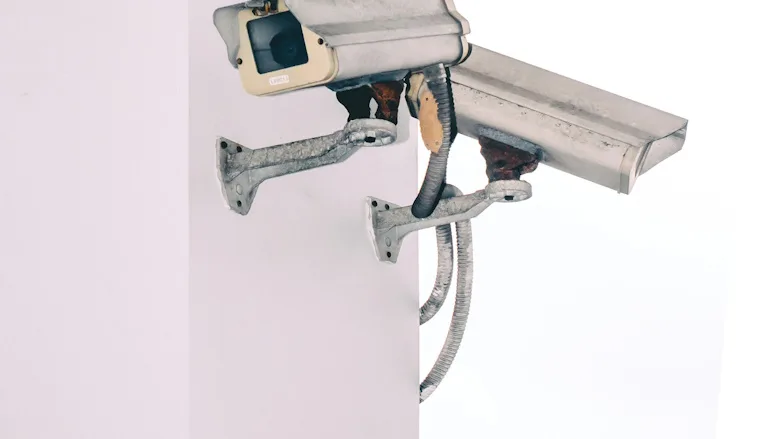
Security cameras on white word

Image via Unsplash

September 13, 2024

Most organizations collect and store a significant amount of sensitive information as part of their security operations. This includes personally identifiable information gathered through video surveillance, license plate readers, access control systems, and more. The data collected by these systems can help quickly resolve security concerns and reveal important operational insights.

Yet, privacy concerns regarding personal data are becoming more prominent. In Cisco’s 2022 Consumer Privacy Survey, three-quarters of respondents said they wouldn’t buy from a company they don’t trust with their data. Over 80% said they believe how an organization treats personal data indicates how the organization views and respects its customers. 

More governments around the world are also enacting new privacy laws that hold organizations accountable for how they collect, store, and access personal information. To date, 71% of countries have implemented legislation to restrict the collection, processing, and access to personal data. 

The good news is, security leaders don’t have to choose between protecting privacy and maintaining security. They can find the proper balance between securing an organization and protecting individual privacy. 

Privacy, by design

The gold standard for ensuring privacy is a framework developed by the former Privacy and Information Commissioner for Ontario, Dr. Ann Cavoukian. It’s called Privacy by Design and is the basis for the General Data Protection Regulation (GDPR) and other privacy laws. 

The Privacy by Design framework defaults to the highest levels of privacy protection. Security leaders can collect and store only the information needed and limit access to sensitive data. Security leaders can also fine-tune who can access sensitive data, define how long this data is held, and under what circumstances it’s deleted. 

For example, modern ALPR systems typically store only the ‘read value’ of a license plate. They don’t store the image of the plate itself and may offer the option to store information only if a plate matches with a hotlist. 

Having encryption built in is also an example of privacy by design. Captured data is automatically encrypted. Only operators with the correct credentials can view it. Some companies have a “four eyes” principle, requiring two people to provide credentials to access the information. 

Embracing Privacy by Design in  business is a win-win scenario. Security leaders ensure the highest levels of data protection for their organization, and their customers or visitors gain more control over their personal information. 

What about privacy masking?

For privacy related to video surveillance applications specifically, consider privacy masking. A privacy mask hides or anonymizes a part of the video. This is done to protect the privacy of individuals or sensitive information within a monitored space. 

By applying privacy masks, specific zones or objects can be intentionally obscured in the video feed, ensuring they’re not visible or recorded. This feature is important in environments where there are legal or ethical considerations regarding privacy, such as public spaces or even correctional facilities.

Let’s dive into the different types of privacy masking – static and dynamic.

Traditional privacy masking is static. The mask blocks defined areas in an image or live video feed. Typically, this is done directly on the camera and can be used, for example, to hide the keypad of a credit card terminal in a top-down view at a cash register.

Dynamic masking blurs or anonymizes all relevant objects or people in motion. Everything else in the video frame or image can be seen and monitored as usual. This ensures identities are protected while still allowing operators to see what’s happening in the video footage. A dynamic video anonymization solution is a more effective masking method for privacy protection. It completely removes individuals’ identities from masked video streams. 

Implementing privacy masking at your facilities is a good first step to proactively address concerns about video surveillance footage. But what happens when someone needs to share video with an external stakeholder? 

Redaction is a post-processing technique that is applied after the video has been recorded. It involves removing or blurring specific sections of the video during the review or export process. Redaction is often used when there’s a need to share video footage for evidence or public disclosure while safeguarding sensitive details.

Building trust and transparency

Security leaders want their customers to trust that their data is being handled properly. Three simple ways you can improve your privacy posture are: 

  • Make sure the only people who have access to sensitive data are those who really need it. 
  • Be selective about the data to collect, only collect and store the information that’s necessary. 
  • Develop an internal privacy policy that describes what data is collected, how it’s stored (and for how long), who can access this data, and under what circumstances.

Investing in physical security technology that is designed from the ground up with privacy in mind makes it easy to stay compliant with privacy best practices. These solutions give security leaders complete control over their data so that they can adjust protection methods and processes to meet evolving regulations. Security leaders can configure the system to define who has access to sensitive data and footage without slowing down response times or investigations. When these measures are in place, it’s a team effort to ensure security with strong privacy protection.

KEYWORDS: data privacy security video video camera video security

Share This Story

Looking for a reprint of this article?
From high-res PDFs to custom plaques, order your copy today!

Florian Matusek, Video Analytics Group Lead, Genetec Inc.

Recommended Content

JOIN TODAY
To unlock your recommendations.

Already have an account? Sign In

  • Cyber tech background

    Security’s Top Cybersecurity Leaders 2026

    Security magazine’s Top Cybersecurity Leaders 2026 award...
    Top Cybersecurity Leaders
  • Iintegration and use of emerging tools

    Future Proof Your Security Career with AI Skills

    AI’s evolution demands security leaders master...
    Columns
    By: Jerry J. Brennan and Joanne R. Pollock
  • The 2025 Security Benchmark Report

    The 2025 Security Benchmark Report

    The 2025 Security Benchmark Report surveys enterprise...
    The Security Benchmark Report
    By: Rachelle Blair-Frasier
Manage My Account
  • Security Newsletter
  • eMagazine Subscriptions
  • Manage My Preferences
  • Online Registration
  • Mobile App
  • Subscription Customer Service

More Videos

Sponsored Content

Sponsored Content is a special paid section where industry companies provide high quality, objective, non-commercial content around topics of interest to the Security audience. All Sponsored Content is supplied by the advertising company and any opinions expressed in this article are those of the author and not necessarily reflect the views of Security or its parent company, BNP Media. Interested in participating in our Sponsored Content section? Contact your local rep!

close
  • Northland Controls sponsored content
    Sponsored byNorthland Controls

    The Execution Gap: Why Great Security Design Doesn't Always Deliver Great Security

Popular Stories

Man in suit looking out window at city

Why GSOCs and Protective Intelligence Are the Cornerstone of Executive Protection

Photograph of apartment complex patios

Enhancing Residential Building Security

5 Minutes with Johnson

Can Organizations Trust Their Own AI?

Open filing cabinet

The Inside Job: Corporate Espionage Never Went Away

Person working on laptop

When Cyber Meets Physical: Rethinking Data Management for a New Threat Landscape

Events

September 10, 2026

So, You Have an Emergency Management Plan… Now What?

LIVE: September 10, 2026 at 2 PM EDT Turning an emergency management plan into an actionable program that prepares staff, students, and partners to respond effectively is a challenge. Learn to move beyond compliance and build a resilient school safety program.
September 22, 2026

How to Detect, Verify, and Respond to AI-Driven Disinformation

LIVE: September 22, 2026 at 2 PM EDT Identify emerging threats, validate information with confidence, and coordinate an effective response across your organization. Learn how to build the people, processes, and technology needed to improve speed-to-truth.

View All Submit An Event

Products

Security Culture: A How-to Guide for Improving Security Culture and Dealing with People Risk in Your Organisation

Security Culture: A How-to Guide for Improving Security Culture and Dealing with People Risk in Your Organisation

See More Products

Related Articles

  • Visitor's badge

    How to Ensure Security Barriers Don't Become Guest Barriers

    See More
  • Software-as-a-Service

    How to ensure your SaaS solutions are secure

    See More
  • security

    How to ensure weapons detection system compliance

    See More

Related Products

See More Products
  • security culture.webp

    Security Culture: A How-to Guide for Improving Security Culture and Dealing with People Risk in Your Organisation

  • school security.jpg

    School Security: How to Build and Strengthen a School Safety Program

  • 9780367030407.jpg

    National Security, Personal Privacy and the Law

See More Products
×

Sign-up to receive top management & result-driven techniques in the industry.

Join over 20,000+ industry leaders who receive our premium content.

SIGN UP TODAY!
  • RESOURCES
    • Advertise
    • Contact Us
    • Store
    • Want More
  • SIGN UP TODAY
    • Create Account
    • eMagazine
    • Newsletter
    • Customer Service
    • Manage Preferences
  • SERVICES
    • Marketing Services
    • Reprints
    • Market Research
    • List Rental
    • Survey/Respondent Access
  • STAY CONNECTED
    • LinkedIn
    • Facebook
    • YouTube
    • X (Twitter)
  • PRIVACY
    • PRIVACY POLICY
    • TERMS & CONDITIONS
    • DO NOT SELL MY PERSONAL INFORMATION
    • PRIVACY REQUEST
    • ACCESSIBILITY

Copyright ©2026. All Rights Reserved BNP Media, Inc. and BNP Media II, LLC.

Design, CMS, Hosting & Web Development :: ePublishing