Security Magazine logo
search
cart
facebook twitter linkedin youtube
  • Sign In
  • Create Account
  • Sign Out
  • My Account
Security Magazine logo
  • NEWS
    • Security Newswire
    • Technologies & Solutions
  • MANAGEMENT
    • Leadership Management
    • Enterprise Services
    • Security Education & Training
    • Logical Security
    • Security & Business Resilience
    • Profiles in Excellence
  • PHYSICAL
    • Access Management
    • Fire & Life Safety
    • Identity Management
    • Physical Security
    • Video Surveillance
    • Case Studies (Physical)
  • CYBER
    • Cybersecurity News
    • More
  • BLOG
  • COLUMNS
    • Career Intelligence
    • Cyber Tactics
    • Cybersecurity Education & Training
    • Leadership & Management
    • Security Talk
  • EXCLUSIVES
    • Annual Guarding Report
    • Most Influential People in Security
    • The Security Benchmark Report
    • Top Guard and Security Officer Companies
    • Top Cybersecurity Leaders
    • Women in Security
  • SECTORS
    • Arenas / Stadiums / Leagues / Entertainment
    • Banking/Finance/Insurance
    • Construction, Real Estate, Property Management
    • Education: K-12
    • Education: University
    • Government: Federal, State and Local
    • Hospitality & Casinos
    • Hospitals & Medical Centers
    • Infrastructure:Electric,Gas & Water
    • Ports: Sea, Land, & Air
    • Retail/Restaurants/Convenience
    • Transportation/Logistics/Supply Chain/Distribution/ Warehousing
  • EVENTS
    • Industry Events
    • Webinars
    • Solutions by Sector
    • Security 500 Conference
  • MEDIA
    • Interactive Spotlight
    • Photo Galleries
    • Podcasts
    • Polls
    • Videos
      • Cybersecurity & Geopolitical Discussion
      • Ask Me Anything (AMA) Series
  • MORE
    • Call for Entries
    • Classifieds & Job Listings
    • Continuing Education
    • Newsletter
    • Sponsor Insights
    • Store
    • White Papers
  • EMAG
    • eMagazine
    • This Month's Content
    • Advertise
  • SIGN UP!
PhysicalAccess ManagementPhysical SecurityVideo Surveillance

The role of access control systems in school safety

By Bruce Canal
Library shelf

Image via Unsplash

February 23, 2024

Campus security needs have evolved over the last decade. The flow of people and information is more dynamic, and the threats are often more complex. In addition to securing doors and buildings, schools also need to protect their networks and connected devices from cybersecurity risks.

Modern security systems are also much ‘smarter’ than in the past. They can provide actionable insights that help improve both safety and operations. Yet, this wealth of data also creates new obligations. Schools must protect the privacy and personal information of students and staff. 

Access control has always played a significant role in campus security. Now, that technology is changing, too. Modern access control systems can address physical security and also streamline the flow of people and the management of cardholder rights. 

Access control systems are used to enhance emergency response, restrict access to sensitive areas, manage visitors and more. They’re also being leveraged in novel ways, such as adapting to health mandates and gleaning insights into how spaces are used. Administrators use the data to reduce crowding or make better use of underutilized rooms.

Open, friendly — and secure

One challenge faced by many school campuses is that they’re designed to be open, welcoming and friendly. This can make common areas hard to secure; commonly called “soft targets” in the security management world.

However, innovations in security technology enable a more holistic approach to security. Technology can enhance security while reducing friction for students and staff while they go about their daily routines. 

Keyless access control systems are an example of technology that improves security as well as the on-campus experience. Keys are a liability. They can be lost, copied, or stolen. When new locks are required for keyed entry locations, the doors need to be cored. In comparison, electronic access control credentials can be switched on or off remotely and managed quickly, if necessary. 

Mobile access control credentials are also becoming especially popular. Key cards may get forgotten in a desk, but most teens and adults today are rarely without a phone in their pocket. In some schools, access control credentials now even double as campus ID cards. The bonus benefit of this technology is that it reduces waste from plastic ID cards, and student or staff adoption can be done virtually without visits to take photos or exchange personal data.

Overall, a unified software solution improves situational awareness and enables a more proactive approach to security. It’s easier than it used to be to set up video surveillance, IoT sensors, automatic license plate readers, or other devices to improve visibility in sprawling areas. When seamlessly unified with access control, they can provide a more comprehensive view of campus safety. 

Data, privacy and cybersecurity

Modern access control systems collect vast amounts of data. Some are even linked to databases with information about staff and students so that access can be adjusted to align with specific roles or areas of study. This makes it easy to keep track of who has accessed areas or retrace who has seen or shared certain files. It also means that campuses need to ensure there are strong measures in place to protect the privacy of individuals — including protecting sensitive data from cyber criminals or other cybersecurity threats.

Look for partners who take a strong and committed stance on privacy and cybersecurity. Protecting sensitive data should be the default. Access to personal information is only on an as-needed basis. 

On the cybersecurity side, ensure your software partner’s encryption is up to the highest standard. They should also have procedures in place to ensure that passwords and IP addresses are changed frequently and promote cybersecurity best practices in their operations. 

Creating a culture of security

In higher education, students have more complex access needs than those in K-12 schools. They may need to access labs, art studios, computer rooms, or areas like student common spaces. Plus, their access to these areas may change semester by semester as they add or drop certain courses. 

In K-12 schools, on the other hand, many schools are limiting the number of exterior doors and restricting entry. Visitors are vetted by a person at the office before being allowed to enter. There’s often an audio or video intercom at the door to make it easier for office staff to determine whether a person should be allowed in the building. 

Modern access control systems are easily capable of coping with challenges like irregular schedules and more stringent security requirements. However, they can’t prevent human error from introducing vulnerabilities into the system. If a student props open the lab door or the school secretary buzzes in a visitor without proper vetting, it undermines the security measures put in place. Campuses must foster a culture of security with all students and faculty. Help them understand why security measures are in place and encourage them to do their part to keep their campus secure. 

One aspect of a unified system that’s helpful to support staff is the ability to digitize standard operating procedures (SOPs). Security leaders can help staff follow best practices by integrating step-by-step instructions. The system can be configured to include prompts or reminders, send alerts, or trigger workflows when certain conditions are met. 

For example, when a secured door is left open for more than 10 minutes, the system could sound an alarm, notify a security officer, or take another appropriate action. With digitized SOPs, staff members don’t need to memorize what to do or search for an instruction manual. All steps are at their fingertips, programmed right into the system.

The best way to strengthen access control on campus

The best way schools can respond to evolving security needs is to transition to an open, scalable and unified solution. Many school campuses have older access control systems that only work with a short list of proprietary hardware. Having many disjointed systems across facilities makes it more difficult to secure the campus, remotely manage door schedules and cardholder rights, or monitor occupancy levels. Older proximity cards and readers also increase cybersecurity risks. 

A complete rip-and-replace of a campus access control system is an expensive and complicated undertaking. Yet, legacy systems may have dangerous vulnerabilities that put the campus at risk. 

A practical solution is to choose open-architecture security software that works with a wide variety of devices. Security leaders may discover that they can continue using some of their hardware and cabling.

KEYWORDS: access control access management school access control school safety school security

Share This Story

Looking for a reprint of this article?
From high-res PDFs to custom plaques, order your copy today!

Bruce A. Canal, CPP, is Executive Lead – Education at Genetec, Inc.

Recommended Content

JOIN TODAY
To unlock your recommendations.

Already have an account? Sign In

  • Iintegration and use of emerging tools

    Future Proof Your Security Career with AI Skills

    AI’s evolution demands security leaders master...
    Security Leadership and Management
    By: Jerry J. Brennan and Joanne R. Pollock
  • The 2025 Security Benchmark Report

    The 2025 Security Benchmark Report

    The 2025 Security Benchmark Report surveys enterprise...
    The Security Benchmark Report
    By: Rachelle Blair-Frasier
  • The Most Influential People in Security 2025

    Security’s Most Influential People in Security 2025

    Security Magazine’s 2025 Most Influential People in...
    Most Influential People in Security
    By: Security Staff
Manage My Account
  • Security Newsletter
  • eMagazine Subscriptions
  • Manage My Preferences
  • Online Registration
  • Mobile App
  • Subscription Customer Service

More Videos

Sponsored Content

Sponsored Content is a special paid section where industry companies provide high quality, objective, non-commercial content around topics of interest to the Security audience. All Sponsored Content is supplied by the advertising company and any opinions expressed in this article are those of the author and not necessarily reflect the views of Security or its parent company, BNP Media. Interested in participating in our Sponsored Content section? Contact your local rep!

close
  • critical event management
    Sponsored byEverbridge

    Why a Unified View Across IT, Continuity, and Security Makes or Breaks Crisis Response

  • Charlotte Star Room
    Sponsored byAMAROK

    In an Uncertain Economy, Security Is a Necessity - Not an Afterthought

  • Sureview screen
    Sponsored bySureView Systems

    The Evolution of Automation in the Command Center

Popular Stories

Cybersecurity trends of 2025

3 Top Cybersecurity Trends from 2025

Red laptop

Security Leaders Discuss SitusAMC Cyberattack

Green code

Logitech Confirms Data Breach, Security Leaders Respond

Neon human and android hands

65% of the Forbes AI 50 List Leaked Sensitive Information

The Louvre

After the Theft: Why Camera Upgrades Should Begin With a Risk Assessment

Top Cybersecurity Leaders

Events

September 18, 2025

Security Under Fire: Insights on Active Shooter Preparedness and Recovery

ON DEMAND: In today’s complex threat environment, active shooter incidents demand swift, coordinated and well-informed responses.

December 11, 2025

Responding to Evolving Threats in Retail Environments

Retail security professionals are facing an increasingly complex array of security challenges — everything from organized retail crime to evolving cyber-physical threats and public safety concerns.

View All Submit An Event

Products

Security Culture: A How-to Guide for Improving Security Culture and Dealing with People Risk in Your Organisation

Security Culture: A How-to Guide for Improving Security Culture and Dealing with People Risk in Your Organisation

See More Products

Related Articles

  • School hallway

    Texas requires access control; school safety improvements this summer

    See More
  • Real-time notifications

    The Important Role of Automated Notification Systems in an Effective Security Solution

    See More
  • Electronic Access Control Systems: The Foundation of Your PSIM

    See More

Related Products

See More Products
  • 150 things.jpg

    The Handbook for School Safety and Security

  • school security.jpg

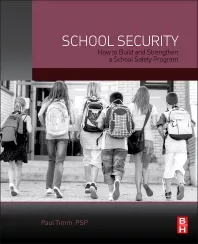
    School Security: How to Build and Strengthen a School Safety Program

  • Physical Security and Safety: A Field Guide for the Practitioner

See More Products

Events

View AllSubmit An Event
  • July 17, 2025

    Tech in the Jungle: Leveraging Surveillance, Access Control, and Technology in Unique Environments

    ON DEMAND: What do zebras, school groups and high-tech surveillance have in common? They're all part of a day’s work for the security team at the Toledo Zoo.
View AllSubmit An Event
×

Sign-up to receive top management & result-driven techniques in the industry.

Join over 20,000+ industry leaders who receive our premium content.

SIGN UP TODAY!
  • RESOURCES
    • Advertise
    • Contact Us
    • Store
    • Want More
  • SIGN UP TODAY
    • Create Account
    • eMagazine
    • Newsletter
    • Customer Service
    • Manage Preferences
  • SERVICES
    • Marketing Services
    • Reprints
    • Market Research
    • List Rental
    • Survey/Respondent Access
  • STAY CONNECTED
    • LinkedIn
    • Facebook
    • YouTube
    • X (Twitter)
  • PRIVACY
    • PRIVACY POLICY
    • TERMS & CONDITIONS
    • DO NOT SELL MY PERSONAL INFORMATION
    • PRIVACY REQUEST
    • ACCESSIBILITY

Copyright ©2025. All Rights Reserved BNP Media.

Design, CMS, Hosting & Web Development :: ePublishing