We talk to David “moose” Wolpoff, Chief Technology Officer (CTO) and co-founder of Randori, about Black Hats’ processes for finding and exploiting weaknesses in software.
New York Governor Andrew M. Cuomo and Chancellor Jim Malatras announced the launch of a State University of New York System (SUNY) system-wide COVID-19 case tracker dashboard. The centralized dashboard will provide real time, up-to-date information on COVID-19 cases, testing, and quarantine and isolation space availability across SUNY's 64 colleges and universities to more efficiently monitor, respond to, and contain the virus.
As businesses and schools seek to bring people back to brick and mortar establishments, it’s going to be important to make customers, students and teachers feel comfortable, in addition to simply following guidelines. Customers are going to have to feel that it’s worth going out, versus shopping on-line. For retailers, that comfort might in part be derived from visible occupancy monitoring efforts and automated voice-down messages when people aren’t wearing masks or keeping their distance.
In late February 2020, news broke in the United States that the once faraway threat of a “novel coronavirus” had spread to U.S. soil. As COVID-19 case numbers in major cities grew, stay-at-home orders were put in place, businesses closed, restaurants shifted to take-out only, and retailers adopted curbside service. All of this took place to slow the spread of COVID-19. Meanwhile, however, hospitals remained open — accepting new patients at the direction of the U.S. Center for Disease Control and Prevention (CDC) and working diligently to adhere to new safety guidelines. During virus, or any pandemic outbreaks, we are acutely reminded of our essential frontline healthcare workers, the critical need to enhance their overall safety, security, and to be as efficient as possible when communicating vital information.
Integrated into one of the most complex industries, blockchain technology can help legislation catch up with the exciting developments in cannabis medicine. At the same time, implementing blockchain in pharmacies can help provide patients with a wider variety of treatment options. In a fast-paced industry, where innovation drives growth, blockchain is the next step in encouraging access and security for cannabinoid-based medicine.
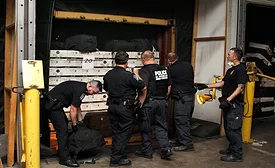
The coronavirus pandemic has triggered an unprecedented chain reaction of border closures around the world. This truly is an extraordinary situation, and many countries have also grappled with lack of information, resources and coordination between relevant agents and authorities. These operational issues have raised questions globally about whether border controls are effective in containing such outbreaks, how prepared border agencies were for the emergency and what this will mean for border management in a post-pandemic world.
The Trump Administration announced the first cybersecurity policy for systems used in outer space and near space. Space Policy Directive- 5 (SPD-5) makes clear the lead role the Department of Homeland Security (DHS) and the Cybersecurity and Infrastructure Security Agency (CISA) have in enhancing the nation’s cyber defenses in space, notably on key systems used for global communications, navigation, weather monitoring, and other critical services.
According to the latest white paper from Keeper Security, "Understanding & Preventing Ransomware Attacks," ransomware attacks have become increasingly common for three reasons.
The Indiana Secured School Board has approved more than $19 million in matching state grant funds. The $19.4 million in awards allows the Board to fully fund all eligible, top-priority projects identified by 418 schools in their applications to the Secured School Safety Grant program (SSSG). In addition, the Board fully funded all school threat assessment projects, as well as eligible projects geared toward implementing health and wellness support services for parents and students.
The Multi-State Information Sharing and Analysis Center (MS-ISAC) and the Downstream Natural Gas Information Sharing and Analysis Center (DNG-ISAC) have signed a memorandum of understanding (MOU) to share cyber threat information that will enable stronger protection for both sectors.
 RSS
RSS