Security Magazine logo
search
cart
facebook twitter linkedin youtube
  • Sign In
  • Create Account
  • Sign Out
  • My Account
Security Magazine logo
  • NEWS
    • Security Newswire
    • Technologies & Solutions
  • MANAGEMENT
    • Leadership Management
    • Enterprise Services
    • Security Education & Training
    • Logical Security
    • Security & Business Resilience
    • Profiles in Excellence
  • PHYSICAL
    • Access Management
    • Fire & Life Safety
    • Identity Management
    • Physical Security
    • Video Surveillance
    • Case Studies (Physical)
  • CYBER
    • Cybersecurity News
    • More
  • BLOG
  • COLUMNS
    • Career Intelligence
    • Cyber Tactics
    • Cybersecurity Education & Training
    • Leadership & Management
    • Security Talk
  • EXCLUSIVES
    • Annual Guarding Report
    • Most Influential People in Security
    • The Security Benchmark Report
    • Top Guard and Security Officer Companies
    • Top Cybersecurity Leaders
    • Women in Security
  • SECTORS
    • Arenas / Stadiums / Leagues / Entertainment
    • Banking/Finance/Insurance
    • Construction, Real Estate, Property Management
    • Education: K-12
    • Education: University
    • Government: Federal, State and Local
    • Hospitality & Casinos
    • Hospitals & Medical Centers
    • Infrastructure:Electric,Gas & Water
    • Ports: Sea, Land, & Air
    • Retail/Restaurants/Convenience
    • Transportation/Logistics/Supply Chain/Distribution/ Warehousing
  • EVENTS
    • Industry Events
    • Webinars
    • Solutions by Sector
    • Security 500 Conference
  • MEDIA
    • Interactive Spotlight
    • Photo Galleries
    • Podcasts
    • Polls
    • Videos
      • Cybersecurity & Geopolitical Discussion
      • Ask Me Anything (AMA) Series
  • MORE
    • Call for Entries
    • Classifieds & Job Listings
    • Newsletter
    • Sponsor Insights
    • Store
    • White Papers
  • EMAG
    • eMagazine
    • This Month's Content
    • Advertise
  • SIGN UP!
PhysicalPhysical Security

Object-Specific Protection: The Non-Negotiable Foundation of Art and Asset Security

By Bill Anderson
Art museum
Andrew Faires via Unsplash
March 10, 2026

The heist from the Louvre Museum in Paris more than five months ago was a jolt to museums everywhere. But it only shone a harsher light on numerous other thefts in the 15 months prior that exposed persistent gaps in security. In the aftermath, the art and security communities have debated which advanced technologies might have prevented these losses. 

Artificial intelligence-driven video analytics, perimeter intrusion detection, hardened construction, and integrated access control all reduce overall risk when properly specified and maintained. Dealers and integrators know these systems well. But even the most comprehensive facility-wide deployments continue to fail in a predictable way: high-value objects are removed without triggering alarms, without forced entry, and often evading immediate detection.

Without object-specific protection as a primary layer, even the most comprehensive security environment contains a critical vulnerability. While perimeter systems, motion detection, and predictive analytics create zones of awareness and response around assets, only object-focused security addresses the fundamental weakness: the moments when an adversary physically interacts with the object.

In many widely discussed museum thefts, perimeter cameras may have detected anomalous activity, predictive tools might have flagged elevated risk, and reinforced glazing could have delayed entry. In several cases, a delayed or fragmented response proved decisive. But history shows that many art thefts do not follow this pattern. 

The majority of art thefts occur not during dramatic nighttime break-ins, but during normal operating hours. Private residences — where most art thefts occur — are typically accessible to staff, contractors, and guests throughout the day. Museums, libraries, and commercial facilities face similar risks: thefts carried out by individuals who blend into ordinary foot traffic and exploit trust rather than force.

At a time when many museums struggle to balance operational costs and staffing, as well as the acquisitions that keep the public returning, large-scale architectural upgrades and advanced analytics are often financially out of reach. Providing security on every single item in the collection is not. It is, by contrast, scalable, universal in its application and it doesn’t depend on a facility’s architecture or the sophistication of its surveillance infrastructure. A properly secured object is protected in the same way whether it resides in a major museum, a regional historical society, or a private residence

The Object Is the Target

The fundamental flaw in space-based security models is that they protect everything equally — and therefore nothing specifically. A painting, sculpture, artifact, or rare object is not merely “within” a protected environment; it is the reason the environment exists. The threat actor’s objective is not to enter the building, but to access and remove the object.

Object-specific protection addresses this reality directly. By monitoring the object itself — its position, orientation, attachment, or condition — security becomes focused on the actual target of theft. Any unauthorized interaction, movement, or tampering generates an immediate, unambiguous alert, regardless of whether other systems perceive a broader security event. 

Complementing, Not Replacing, Other Systems

Specific protection on all valuable assets does not replace perimeter security, surveillance, or response protocols — it makes them relevant. Perimeter systems deter and delay. Structural hardening buys time. Video enables verification and investigation. Communication and response determine outcomes. Object-specific protection ensures that these layers are triggered by the event that matters most.

For institutions, collectors, and the professionals tasked with protecting irreplaceable assets, the conclusion is unavoidable: object-specific protection is not an enhancement or an upgrade. It is the foundation upon which all other security measures must rest.

Recommendations for Implementation

  • Whether in a museum or private residence, conduct an inventory assessment that identifies every item requiring protection and evaluate current object-specific measures. Many organizations discover they’ve invested heavily in facility-wide systems while leaving individual objects surprisingly vulnerable.
  • Establish object-specific protection as a baseline requirement rather than an optional enhancement. Before considering sophisticated perimeter or analytical systems, ensure every valuable item has appropriate physical security commensurate with its value and vulnerability.
  • Prioritize solutions that travel with objects. Security measures that protect items during loan periods and temporary exhibitions multiply their value across multiple scenarios and locations.
  • Integrate individualized protection into procurement and collections management processes. Just as we wouldn’t acquire artwork without considering climate control, we shouldn't accept items into collections without planning for their specific physical security.

The most advanced security technology in the world cannot recover an asset that was inadequately protected at the most critical moment. Object-specific protection is not everything — but it must be the first thing. If security directors can learn anything from the Louvre heists, it’s that once someone touches an object, every other layer of security has already failed.

KEYWORDS: asset protection museum security system integration theft prevention

Share This Story

Looking for a reprint of this article?
From high-res PDFs to custom plaques, order your copy today!


Bill anderson headshot

Bill Anderson is the Founder and Managing Partner of Art Guard, a New York–based company providing advanced technologies to protect fine art and valuable objects from theft.

Recommended Content

JOIN TODAY
To unlock your recommendations.

Already have an account? Sign In

  • Cyber tech background

    Security’s Top Cybersecurity Leaders 2026

    Security magazine’s Top Cybersecurity Leaders 2026 award...
    Security Leadership and Management
  • Iintegration and use of emerging tools

    Future Proof Your Security Career with AI Skills

    AI’s evolution demands security leaders master...
    Career Intelligence
    By: Jerry J. Brennan and Joanne R. Pollock
  • The 2025 Security Benchmark Report

    The 2025 Security Benchmark Report

    The 2025 Security Benchmark Report surveys enterprise...
    The Security Benchmark Report
    By: Rachelle Blair-Frasier
Manage My Account
  • Security Newsletter
  • eMagazine Subscriptions
  • Manage My Preferences
  • Online Registration
  • Mobile App
  • Subscription Customer Service

More Videos

Popular Stories

Cables plugged in

Chinese Supercomputer Allegedly Hacked, 10 Petabytes of Data Stolen

Man on laptop

Healthcare Executives Face a New Era of Personal Risk

Abstract shape

What Are Security Experts Saying About Claude Mythos and Project Glasswing?

Executive Protection

Beyond the Bodyguard: Why Executive Protection Requires a New Playbook

Man walking with briefcase

The Rising Tide of Executive Protection: Corporations Ramp Up Security in an Era of Heightened Threats

SEC 2026 Benchmark Banner

Events

April 30, 2026

Building a Campus-Wide Culture of Security and Shared Responsibility

In today’s higher education environment, where institutions face evolving and multifaceted incidents, safety must be embedded into the fabric of campus culture. Learn strategies for generating collective buy-in from faculty, staff, students and senior leadership. 

May 7, 2026

Beyond Cameras: Revolutionizing Perimeter Security with LiDAR, AI and Digital Twins

In this webinar, we will explore how LiDAR‑based detection, AI‑powered analytics and digital twins are transforming the future of perimeter protection with 3D detection, real-time situational awareness and unified operational views.

View All Submit An Event

Products

Security Culture: A How-to Guide for Improving Security Culture and Dealing with People Risk in Your Organisation

Security Culture: A How-to Guide for Improving Security Culture and Dealing with People Risk in Your Organisation

See More Products
SEC 2026 Top Cybersecurity Leaders

Related Articles

  • Four pillars

    Why data protection is non-negotiable for every business

    See More
  • mark stinde

    Mark Stinde named VP of Asset Protection at the Kroger Company

    See More
  • The Art of Museum Protection

    See More

Related Products

See More Products
  • Physical Security and Environmental Protection

  • Physical Security and Safety: A Field Guide for the Practitioner

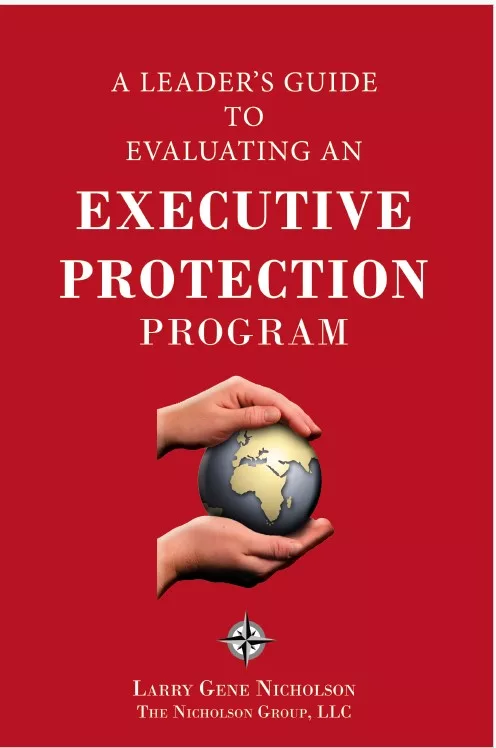
  • A Leaders Guide Book Cover_Nicholson_29Sept2023.jpg

    A Leader’s Guide to Evaluating an Executive Protection Program

See More Products
×

Sign-up to receive top management & result-driven techniques in the industry.

Join over 20,000+ industry leaders who receive our premium content.

SIGN UP TODAY!
  • RESOURCES
    • Advertise
    • Contact Us
    • Store
    • Want More
  • SIGN UP TODAY
    • Create Account
    • eMagazine
    • Newsletter
    • Customer Service
    • Manage Preferences
  • SERVICES
    • Marketing Services
    • Reprints
    • Market Research
    • List Rental
    • Survey/Respondent Access
  • STAY CONNECTED
    • LinkedIn
    • Facebook
    • YouTube
    • X (Twitter)
  • PRIVACY
    • PRIVACY POLICY
    • TERMS & CONDITIONS
    • DO NOT SELL MY PERSONAL INFORMATION
    • PRIVACY REQUEST
    • ACCESSIBILITY

Copyright ©2026. All Rights Reserved BNP Media, Inc. and BNP Media II, LLC.

Design, CMS, Hosting & Web Development :: ePublishing