New data from CyberSeek, America’s top free resource on the U.S. cybersecurity job market, shows that the shortage of cyber professionals is approaching a danger level, putting digital privacy and infrastructure at greater risk.
The Cybersecurity and Infrastructure Security Agency (CISA) and government and industry members of the Information and Communications Technology (ICT) Supply Chain Risk Management (SCRM) Task Force released an analysis report on the impact of COVID-19 on global supply chains. Building A More Resilient ICT Supply Chain: Lessons Learned During The COVID-19 Pandemic examines how ICT supply chains have been logistically impacted by the pandemic and provides practical recommendations to increase supply chain resiliency from future risks.
Cal State San Bernardino’s Cybersecurity Center will host the annual Center of Academic Excellence (CAE) in Cybersecurity Symposium this year to be held virtually Nov. 19-20.
On November 4, 2020, the California Privacy Rights Act (CPRA) passed, with a decisive majority of Californians (56% according to the Secretary of State's web site) supporting the measure to strengthen consumer privacy rights. Here, we talk to Heather Federman, Vice President of Privacy & Policy at BigID, about this sweeping privacy law that will set the bar for privacy rights for the rest of the nation.
Overlooked risks can cost companies millions in financial and reputational damage — but existing commercial threat intelligence solutions often lack data coverage, especially from these alternative web spaces.
How does this impact corporate security operations, and how can data coverage gaps be addressed?
Data must be protected. There’s no argument about that. Solutions to protect data at rest and data in motion have been around for decades. The problem is that for data to be useful, it has to be processed, and, until recently, processing left data wide open to theft or attack.
The U.S. Fire Administration (USFA) report, “Firefighter Fatalities in the United States in 2019,” revealed that 62 firefighters died from injuries sustained while on duty, 22 less than the 2018 total of 84 firefighters.
For most of this year, COVID-19 has dominated and disrupted our normal business routines, and as we relocated to avoid the first wave of the virus, the hackers and thieves weren’t far behind. As people began working remotely in large numbers, the number of unsecured remote desktops soared, as did brute-force attacks against those desktops.
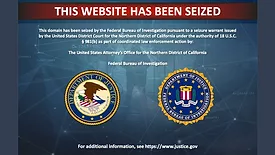
The United States has seized 27 domain names that Iran’s Islamic Revolutionary Guard Corps (IRGC) unlawfully used to further a global covert influence campaign
Japanese gaming giant Capcom has disclosed a data breach which led to unauthorized access of some files and systems. The developer claimed that the incident impacted email and file servers, among other systems.
 RSS
RSS