The Cybersecurity and Infrastructure Security Agency (CISA) recently launched a webpage to promote the rebranded Tribal Emergency Communications Program, which supports direct consultation to tribes and Alaska Native communities to strengthen public safety communications.
The Transportation Security Administration (TSA) announced the new members of the Aviation Security Advisory Committee (ASAC), which includes the appointment of four new members, the reappointment of 15 members, and the full list of other committee members serving their term.
Chicago, Ill. Mayor Lori E. Lightfoot and Chicago Police Department (CPD) Superintendent David O. Brown announced the expansion of the Neighborhood Policing Initiative to the 9th (Deering), 10th (Ogden) and 11th (Harrison) District. As part of the expanded initiative, each district will rollout new District Coordination Officers (DCOs) this fall, who will work directly with community members to resolve public safety issues through collaboration and remedy neighborhood issues with the help of beat officers, detectives, aldermen, area businesses and sister agencies. To ensure DCOs are fully integrated in the neighborhoods they serve, the Department is also launching a new community-immersion training program, completing one of Mayor Lightfoot’s 90-day reforms announced in early June.
During an emergency special meeting, members of the Detroit Federation of Teachers (DFT) voted to authorize a potential safety strike aimed at pressing the Detroit, Mich. Public Schools Community District to implement basic science-based safety protocols before schools reopen during the continuing coronavirus pandemic.
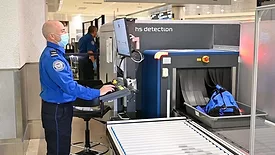
Security screening at Miami International Airport in the post-COVID-19 era just got easier, thanks to the installation of seven state-of-the-art computed tomography (CT) scanners at six Transportation Security Administration (TSA) checkpoints.
The US Government Accountability Office (GAO) reviewed how 3 agencies—the Federal Aviation Administration, Indian Health Service, and the Small Business Administration—used cybersecurity tools that identify the hardware and software on their networks and check for vulnerabilities and insecure configurations.
IBM, the owner of the Weather Channel mobile app, has reached a settlement with the Los Angeles city attorney’s office after a 2019 lawsuit alleged that the app was deceiving its users in how it was using their geolocation data.
The Election Infrastructure Government Coordinating Council (GCC) held its summer meeting virtually to discuss Election Day preparations and other areas of coordination between the federal government and state and local election officials.
 RSS
RSS