The Behavioral Health Crisis Support Team (BHCST) pairs public safety officers with mental health clinicians to respond to behavioral health crises on Johns Hopkins University's Homewood campus.
Detroit Alerts 365 will send emergency alerts to residents based on their location, including notifications about missing persons, severe weather and other emergencies.
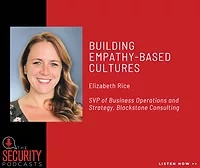
Listen to Elizabeth Rice, Senior Vice President of Business Operations and Strategy at Blackstone Consulting, as she sits down with Security’s Layan Dahhan to talk about her career journey and the importance of culture in the workplace.
The NTT 2021 Global Workforce Report found disparities between C-suite and operations staff perceptions of remote and in-person work, as well as the level of employee satisfaction in their organizations.
Light detection and ranging (LiDAR) technology has a range of access control benefits, from crowd density monitoring to determining the flow of traffic.
Review five studies concerning workplace violence (WPV) in healthcare settings to determine next steps for the security industry in raising worker morale and mitigating the risk of WPV in hospitals.
Eight concertgoers passed away due to a crowd surge at the Astroworld music festival in Houston, Texas. The tragic event highlights the duty of care that event organizations have to maintain safety at their venues.
The U.S. Department of Homeland Security (DHS) Science and Technology Directorate (S&T) announced the selection of Northeastern University to lead a consortium of U.S. academic institutions and other partners for a new Center of Excellence for Engineering Secure Environments from Targeted Attacks (ESE).
Security magazine sits down with Blackstone Consulting's Senior Vice President of Business Operations and Strategy
Elizabeth Rice to discuss building operational models and the importance of a positive, empathy-based workplace culture.
 RSS
RSS