A preliminary study by the National Institute of Standards and Technology (NIST) evaluates the performance of facial recognition algorithms on faces partially covered by protective masks.
United States Attorney for Western District of Pennsylvania, U.S. Immigration and Customs Enforcement (ICE) Homeland Security Investigations (HSI) Pittsburgh, and the Federal Bureau of Investigation (FBI) Pittsburgh announced the creation of a new anti-human trafficking coalition, Operation T.E.N. (Trafficking Ends Now), comprised of federal, state and local law enforcement agencies as well as non-governmental organizations.
Amtrak announced new safety measures, including providing boarding information through push notification via the Amtrak app, increasing the number of personnel and by adding additional cleanliness and convenience measures.
A new study conducted by researchers from Xavier University, Northern Kentucky University and Seattle University has found that for students in 4th-12th grade, active assailant training provided more feelings of safety than fear, worry, or concern.
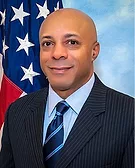
Derek Fuller, a 25-year law enforcement veteran and former chief of the FBI Police Department, has been named the new chief of the Alamo Colleges Police Department.
Alabama Governor Kay Ivey awarded $70 million to support the Alabama State Department of Education’s (ALSDE) Education Health and Wellness Grant Program and $100 million to support the Educational Remote Learning Devices Grant Program.
Coastal communities across the U.S. continued to see record-setting high-tide flooding last year, forcing their residents and visitors to deal with flooded shorelines, streets and basements — a trend that is expected to continue into 2021. The elevated water levels affected coastal economies, tourism and crucial infrastructure like waste and stormwater systems, according to a new NOAA report.
 RSS
RSS