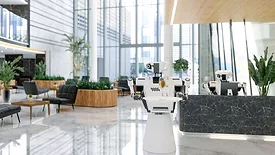
Integrated Solutions A new era in property protection: Security officers & security robots Integrating human and autonomous guarding into a comprehensive security system can enhance protection. Steve Reinharz April 6, 2023 It is possible for human security guards and autonomous security robots to coexist and collaborate in order to provide maximum protection for properties.Read More
48% of security leaders hesitant to adapt to post-quantum algorithms Security Staff March 23, 2023 According to research, the rise of machine identities has created visibility and management challenges for public key infrastructures (PKI).Read More
80% of security leaders predict increase in cybersecurity automation Security Staff March 22, 2023 Research finds that security leaders are dissatisfied with the use of automation within their company's security operation centers (SOCs).Read More
Cybersecurity threats to medical devices are a growing concern Richard Staynings March 21, 2023 Healthcare needs a security strategy that involves the implementation of controls that compensate for unpatched vulnerabilities of at-risk devices.Read More
Will AI replace humans in phishing attacks? Rachelle Blair-Frasier March 17, 2023 Recent research from Hoxhunt analyzed effectiveness of ChatGPT-generated phishing attacks showing people are still better at deceiving other people.Read More
Global News How do enterprises use video surveillance? Madeline Lauver March 14, 2023 The Video Surveillance Report 2022 from IFSEC Global identified artificial intelligence (AI) as a key trend in video surveillance. Read More
Cyber Tactics Reflections on 35 years in the trenches To stay ahead of our adversaries, cybersecurity leaders must continually innovate and prioritize proactive security. John McClurg March 10, 2023 Columnist John McClurg shares lessons learned from his 35-year career as a cybersecurity leader, foregrounding the importance of cyber innovation.Read More
Create a P.L.A.N. for security investigations Austin Perez March 8, 2023 Corporate security investigations that leverage planning and technology are an important aspect of robust enterprise security programs.Read More
Product Spotlight ISC West 2023 product preview From robotic visitor management to mobile access control credentials, Security magazine spotlights solutions from companies at ISC West 2023. Madeline Lauver March 6, 2023 From robotic visitor management to mobile access control credentials, Security magazine spotlights solutions from companies at ISC West 2023.Read More
Will AI make organizations more secure? Monica Oravcova March 6, 2023 With both good and bad actors using AI, enterprises will need the best solution to defend themselves. It's an arms race as to who has the best tool. Read More