Jeff Spoerndle, Vice President of BEST Crowd Management, who has led efforts to ensure training is provided to employees on emergency response in a high-threat situation, discusses the potential threat of domestic violent extremism at large events and critical safety considerations for venues.
Antisemitic incidents remained at a historically high level across the United States in 2020, with a total of 2,024 incidents of assault, harassment and vandalism reported to ADL (the Anti-Defamation League). While antisemitic incidents declined by 4 percent after hitting an all-time high in 2019, last year was still the third-highest year for incidents against American Jews since ADL started tracking such data in 1979.
Marking the 40th Anniversary of National Crime Victims’ Rights Week (NCVRW), the Justice Department’s Hate Crimes Enforcement and Prevention Initiative announced newly translated hate crimes resources in eight languages for the department’s hate crimes website, www.justice.gov/hatecrimes.
Though extremism is not a new concept, the rise in radical and extremist ideals and incidents in recent years, puts this risk on the radar of security leaders across all market sectors. How can enterprise security professionals follow and stay on top of the threat of extremism and radicalism? With a strong understanding of their organization’s risk profile, security leaders can thwart potential incidents related to extremism that could potentially harm individuals, company assets, brand reputation or more.
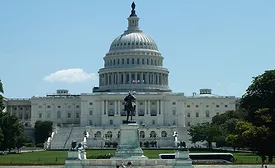
The aftermath of the Jan. 6 attack on the United States Capitol has led to the emergence of a new broad, anti-government conspiracy theory spreading on social media that is dovetailing with anti-vaccination and anti-public health extremism, according to a new report by Rutgers’ Miller Center for Community Protection and Resilience.
CEO and co-founder of social media platform Gab said the site had suffered a data breach. WIRED reported that the far-right platform had more than 70 gigabytes of data, and 40 million posts, leaked by a hacktivist who self-identifies as "JaXpArO and My Little Anonymous Revival Project."
The Department of Homeland Security will allocate $1.8 billion in grants to state and local jurisdictions to protect against terrorism and other disasters, with at least $77 million specifically going toward combatting domestic violent extremism.
Some 200 individuals have been charged with federal offenses connected to the siege at the U.S. Capitol on January 6, 2021. Among them are at least 15 examples of family affiliated extremism. These instances include: five sets of husbands and wives; two cases of fathers and sons, mothers and sons, brothers, and cousins; and an instance of father/daughter and brother/sister participation. Although of a different strain and less serious offenses—none specifically terrorism nor involving murder —such kin-connected radicalism is neither a new phenomenon nor one unique to the United States or elsewhere.
Reporter Jeffrey Decker takes Security readers through the physical security at this year’s 2021 Presidential Inauguration, as well as comparing and contrasting the security measures with previous inaugurations.