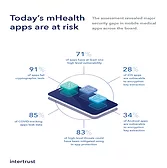
According to Intertrust's 2020 Security Report on Global mHealth Apps, 71% of healthcare and medical apps have at least one serious vulnerability that could lead to a breach of medical data. The report investigated 100 publicly available global mobile healthcare apps across a range of categories—including telehealth, medical device, health commerce, and COVID-tracking—to uncover the most critical mHealth app threats.
nVisium released the findings of their recent research which explores the current state of cybersecurity awareness and security training initiatives within today’s remote workforce. The research reveals that only 35% of respondents classify security awareness training as a ‘top priority’ while working remotely, and nearly half say that their DevOps teams are not experts in understanding how to protect at home wireless networks.
October is National Cybersecurity Awareness Month (NCSAM), which is a collaborative effort between the Cybersecurity and Infrastructure Security Agency (CISA) and its public and private partners — including the National Cyber Security Alliance — to ensure every American has the resources they need to stay safe and secure online.
The Information Security Forum (ISF) has published Becoming a Next Generation CISO, the organizations latest digest which sets out the range of disciplines a next-generation Chief Information Security Officer (CISO) can be expected to master.
Hermeneutics, a hodge-podge of psychology, sociology, anthropology and philosophy — with a dose of linguistics thrown in for good measure — examines the variables around which we construct and impute meaning to our world. This process is more colloquially known as interpretation theory.
During your security career, it is highly likely at some point that you will come across someone in a leadership role whose personality and style characteristics create an environment that is toxic and stressful. If you are in the unfortunate position of working for that individual while you are seeking new career opportunities, it may be time to reflect on any early warning indicators you may have missed.
A new report from email security company Tessian reveals that 75% of IT decision makers believe the future of work will be remote or “hybrid” - where employees choose to split their time between working in the office and anywhere else they’d like. As businesses try to deliver a seamless hybrid experience, Tessian’s Securing the Future of Hybrid Working report reveals the security risks they must overcome and the pressures on IT teams.
Digital Shadows explored four main themes via which threat actors’ personalities or real-life identities are expressed on cybercriminal forums, providing examples they've observed over the years. This first blog looked at gender and nationality, while the second in the series examined morality and forum dynamics.
Survey data acquired by Finbold.com indicates that about 68% of hackers initiate attacks in order to be challenged. The survey featured over 3,150 respondents from at least 120 countries and territories.