The National Security Agency (NSA) has chosen Cal State San Bernardino to be a leader of its core workforce development initiative, selecting it for a $10.5 million grant and naming the university’s Cybersecurity Center as the Community National Center for Cybersecurity Education.
This prestigious designation illustrates CSUSB’s continued prominence as the premier institution of higher education for cybersecurity education and took effect Sept. 18, 2020.
Emotet — a sophisticated Trojan commonly functioning as a downloader or dropper of other malware — resurged in July 2020, after a dormant period that began in February. Since August, CISA and MS-ISAC have seen a significant increase in malicious cyber actors targeting state and local governments with Emotet phishing emails. This increase has rendered Emotet one of the most prevalent ongoing threats.
Thycotic, provider of privileged access management (PAM) solutions, released its CISO Decisions survey. Based on findings from more than 900 global CISOs/Senior IT decision-makers, the research shows Boardroom investments in cybersecurity are most commonly the result of an incident or fears of compliance audit failure. Because of this, the research shows more than half, 58 percent, of respondents say their organizations plan to add more towards security budgets in the next 12 months.
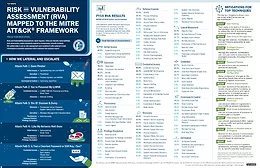
The Cybersecurity and Information Security Agency (CISA) has released an infographic mapping analysis of 44 of its Risk and Vulnerability Assessments (RVAs) conducted in Fiscal Year 2019 to the MITRE Adversarial Tactics, Techniques, and Common Knowledge (ATT&CK) Framework.
Digital Guardian announced Tim Bandos will become Chief Information Security Officer (CISO). Bandos will bring more than 15 years of experience to the position including his five years as VP of Cybersecurity at Digital Guardian. Prior to joining Digital Guardian, Bandos was Director of Cybersecurity for Dupont where he was responsible for overseeing internal controls, incident response and threat intelligence.
According to new data released by Cybersecurity Insiders, 72% of organizations experienced an increase in endpoint and IoT security incidents in the last year, while 56% anticipate their organization will likely be compromised due to an endpoint or IoT-originated attack with the next 12 months.
As with any new disruptive innovation, we must strive to strike a balance between risk and reward. While it’s exciting to ponder the possibilities of a world powered by 5G and an constellation of connected things, we must first establish a secure foundation to support these innovations. A software-based, Zero Trust security framework represents our best chance at securing the Edge from the connected things of tomorrow.
Security Access Service Edge (SASE) is the latest security trend to hit the world of cybersecurity for enterprises. But unlike meaningless buzzwords, SASE looks set to become an essential toolkit for any cybersecurity framework.
The previously undocumented group leverages COVID-19-themed spear phishing
ESET researchers uncovered a new APT group that has been stealing sensitive documents from several governments in Eastern Europe and the Balkans since 2011. Named XDSpy by ESET, the APT group has gone largely undetected for nine years, which is rare. The espionage group has compromised many government agencies and private companies. The findings were presented today at the VB2020 localhost conference.
The U.S. Department of the Treasury’s Office of Foreign Assets Control (OFAC) is issuing an advisory to alert companies that engage with victims of ransomware attacks of the potential sanctions risks for facilitating ransomware payments. This advisory highlights OFAC’s designations of malicious cyber actors and those who facilitate ransomware transactions under its cyber-related sanctions program.