Security Magazine logo
search
cart
facebook twitter linkedin youtube
  • Sign In
  • Create Account
  • Sign Out
  • My Account
Security Magazine logo
  • NEWS
    • Security Newswire
    • Technologies & Solutions
  • MANAGEMENT
    • Leadership Management
    • Enterprise Services
    • Security Education & Training
    • Logical Security
    • Security & Business Resilience
    • Profiles in Excellence
  • PHYSICAL
    • Access Management
    • Fire & Life Safety
    • Identity Management
    • Physical Security
    • Video Surveillance
    • Case Studies (Physical)
  • CYBER
    • Cybersecurity News
    • More
  • BLOG
  • COLUMNS
    • Career Intelligence
    • Cyber Tactics
    • Cybersecurity Education & Training
    • Leadership & Management
    • Security Talk
  • EXCLUSIVES
    • Annual Guarding Report
    • Most Influential People in Security
    • The Security Benchmark Report
    • Top Guard and Security Officer Companies
    • Top Cybersecurity Leaders
    • Women in Security
  • SECTORS
    • Arenas / Stadiums / Leagues / Entertainment
    • Banking/Finance/Insurance
    • Construction, Real Estate, Property Management
    • Education: K-12
    • Education: University
    • Government: Federal, State and Local
    • Hospitality & Casinos
    • Hospitals & Medical Centers
    • Infrastructure:Electric,Gas & Water
    • Ports: Sea, Land, & Air
    • Retail/Restaurants/Convenience
    • Transportation/Logistics/Supply Chain/Distribution/ Warehousing
  • EVENTS
    • Industry Events
    • Webinars
    • Solutions by Sector
    • Security 500 Conference
  • MEDIA
    • Interactive Spotlight
    • Photo Galleries
    • Podcasts
    • Polls
    • Videos
      • Cybersecurity & Geopolitical Discussion
      • Ask Me Anything (AMA) Series
  • MORE
    • Call for Entries
    • Classifieds & Job Listings
    • Continuing Education
    • Newsletter
    • Sponsor Insights
    • Store
    • White Papers
  • EMAG
    • eMagazine
    • This Month's Content
    • Advertise
  • SIGN UP!
CybersecurityManagementSecurity Leadership and ManagementPhysical Security

Building a stronger bond between IT and physical security

By Roy Dagan
two people shaking hands

Image via Unsplash

January 27, 2023

Physical security and IT teams are vital to the security of any large organization. This is especially true in today’s connected enterprise, where every physical security device lives within a network. 

In order to protect a business, both teams must work in tandem to solve the many security challenges that can arise — device availability issues, cyberattacks, compliance issues, device vulnerabilities, etc. 

But there’s been a longstanding disconnect between the two groups, stemming from limited visibility over physical security devices, a lack of tools and systems to see and manage their infrastructure, and lack of a common language and shared data to properly collaborate. 

This overarching problem has been compounded by the fact that Internet of Things (IoT) and physical security devices have exploded in number in the enterprise. Companies deploy anywhere from dozens to tens of thousands of security cameras, access control and other physical security devices. 

To be fair, the relationship between IT and physical security has certainly made progress, but there is plenty of residual misalignment. In many cases, there is still tension and mutual frustration: each side feels the other makes their job more difficult and at times presents demands that are unreasonably outside the scope of their respective purview.

Who owns the devices, who manages them, and why it’s hard to talk about

Physical security departments own the devices they rely on — video cameras and access controls, etc. — while IT owns the network where the devices live. This results in an awkward problem: while physical security teams introduce these devices into the network, they mostly lack the technology to properly manage them. IT teams typically aren’t the experts when it comes to physical security devices; are not responsible for managing these devices; nor do they see whether they are operational and secure. And because companies today have massive fleets of physical security devices deployed, managing and maintaining them at scale is very difficult. 

Furthermore, IT’s domain has always been on the technology side, while physical security focused on operations. This resulted in a language barrier between the two groups. Luckily, the relationship has been improving, due in part to a growing and healthy overlap of domain knowledge. 

From then to now: root causes of the tension

Once upon a time, not so long ago, IT and physical security teams worked in separate silos. That’s not fully the case today. But the relationship can certainly stand to improve. 

There are practical reasons for the historical misalignment. The migration from analog to internet protocol (IP)-based devices in recent years amplified communication issues and friction between the teams. That’s because virtually all physical security devices live on networks managed by IT — unlike analog devices of yesteryear. The physical security group is responsible for their devices, but are having a hard time upgrading firmware, rotating passwords and other “standard IT” operations. That has created unnecessary risk at some organizations. 

Today, the biggest impediment is that most physical security teams still lack tools to see and manage their devices properly. This creates more blind spots. If a physical security manager sends IT a spreadsheet list of its devices and compliance-related information, that’s merely a static snapshot. It’s not how IT is used to working today. They’re equipped with numerous systems to manage, maintain and secure any asset on their network — but their physical security group lacks a system to handle those functions. This can put the company at risk. For its part, physical security teams still have to get their job done every day. The end result? Frustration on both sides.

When misalignment impedes problem solving

IT points out that physical security devices cause cybersecurity and operational problems because they often have outdated firmware, easily guessed passwords, ports left open, and other vulnerabilities. Hackers may target physical security devices as entry points to attack enterprise IT infrastructure. As one director of physical security at a global manufacturer said, “IT does not like me.” Others comment, “When we turn to IT for tech guidance, we are given low priority.” This pattern became a sore point over the years. 

A typical story: A camera goes offline. IT says, “It’s the device, not us.” The physical security team alerts the integrator responsible for maintenance. They dispatch a technician to find and check the non-working camera. The technician reports back that the camera is actually working and needs no repair. Meanwhile, a half dozen other cameras go offline, and IT discovers that a network switch was having intermittent failures. No one is to blame, but the lack of visibility and diagnostic data created expense, inconvenience and friction. This type of situation might take several days to fully resolve. In the meantime, it feeds the disconnect between the two teams. 

Luckily, these issues can be largely overcome today with appropriate tools. 

Strengthening the relationship between IT and physical security

When two parties speak the same language and use the same currency (data), they can cooperate easily and resolve issues quickly. With the right data, physical security teams would know quickly on their own if a network switch was causing the outage, for example, and then provide IT with the required information to help resolve this issue in no time.  

Luckily, there are Software as a Service (SaaS) solutions that can help manage, secure and maintain devices — and provide the level of insight to give both teams peace of mind. Having this type of technology will be a key enabler to level the playing field and elevate the capabilities of physical security. These tools equalize the data about connected devices, and satisfy IT standards. 

By eliminating the problem of device visibility, stress between the two departments can recede. IT will begin to see their physical security colleagues as the strategic partners they are. The relationship will shift from one filled with tension to one marked by collaboration. This will be particularly important during outages and cyberattacks, and will ultimately save both teams time and money.

This article originally ran in Security, a twice-monthly security-focused eNewsletter for security end users, brought to you by Security magazine. Subscribe here.

KEYWORDS: interdepartmental cooperation IT infrastructure software as a service surveillance cameras team collaboration

Share This Story

Looking for a reprint of this article?
From high-res PDFs to custom plaques, order your copy today!

Roy Dagan is the CEO at SecuriThings

Recommended Content

JOIN TODAY
To unlock your recommendations.

Already have an account? Sign In

  • Iintegration and use of emerging tools

    Future Proof Your Security Career with AI Skills

    AI’s evolution demands security leaders master...
    Career Intelligence
    By: Jerry J. Brennan and Joanne R. Pollock
  • The 2025 Security Benchmark Report

    The 2025 Security Benchmark Report

    The 2025 Security Benchmark Report surveys enterprise...
    The Security Benchmark Report
    By: Rachelle Blair-Frasier
  • The Most Influential People in Security 2025

    Security’s Most Influential People in Security 2025

    Security Magazine’s 2025 Most Influential People in...
    Most Influential People in Security
    By: Security Staff
Manage My Account
  • Security Newsletter
  • eMagazine Subscriptions
  • Manage My Preferences
  • Online Registration
  • Mobile App
  • Subscription Customer Service

More Videos

Sponsored Content

Sponsored Content is a special paid section where industry companies provide high quality, objective, non-commercial content around topics of interest to the Security audience. All Sponsored Content is supplied by the advertising company and any opinions expressed in this article are those of the author and not necessarily reflect the views of Security or its parent company, BNP Media. Interested in participating in our Sponsored Content section? Contact your local rep!

close
  • critical event management
    Sponsored byEverbridge

    Why a Unified View Across IT, Continuity, and Security Makes or Breaks Crisis Response

  • Charlotte Star Room
    Sponsored byAMAROK

    In an Uncertain Economy, Security Is a Necessity - Not an Afterthought

  • Sureview screen
    Sponsored bySureView Systems

    The Evolution of Automation in the Command Center

Popular Stories

Cybersecurity trends of 2025

3 Top Cybersecurity Trends from 2025

Red laptop

Security Leaders Discuss SitusAMC Cyberattack

Green code

Logitech Confirms Data Breach, Security Leaders Respond

Neon human and android hands

65% of the Forbes AI 50 List Leaked Sensitive Information

The Louvre

After the Theft: Why Camera Upgrades Should Begin With a Risk Assessment

Top Cybersecurity Leaders

Events

September 18, 2025

Security Under Fire: Insights on Active Shooter Preparedness and Recovery

ON DEMAND: In today’s complex threat environment, active shooter incidents demand swift, coordinated and well-informed responses.

December 11, 2025

Responding to Evolving Threats in Retail Environments

Retail security professionals are facing an increasingly complex array of security challenges — everything from organized retail crime to evolving cyber-physical threats and public safety concerns.

View All Submit An Event

Products

Security Culture: A How-to Guide for Improving Security Culture and Dealing with People Risk in Your Organisation

Security Culture: A How-to Guide for Improving Security Culture and Dealing with People Risk in Your Organisation

See More Products

Related Articles

  • Building a Stronger Security Culture to Mitigate Risk

    See More
  • The Challenge of Multiples: How to Manage Physical Security Information in a Multi-Building Campus

    See More
  • IT and Physical Security: A Welcomed Partnership?

    See More

Related Products

See More Products
  • physical security.webp

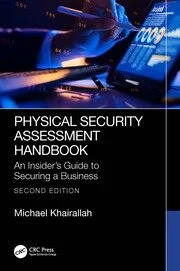
    Physical Security Assessment Handbook An Insider’s Guide to Securing a Business

  • Physical Security and Safety: A Field Guide for the Practitioner

  • Physical Security and Environmental Protection

See More Products
×

Sign-up to receive top management & result-driven techniques in the industry.

Join over 20,000+ industry leaders who receive our premium content.

SIGN UP TODAY!
  • RESOURCES
    • Advertise
    • Contact Us
    • Store
    • Want More
  • SIGN UP TODAY
    • Create Account
    • eMagazine
    • Newsletter
    • Customer Service
    • Manage Preferences
  • SERVICES
    • Marketing Services
    • Reprints
    • Market Research
    • List Rental
    • Survey/Respondent Access
  • STAY CONNECTED
    • LinkedIn
    • Facebook
    • YouTube
    • X (Twitter)
  • PRIVACY
    • PRIVACY POLICY
    • TERMS & CONDITIONS
    • DO NOT SELL MY PERSONAL INFORMATION
    • PRIVACY REQUEST
    • ACCESSIBILITY

Copyright ©2025. All Rights Reserved BNP Media.

Design, CMS, Hosting & Web Development :: ePublishing