Security Magazine logo
search
cart
facebook twitter linkedin youtube
  • Sign In
  • Create Account
  • Sign Out
  • My Account
Security Magazine logo
  • NEWS
    • Security Newswire
    • Technologies & Solutions
  • MANAGEMENT
    • Leadership Management
    • Enterprise Services
    • Security Education & Training
    • Logical Security
    • Security & Business Resilience
    • Profiles in Excellence
  • PHYSICAL
    • Access Management
    • Fire & Life Safety
    • Identity Management
    • Physical Security
    • Video Surveillance
    • Case Studies (Physical)
  • CYBER
    • Cybersecurity News
    • More
  • BLOG
  • COLUMNS
    • Career Intelligence
    • Cyber Tactics
    • Cybersecurity Education & Training
    • Leadership & Management
    • Security Talk
  • EXCLUSIVES
    • Annual Guarding Report
    • Most Influential People in Security
    • The Security Benchmark Report
    • Top Guard and Security Officer Companies
    • Top Cybersecurity Leaders
    • Women in Security
  • SECTORS
    • Arenas / Stadiums / Leagues / Entertainment
    • Banking/Finance/Insurance
    • Construction, Real Estate, Property Management
    • Education: K-12
    • Education: University
    • Government: Federal, State and Local
    • Hospitality & Casinos
    • Hospitals & Medical Centers
    • Infrastructure:Electric,Gas & Water
    • Ports: Sea, Land, & Air
    • Retail/Restaurants/Convenience
    • Transportation/Logistics/Supply Chain/Distribution/ Warehousing
  • EVENTS
    • Industry Events
    • Webinars
    • Solutions by Sector
    • Security 500 Conference
  • MEDIA
    • Interactive Spotlight
    • Photo Galleries
    • Podcasts
    • Polls
    • Videos
      • Cybersecurity & Geopolitical Discussion
      • Ask Me Anything (AMA) Series
  • MORE
    • Call for Entries
    • Classifieds & Job Listings
    • Newsletter
    • Sponsor Insights
    • Store
    • White Papers
  • EMAG
    • eMagazine
    • This Month's Content
    • Advertise
  • SIGN UP!
CybersecurityManagementTechnologies & SolutionsSecurity Enterprise ServicesSecurity Leadership and ManagementLogical SecuritySecurity & Business ResilienceCybersecurity News

Digital twins & deepfakes: The two sides of this technological coin
By Neil Sahota
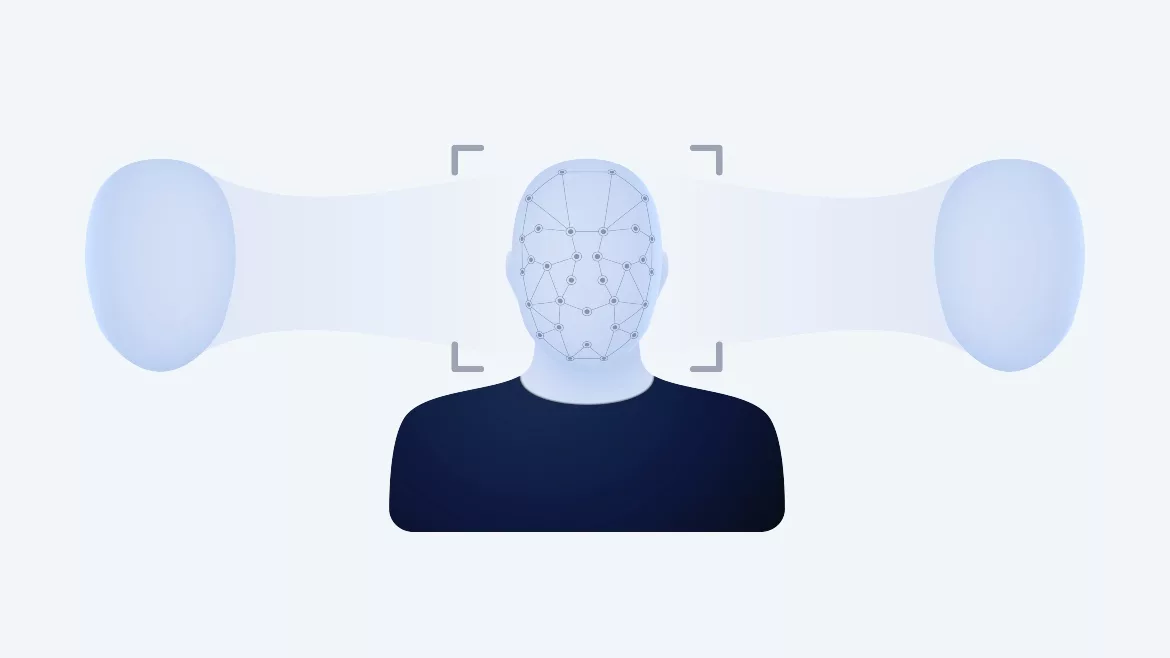
Deepfake-freepik1170x658.jpg

Image by maxim999 via Freepik

July 21, 2022

Imagine for a moment that you are a C-suite executive at one of the world’s largest mining companies. You have a very large but oddly shaped ore body that will prove challenging to mine successfully while maintaining the balance of profit, people safety, and compliance with environmental regulations. Normally, your leadership team would study a few options and hopefully pick the best one, knowing that you have limited options if something goes wrong after you start the mining process. However, these traditional approaches are changing as we now live in the age of the metaverse.


Thanks to this revolutionary virtual world technology, you have a complete digital replica of the ore body, the mine itself, the equipment, and even the people working the mine. Suddenly, your employees practice with the equipment, train in the safety protocols in the replica environment, and attempt thousands of scenarios — with a little help from artificial intelligence (AI) — on how to optimize people, planet, profit, and safety. Through this scenario planning, you’ve uncovered a path to something no one believed was possible: sustainable mining.


Wishful thinking? Hardly. This unfolded four years ago when the mining companies embraced the use of digital twins. Today, this technology has also been applied to farms, mental health programs, media content development, and supporting autistic children in the development of basic social skills. 


More importantly, it has opened Pandora’s box on digital twins and its mirror image of deepfakes.


A digital twin is a replica of a person. It looks like them, sounds like them, uses the same type of words, and mimics their body language. Often, AI creates the digital twin and the AI system learns by studying video, audio, and images of the person. Moreover, the AI trains against other AI systems to perfect its digital twin generation. Thanks to technological advances, these digital twins can be very hard to detect without close scrutiny. So, why have them? Many people have found them to be effective substitutes to increase their work effort bandwidth. An example of this would be with celebrities and key influencers who have found the use of digital twins an efficient way to interact with their fans on a frequent basis.


Unfortunately, the metaverse, like all technology, is a tool that can be wielded for benefit or for harm. Digital twins are no different, and their antithesis are the deepfakes: when people create a digital twin without the permission of the imitated person and plan to use it to fool people. More recent cases of this have been seen with the fake videos of President Obama advocating violence in a public service announcement and Tom Cruise doing magic on TikTok, showing the destructive power of this technology in the hands of the nefarious.


All of this started with video rewrites… in other words, video editing. Better compositing and special effects laid the foundation for this technology. As the AI wave started in the early 2010s, people learned to train AI in body language, sound imitation, and so forth. It reached a point where a group of engineers started experimenting with inserting their favorite actor — from any time period — into films to maintain the illusion that it truly was that actor. This platform ultimately found its way as a mobile app for general usage. Regrettably, some people uncovered a way to corrupt this technology. Seeing an opportunity to lash out at people, deepfakes found their way into revenge porn. While a deepfake of a famous person like President Obama will get a lot of attention and scrutiny, the average person is not so lucky and can suffer unimaginable reputation harm. This reached new heights when a mobile app called DeepNude was released and allowed anyone to create their own revenge porn with anyone they had the basic data to generate a digital imitation.


Ultimately, the promise and the pain of this technology is data manipulation. While people control their own use of digital twins, deepfakes are a completely different story, and simple security safeguards are not so simple. Recall German Defense Minister Ursula von der Leyen. From just a handful of high-resolution photographs (including one sent out by her own press team), famed hacker Jan Krissler (a.k.a. Starbug) reverse-engineered her fingerprints. With 3D printing technology, these fingerprints can be put onto a makeshift hand to gain access to von der Leyen’s mobile devices or even her bank accounts. Sadly, there have been numerous other examples, such as the voice of a corporate executive being mimicked to transfer funds to an unknown vendor or falsifying the data stream to a security camera to cover a crime being committed. This all begs the question, what’s next? Someone stealing your face to enter a country? A social crusader being deepfaked as a racist? Given the proliferation of data on each one of us, how can we protect our likeness, let alone our fingerprints?


This is the next great challenge we face in the realm of cybersecurity. While we can be more cognizant of the data we share (even on social media), think of all those moments when someone else captures our likeness via a security camera or a group social media post. Whether we like it or not, the data is out there, so cutting off that flow will not stem the tide of deepfakes. We can — and should — train more people on how to verify the authenticity of the video and content within it to ensure accuracy. We will need to do more research on a person to see if the video is in character with that person’s values. (There’s some initial experimentation with blockchain technology to see if this can be done in a simplified manner.)


However, the best solutions to this dilemma have yet to come but are being incubated today. The power of digital twins is a huge boon for humanity, but we cannot let that value be overwhelmed by a few bad apples abusing the technology through deepfakes. We should all strive to create and maintain the culture of the beneficial use of technology, but we must never forget the lesson (usually attributed to Thomas Jefferson): the price of freedom is eternal vigilance.

KEYWORDS: artificial intelligence (AI) cyber security deepfakes risk management

Share This Story

Looking for a reprint of this article?
From high-res PDFs to custom plaques, order your copy today!


Neil sahota

Neil Sahota is an IBM Master Inventor, United Nations (UN) Artificial Intelligence (AI) Advisor, Faculty at UC Irvine, and author of Own the A.I. Revolution. With 20+ years of business experience, he works with organizations to create next generation products/solutions powered by emerging technology.

Recommended Content

JOIN TODAY
To unlock your recommendations.

Already have an account? Sign In

  • Cyber tech background

    Security’s Top Cybersecurity Leaders 2026

    Security magazine’s Top Cybersecurity Leaders 2026 award...
    Top Cybersecurity Leaders
  • Iintegration and use of emerging tools

    Future Proof Your Security Career with AI Skills

    AI’s evolution demands security leaders master...
    Security Leadership and Management
    By: Jerry J. Brennan and Joanne R. Pollock
  • The 2025 Security Benchmark Report

    The 2025 Security Benchmark Report

    The 2025 Security Benchmark Report surveys enterprise...
    The Security Benchmark Report
    By: Rachelle Blair-Frasier
Manage My Account
  • Security Newsletter
  • eMagazine Subscriptions
  • Manage My Preferences
  • Online Registration
  • Mobile App
  • Subscription Customer Service

More Videos

Popular Stories

Man on laptop

Healthcare Executives Face a New Era of Personal Risk

Man walking with briefcase

The Rising Tide of Executive Protection: Corporations Ramp Up Security in an Era of Heightened Threats

Stadium

Physical Security in Global Arenas: How AI Improves Security at Scale

Chatbot prompt screen

8 in 10 AI Chatbots Likely to Help Plan Attacks, Hate Crimes

Head in front of monitors

Ransomware Response: How Businesses Regain Control Under Pressure

SEC 2026 Benchmark Banner

Events

April 30, 2026

Building a Campus-Wide Culture of Security and Shared Responsibility

In today’s higher education environment, where institutions face evolving and multifaceted incidents, safety must be embedded into the fabric of campus culture. Learn strategies for generating collective buy-in from faculty, staff, students and senior leadership. 

May 7, 2026

Beyond Cameras: Revolutionizing Perimeter Security with LiDAR, AI and Digital Twins

In this webinar, we will explore how LiDAR‑based detection, AI‑powered analytics and digital twins are transforming the future of perimeter protection with 3D detection, real-time situational awareness and unified operational views.

View All Submit An Event

Products

Security Culture: A How-to Guide for Improving Security Culture and Dealing with People Risk in Your Organisation

Security Culture: A How-to Guide for Improving Security Culture and Dealing with People Risk in Your Organisation

See More Products
SEC 2026 Top Cybersecurity Leaders

Related Articles

  • Compliance-regulations-graphic.JPG

    Compliance and security are two sides of the same coin

    See More
  • deepfake

    The two faces of deepfakes: Cybersecurity & identity fraud

    See More
  • SEC0421-DeepFake-FEAT_MAIN_1170x878px

    Don’t discount the risk of deepfakes to the enterprise

    See More

Related Products

See More Products
  • Physical Security and Safety: A Field Guide for the Practitioner

  • Security of Information and Communication Networks

See More Products

Events

View AllSubmit An Event
  • May 7, 2026

    Beyond Cameras: Revolutionizing Perimeter Security with LiDAR, AI and Digital Twins

    In this webinar, we will explore how LiDAR‑based detection, AI‑powered analytics and digital twins are transforming the future of perimeter protection with 3D detection, real-time situational awareness and unified operational views.
View AllSubmit An Event
×

Sign-up to receive top management & result-driven techniques in the industry.

Join over 20,000+ industry leaders who receive our premium content.

SIGN UP TODAY!
  • RESOURCES
    • Advertise
    • Contact Us
    • Store
    • Want More
  • SIGN UP TODAY
    • Create Account
    • eMagazine
    • Newsletter
    • Customer Service
    • Manage Preferences
  • SERVICES
    • Marketing Services
    • Reprints
    • Market Research
    • List Rental
    • Survey/Respondent Access
  • STAY CONNECTED
    • LinkedIn
    • Facebook
    • YouTube
    • X (Twitter)
  • PRIVACY
    • PRIVACY POLICY
    • TERMS & CONDITIONS
    • DO NOT SELL MY PERSONAL INFORMATION
    • PRIVACY REQUEST
    • ACCESSIBILITY

Copyright ©2026. All Rights Reserved BNP Media, Inc. and BNP Media II, LLC.

Design, CMS, Hosting & Web Development :: ePublishing
