How the Current Iran-US Conflict May Impact World Cup Security
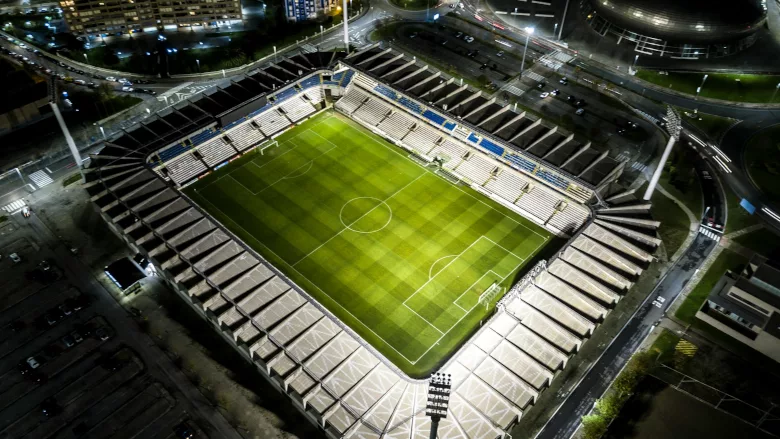
As North America prepares to host matches for the 2026 FIFA World Cup across three countries and 16 cities, security professionals and law enforcement agencies face a significantly different threat environment than previous global sporting events. Traditional concerns such as perimeter security, cross-border travel, crowd management, and terrorism or violent demonstrations remain central concerns. However, geopolitical tensions, cyber risks, misinformation, and a politically charged world lead to heightened security concerns, especially in the United States.
Geopolitical Tensions and a Divided Nation
A leading concern for the 2026 World Cup is ongoing geopolitical instability that continues to impact the security environment surrounding international sporting events. Ongoing tensions involving Iran and the U.S. represent a key example of how broader political conflicts create additional challenges for security managers and law enforcement agencies during major events.
The likelihood of a coordinated Iran-linked attack tied directly to the event is considered low; however, the broader political climate introduces nuanced security considerations for organizers, venue operators, law enforcement, and private security teams. The challenge for security leaders may not stem from a single catastrophic threat, but from digital disruption, civil unrest, online radicalization from both countries, and emotionally charged political tensions that could emerge during the world’s most visible sporting events.
Political tensions involving Iran are multi-pronged and create a uniquely sensitive environment surrounding fan activity and demonstrations. With three Iran matches being played in the U.S. (Seattle and Los Angeles), the Iranian national team could become a focal point for demonstrations both supporting and opposing the government. There is a large Iranian-American community in both cities, who are generally opposed to the current Iranian regime, which increases the likelihood of anti-Iran protests and associated security and operational risks. Emotionally charged demonstrations can increase the risk of confrontation or targeted harassment, escalating the security profile of a peaceful protest or demonstration.
An additional layer of complexity comes from the contrasting dynamic between Iranian-Americans and the rest of the country regarding American intervention in Iran. While the majority of Iranian-Americans are opposed to the Iranian regime and are supportive of American intervention, the general public opinion in the U.S. is opposed to the conflict, increasing the likelihood of rival protests in Los Angeles and Seattle. Security personnel and public-facing staff may require cultural awareness and de-escalation training to navigate politically sensitive interactions without unintentionally escalating situations. In highly polarized environments, perception alone can rapidly influence crowd behavior.
Athlete Protection & Safety
The Iranian national team may face heightened scrutiny and security concerns as players have historically faced pressure surrounding political expression both domestically and abroad. Security managers need to consider scenarios involving athlete protests, politically motivated disruptions, or increased online targeting towards players viewed as representing the current Iranian regime.
Equally important is the potential for Iranian players and staff to feel unsafe travelling to the U.S. amid heightened political tensions and anti-Iran sentiment. In the current environment, security planning must account for not only physical protection but also reputational risk and the diplomatic sensitivity posed by geopolitical conflict to athletes, staff, and fans.
Cyber Threats and Social Media Risks
The rise of artificial intelligence and social media has fundamentally changed how security incidents emerge and escalate. False reports, fake videos, impersonation scams, and coordinated misinformation campaigns that have the power to circulate globally within minutes, creating confusion and fear that leads to increased pressure on event organizers and security personnel.
With an event expected to attract millions of international visitors and massive global attention, the risks posed by cybercrime are as significant as physical security risks. Large-scale sporting events are prime targets for phishing, fake ticketing platforms, credential theft, social media-engineered attacks, and infrastructure and travel scams. With the increase in technology-based attacks, these disruptions often create more operational strain than traditional physical threats.
Security Planning in a Politically Charged Environment
For security professionals, the 2026 World Cup represents a broader evolution in how global events must be protected. The most effective security strategies need to integrate and address physical security, cyber threats, social media monitoring, behavioral threat assessments, crisis communication, and protest management to ensure a unified operational approach.
Modern sporting events no longer exist separately from world affairs. As geopolitical tensions increase, security professionals need to understand the risks beyond physical threats, considering digital platforms, cyber concerns, and political instability as fixtures in strategies and planning for major events.
The 2026 World Cup is expected to be one of the largest sporting events ever hosted worldwide. Success depends not only on protecting venues and infrastructure but also on security leaders' ability to adapt to the modern world, where geopolitics, technology, and public sentiment are deeply interconnected.
Looking for a reprint of this article?
From high-res PDFs to custom plaques, order your copy today!