Security Magazine logo
search
cart
facebook twitter linkedin youtube
  • Sign In
  • Create Account
  • Sign Out
  • My Account
Security Magazine logo
  • NEWS
    • Security Newswire
    • Technologies & Solutions
  • MANAGEMENT
    • Leadership Management
    • Enterprise Services
    • Security Education & Training
    • Logical Security
    • Security & Business Resilience
    • Profiles in Excellence
  • PHYSICAL
    • Access Management
    • Fire & Life Safety
    • Identity Management
    • Physical Security
    • Video Surveillance
    • Case Studies (Physical)
  • CYBER
    • Cybersecurity News
    • More
  • BLOG
  • COLUMNS
    • Career Intelligence
    • Cyber Tactics
    • Cybersecurity Education & Training
    • Leadership & Management
    • Security Talk
  • EXCLUSIVES
    • Annual Guarding Report
    • Most Influential People in Security
    • The Security Benchmark Report
    • Top Guard and Security Officer Companies
    • Top Cybersecurity Leaders
    • Women in Security
  • SECTORS
    • Arenas / Stadiums / Leagues / Entertainment
    • Banking/Finance/Insurance
    • Construction, Real Estate, Property Management
    • Education: K-12
    • Education: University
    • Government: Federal, State and Local
    • Hospitality & Casinos
    • Hospitals & Medical Centers
    • Infrastructure:Electric,Gas & Water
    • Ports: Sea, Land, & Air
    • Retail/Restaurants/Convenience
    • Transportation/Logistics/Supply Chain/Distribution/ Warehousing
  • EVENTS
    • Industry Events
    • Webinars
    • Solutions by Sector
    • Security 500 Conference
  • MEDIA
    • Interactive Spotlight
    • Photo Galleries
    • Podcasts
    • Polls
    • Videos
      • Cybersecurity & Geopolitical Discussion
      • Ask Me Anything (AMA) Series
  • MORE
    • Call for Entries
    • Classifieds & Job Listings
    • Continuing Education
    • Newsletter
    • Sponsor Insights
    • Store
    • White Papers
  • EMAG
    • eMagazine
    • This Month's Content
    • Advertise
  • SIGN UP!
ManagementPhysicalSecurity NewswireTechnologies & SolutionsSecurity Leadership and ManagementFire & Life SafetyPhysical SecurityGovernment: Federal, State and Local

Top 3 considerations of public sector crisis management communication tools
By Jeff Halstead
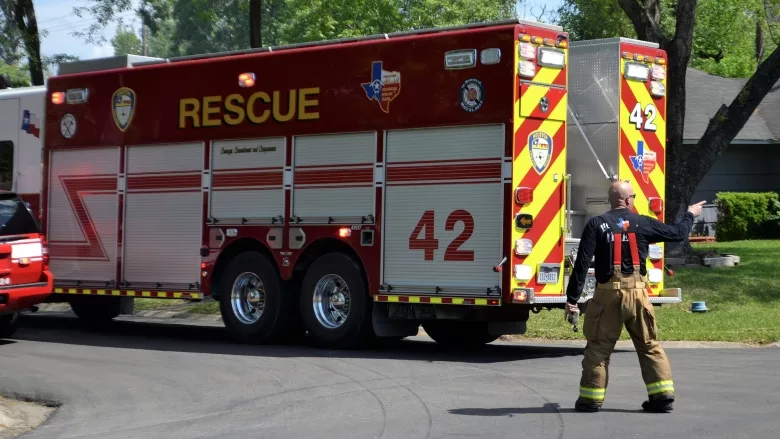
first responder firefighter
February 18, 2022

Crimes, crises and dangerous situations are on the rise across the United States. Homicides have spiked over the past year, and a 667% increase in spear-phishing attacks alone since the start of COVID-19 — along with recent weather and climate crises nationwide — are just a few examples of the alarming instances security leaders are seeing.

These developments and more have made effective crisis management paramount as first responders, security experts and government agencies look to keep their communities safe and secure. A step in accomplishing such is communicating and sharing intelligence effectively and in real time, which can help better inform security teams and increase efficiency in crisis management.

The problem with information sharing is that many in the public sector lack these abilities due to legacy technologies, which can hinder response strategies and execution. These complications can be mitigated by implementing communication platforms that allow for instant collaboration, agency interoperability and enhanced security and compliance.

Each of these benefits can play a vital role in improving crisis management in the public sector:

1. Instant collaboration

Today, communicating in real time can seem mundane, with the many ways we already can interact via smartphones, laptops, tablets and various applications and software. Unfortunately, many in the public sector still utilize traditional communication methods like email, which hinders the chances to collaborate instantly and effectively in a time of need.

Not only can traditional methods be insecure, but they can also be slow, littered with irrelevant content, or even ignored if not seen immediately. This ultimately hinders the chances to collaborate instantly in a time of need.

Utilizing instant communication tools that are available on mobile apps, as well as on laptops or desktop computers, presents one opportunity overcome this challenge. Today, 72% of first responders use mobile devices in their everyday operations, which highlights how important it is to have compatible technologies available and the impact they can have in the management of crises.

2. Agency interoperability

Along with adopting instant communications platforms, agencies and departments should look for tools that allow them to communicate with other agencies and first responders no matter the devices or network they use — also known as interoperability.

Collaborating across devices and networks is becoming incredibly important with more wide-scale crises and disasters occurring today. In fact, roughly nine in 10 first responders surveyed in a recent Verizon study reported that the ability to communicate across agencies was “a critical concern” in their current line of work. Many first responders and government agencies still rely heavily on land mobile radio systems (LMRs), where interoperability still faces significant barriers when networks experience heavy traffic or are even dysfunctional.

With more public professionals utilizing mobile devices while on duty, applications and software enabling interoperability will become paramount in crisis management. Agencies and departments must do their due diligence and adopt adequate technologies.

3. Enhanced security and compliance

The advancements of communication technology have sparked the usage of public messaging applications — such as WhatsApp, GroupMe and Signal — and SMS texting among responders and their agencies. However, many of these apps and messaging methods are not compliant with regulations nor are they secure, making it easy for classified data and intelligence embedded in these programs to fall into the wrong hands. And as more of our devices are interconnected on Internet of Things (IoT) servers, and with the number of data breaches in 2021 exceeding the total of 2020, data and intelligence security risks will continue to be high with the usage of these communication tools.

Agencies should look for platforms that not only allow for real-time interaction, but that adequately secure sensitive crisis management data to fend off today’s intuitive hackers and data thieves. Tools like military-grade encryption, identity verification and multiple-factor authentication are features that should be considered in communication platforms.

It’s also essential that platforms are compliant with state and federal regulations to ensure legality in communications, especially during a crisis. Many first responders and public safety officials don’t understand that utilizing consumer messaging apps is illegal for work-related communications in government, as they violate federal and state public records laws and increase the chances of legal action against a department or agency. This is something that can be often overlooked, but it results in major consequences.

Technology has come a long way, and security leaders today are lucky to reap the benefits of such advancements to better their organizations in the public sector and better protect their communities. Now, it’s on leaders in the crisis management space to adopt the proper technology to allow first responders and security professionals to do their jobs to the highest level and ensure the security and protection of all communities from sea to shining sea.


This article originally ran in Security, a twice-monthly security-focused eNewsletter for security end users, brought to you by Security Magazine. Subscribe here.

KEYWORDS: communications system compliance emergency management EMS first responder interdepartmental cooperation law enforcement public records

Share This Story

Looking for a reprint of this article?
From high-res PDFs to custom plaques, order your copy today!

Chief Jeff Halstead (Ret.) is President & Founder of “CONNECT” by Genasys, formerly Evertel Technologies. CONNECT provides mission-critical messaging for first responders and public safety leaders across 33 states.

Halstead dedicated nearly 30 years of service to law enforcement and corresponding local communities. For more than two decades, he worked for the Phoenix Police Department, departing as Commander to join the Fort Worth Police Department. As Chief of Police in Fort Worth, he faced many national and global crisis incidents before retiring in 2015.  

Recommended Content

JOIN TODAY
To unlock your recommendations.

Already have an account? Sign In

  • Iintegration and use of emerging tools

    Future Proof Your Security Career with AI Skills

    AI’s evolution demands security leaders master...
    Career Intelligence
    By: Jerry J. Brennan and Joanne R. Pollock
  • The 2025 Security Benchmark Report

    The 2025 Security Benchmark Report

    The 2025 Security Benchmark Report surveys enterprise...
    The Security Benchmark Report
    By: Rachelle Blair-Frasier
  • The Most Influential People in Security 2025

    Security’s Most Influential People in Security 2025

    Security Magazine’s 2025 Most Influential People in...
    Most Influential People in Security
    By: Security Staff
Manage My Account
  • Security Newsletter
  • eMagazine Subscriptions
  • Manage My Preferences
  • Online Registration
  • Mobile App
  • Subscription Customer Service

More Videos

Sponsored Content

Sponsored Content is a special paid section where industry companies provide high quality, objective, non-commercial content around topics of interest to the Security audience. All Sponsored Content is supplied by the advertising company and any opinions expressed in this article are those of the author and not necessarily reflect the views of Security or its parent company, BNP Media. Interested in participating in our Sponsored Content section? Contact your local rep!

close
  • critical event management
    Sponsored byEverbridge

    Why a Unified View Across IT, Continuity, and Security Makes or Breaks Crisis Response

  • Charlotte Star Room
    Sponsored byAMAROK

    In an Uncertain Economy, Security Is a Necessity - Not an Afterthought

  • Sureview screen
    Sponsored bySureView Systems

    The Evolution of Automation in the Command Center

Popular Stories

Cybersecurity trends of 2025

3 Top Cybersecurity Trends from 2025

Red laptop

Security Leaders Discuss SitusAMC Cyberattack

Green code

Logitech Confirms Data Breach, Security Leaders Respond

Neon human and android hands

65% of the Forbes AI 50 List Leaked Sensitive Information

The Louvre

After the Theft: Why Camera Upgrades Should Begin With a Risk Assessment

Top Cybersecurity Leaders

Events

September 18, 2025

Security Under Fire: Insights on Active Shooter Preparedness and Recovery

ON DEMAND: In today’s complex threat environment, active shooter incidents demand swift, coordinated and well-informed responses.

December 11, 2025

Responding to Evolving Threats in Retail Environments

Retail security professionals are facing an increasingly complex array of security challenges — everything from organized retail crime to evolving cyber-physical threats and public safety concerns.

View All Submit An Event

Products

Security Culture: A How-to Guide for Improving Security Culture and Dealing with People Risk in Your Organisation

Security Culture: A How-to Guide for Improving Security Culture and Dealing with People Risk in Your Organisation

See More Products

Related Articles

  • Police officer

    The critical need for secure communications in modern law enforcement

    See More
  • leadership

    Leading a Company Through Crisis: Communication, Support and Technical Considerations

    See More
  • Person working at desk with coffee

    3% of public sector applications are flaw free

    See More

Related Products

See More Products
  • contemporary.jpg

    Contemporary Security Management, 4th Edition

  • 9780128147948.jpg

    Effective Security Management, 7th Edition

  • 9780367259044.jpg

    Understanding Homeland Security: Foundations of Security Policy

See More Products

Events

View AllSubmit An Event
  • May 22, 2025

    Proactive Crisis Communication

    ON DEMAND: Crisis doesn't wait for the right time - it strikes when least expected. Is your team prepared to communicate clearly and effectively when it matters most?
  • August 20, 2012

    Radiological Emergency Planning: Terrorism, Security, and Communication

    Participants will examine the latest principles and requirements to prepare for and respond to a radiological emergency as well as develop the skills necessary to effectively communicate with the media and public during crisis situations.
View AllSubmit An Event
×

Sign-up to receive top management & result-driven techniques in the industry.

Join over 20,000+ industry leaders who receive our premium content.

SIGN UP TODAY!
  • RESOURCES
    • Advertise
    • Contact Us
    • Store
    • Want More
  • SIGN UP TODAY
    • Create Account
    • eMagazine
    • Newsletter
    • Customer Service
    • Manage Preferences
  • SERVICES
    • Marketing Services
    • Reprints
    • Market Research
    • List Rental
    • Survey/Respondent Access
  • STAY CONNECTED
    • LinkedIn
    • Facebook
    • YouTube
    • X (Twitter)
  • PRIVACY
    • PRIVACY POLICY
    • TERMS & CONDITIONS
    • DO NOT SELL MY PERSONAL INFORMATION
    • PRIVACY REQUEST
    • ACCESSIBILITY

Copyright ©2025. All Rights Reserved BNP Media.

Design, CMS, Hosting & Web Development :: ePublishing