Security Magazine logo
search
cart
facebook twitter linkedin youtube
  • Sign In
  • Create Account
  • Sign Out
  • My Account
Security Magazine logo
  • NEWS
    • Security Newswire
    • Technologies & Solutions
  • MANAGEMENT
    • Leadership Management
    • Enterprise Services
    • Security Education & Training
    • Logical Security
    • Security & Business Resilience
    • Profiles in Excellence
  • PHYSICAL
    • Access Management
    • Fire & Life Safety
    • Identity Management
    • Physical Security
    • Video Surveillance
    • Case Studies (Physical)
  • CYBER
    • Cybersecurity News
    • More
  • BLOG
  • COLUMNS
    • Career Intelligence
    • Cyber Tactics
    • Cybersecurity Education & Training
    • Leadership & Management
    • Security Talk
  • EXCLUSIVES
    • Annual Guarding Report
    • Most Influential People in Security
    • The Security Benchmark Report
    • Top Guard and Security Officer Companies
    • Top Cybersecurity Leaders
    • Women in Security
  • SECTORS
    • Arenas / Stadiums / Leagues / Entertainment
    • Banking/Finance/Insurance
    • Construction, Real Estate, Property Management
    • Education: K-12
    • Education: University
    • Government: Federal, State and Local
    • Hospitality & Casinos
    • Hospitals & Medical Centers
    • Infrastructure:Electric,Gas & Water
    • Ports: Sea, Land, & Air
    • Retail/Restaurants/Convenience
    • Transportation/Logistics/Supply Chain/Distribution/ Warehousing
  • EVENTS
    • Industry Events
    • Webinars
    • Solutions by Sector
    • Security 500 Conference
  • MEDIA
    • Interactive Spotlight
    • Photo Galleries
    • Podcasts
    • Polls
    • Videos
      • Cybersecurity & Geopolitical Discussion
      • Ask Me Anything (AMA) Series
  • MORE
    • Call for Entries
    • Classifieds & Job Listings
    • Newsletter
    • Sponsor Insights
    • Store
    • White Papers
  • EMAG
    • eMagazine
    • This Month's Content
    • Advertise
  • SIGN UP!
Banking/Finance/InsuranceEducation:UniversityRetail/Restaurants/Convenience

What Businesses Should Reopen First? MIT Researchers Highlight the Risks

coronavirus
June 11, 2020

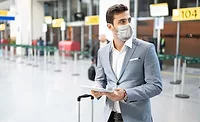
As governors and local policymakers wrestle with how to stage the reopening of their states' economies in the shadow of the COVID-19 pandemic, questions abound. Which businesses are the most essential to the economy and social well-being? Which locations should reopen first—and which should be last?

A new working paper from the MIT Sloan School of Management provides answers. Using location data from a large sample of smartphones, nationally representative consumer preference surveys, and government statistics, the paper analyzes the tradeoffs between the transmission risk of the coronavirus and the social and economic benefits of reopening different kinds of businesses, schools and public spaces.

The paper's research team—Seth G. Benzell, a postdoctoral associate at the MIT Initiative on the Digital Economy; Avinash Collis, a doctoral candidate in Information Technologies at the MIT Sloan School of Management; and Christos Nicolaides, a digital fellow at the MIT Initiative on the Digital Economy—offers suggestions to policymakers on how to prioritize the phased reopening of their states' economies in a way that minimizes risks to public health and maximizes economic wellbeing.

"Across the country, state leaders are making decisions in the dark about which types of businesses and locations can reopen and which ones should be kept closed to prevent the spread of COVID-19," says Collis. "But in the fight against this pandemic, intuition alone isn't good enough. Our research offers empirical evidence about the relative dangers and advantages of reopening stores and gathering places, to help governors and state officials reach decisions."

According to their analysis, banks, other financial institutions, and general merchandise stores, such as Walmart and Target, should be among the first businesses to reopen. These locations provide lots of economic and social value and typically have large spaces that limit crowding, say the researchers.

The next phase of reopening should include colleges and universities, places of worship, auto dealers and repair shops, and other stores, which offer a balanced tradeoff of risks and benefits, according to the research. Within shops, electronics and furniture stores should be reopened before sporting goods and liquor and tobacco stores.

Meanwhile, gyms, cafes, juice bars, and dessert shops should be among the last businesses to reopen. These locations offer very limited economic benefit compared to their risks.

To identify the tradeoffs involved in opening different places, the researchers first needed to understand each location's potential health risks and its importance to consumers and the economy. To measure importance, they investigated how much consumers value being able to have access to the location, its levels of employment, the size of its payrolls, and the amount of revenue it collects.

They also constructed a measure of "cumulative danger"—in other words, the overall risk—of spreading or catching Covid-19 in 26 categories of places. To do so, they harnessed cellphone data to track the number of visits the business receives, the number of unique visitors it gets, the person-hours of attendance at different levels of crowdedness, and the median distance traveled to the destination, which provides an indication of how much geographic mixing takes place. The researchers investigated these same danger measures for the general population and for people age 65 and older, who are at higher risk for severe illness.

"The most reassuring part of our research came when we compared our ranking of location types against the locations that have seen the largest decreases in visitations after weeks of nationwide lockdowns," says Benzell. "The places we deemed to offer the worst tradeoffs — for instance, gyms and bookstores — have generally seen the largest reductions in visits and vice versa. This confirmed for us that people are viewing the problem broadly in the same way we are.

"That said, our rankings don't line up perfectly with these reductions in visitation. Two of the largest outliers are liquor and tobacco stores, which do not have great economic or social importance, and tend to be small and highly trafficked shops, and universities and colleges, which have great economic and social importance, and often have large, open-air campuses with a consistent population of visitors. However, the number of visits to colleges and universities has decreased by over six times as much, in percentage terms, than visits to liquor and tobacco stores (more than 60% versus less than 10%). This is in part due to decisions made by leaders about which types of locations are allowed to remain open. States should take a second look at how they've treated these outlier categories, while keeping in mind our study's limitations."

"The fact is, tradeoffs are inevitable and reopening businesses will expose people to the virus," says Nicolaides, who is also an assistant professor at the University of Cyprus. "Our research provides a data-driven framework for weighing risks against rewards. We hope that policymakers are able to combine the results of our study with their own intuition and expertise to make better informed decisions."

KEYWORDS: coronavirus COVID-19 pandemic social distancing

Share This Story

Looking for a reprint of this article?
From high-res PDFs to custom plaques, order your copy today!

Recommended Content

JOIN TODAY
To unlock your recommendations.

Already have an account? Sign In

  • Cyber tech background

    Security’s Top Cybersecurity Leaders 2026

    Security magazine’s Top Cybersecurity Leaders 2026 award...
    Cybersecurity
  • Iintegration and use of emerging tools

    Future Proof Your Security Career with AI Skills

    AI’s evolution demands security leaders master...
    Columns
    By: Jerry J. Brennan and Joanne R. Pollock
  • The 2025 Security Benchmark Report

    The 2025 Security Benchmark Report

    The 2025 Security Benchmark Report surveys enterprise...
    The Security Benchmark Report
    By: Rachelle Blair-Frasier
Manage My Account
  • Security Newsletter
  • eMagazine Subscriptions
  • Manage My Preferences
  • Online Registration
  • Mobile App
  • Subscription Customer Service

More Videos

Popular Stories

Cables plugged in

Chinese Supercomputer Allegedly Hacked, 10 Petabytes of Data Stolen

Man on laptop

Healthcare Executives Face a New Era of Personal Risk

Abstract shape

What Are Security Experts Saying About Claude Mythos and Project Glasswing?

Padlock with computer keys

Breach of FBI Surveillance System Considered a “Major Incident,” Security Experts Weigh In

AI

AI Startup Mercor, Which Works With Open AI and Anthropic, Confirms Data Breach

SEC 2026 Benchmark Banner

Events

April 30, 2026

Building a Campus-Wide Culture of Security and Shared Responsibility

In today’s higher education environment, where institutions face evolving and multifaceted incidents, safety must be embedded into the fabric of campus culture. Learn strategies for generating collective buy-in from faculty, staff, students and senior leadership. 

May 7, 2026

Beyond Cameras: Revolutionizing Perimeter Security with LiDAR, AI and Digital Twins

In this webinar, we will explore how LiDAR‑based detection, AI‑powered analytics and digital twins are transforming the future of perimeter protection with 3D detection, real-time situational awareness and unified operational views.

View All Submit An Event

Products

Security Culture: A How-to Guide for Improving Security Culture and Dealing with People Risk in Your Organisation

Security Culture: A How-to Guide for Improving Security Culture and Dealing with People Risk in Your Organisation

See More Products
SEC 2026 Top Cybersecurity Leaders

Related Articles

  • NFL footballs

    Security Risks Around Super Bowl LX: What Security Leaders Should Be Watching

    See More
  • election

    MIT Researchers: Voatz, Voting App, Can Be Hacked

    See More
  • SEC0121-Active-Feat-slide1_900px

    The attack cycle, mass shootings and lone wolves: What companies should know

    See More

Related Products

See More Products
  • 150 things.jpg

    Physical Security: 150 Things You Should Know 2nd Edition

  • CPTED.jpg

    CPTED and Traditional Security Countermeasures: 150 Things You Should Know

  • facility manager.jpg

    The Facility Manager's Guide to Safety and Security

See More Products
×

Sign-up to receive top management & result-driven techniques in the industry.

Join over 20,000+ industry leaders who receive our premium content.

SIGN UP TODAY!
  • RESOURCES
    • Advertise
    • Contact Us
    • Store
    • Want More
  • SIGN UP TODAY
    • Create Account
    • eMagazine
    • Newsletter
    • Customer Service
    • Manage Preferences
  • SERVICES
    • Marketing Services
    • Reprints
    • Market Research
    • List Rental
    • Survey/Respondent Access
  • STAY CONNECTED
    • LinkedIn
    • Facebook
    • YouTube
    • X (Twitter)
  • PRIVACY
    • PRIVACY POLICY
    • TERMS & CONDITIONS
    • DO NOT SELL MY PERSONAL INFORMATION
    • PRIVACY REQUEST
    • ACCESSIBILITY

Copyright ©2026. All Rights Reserved BNP Media, Inc. and BNP Media II, LLC.

Design, CMS, Hosting & Web Development :: ePublishing