Security Magazine logo
search
cart
facebook twitter linkedin youtube
  • Sign In
  • Create Account
  • Sign Out
  • My Account
Security Magazine logo
  • NEWS
    • Security Newswire
    • Technologies & Solutions
  • MANAGEMENT
    • Leadership Management
    • Enterprise Services
    • Security Education & Training
    • Logical Security
    • Security & Business Resilience
    • Profiles in Excellence
  • PHYSICAL
    • Access Management
    • Fire & Life Safety
    • Identity Management
    • Physical Security
    • Video Surveillance
    • Case Studies (Physical)
  • CYBER
    • Cybersecurity News
    • More
  • BLOG
  • COLUMNS
    • Career Intelligence
    • Cyber Tactics
    • Cybersecurity Education & Training
    • Leadership & Management
    • Security Talk
  • EXCLUSIVES
    • Annual Guarding Report
    • Most Influential People in Security
    • The Security Benchmark Report
    • Top Guard and Security Officer Companies
    • Top Cybersecurity Leaders
    • Women in Security
  • SECTORS
    • Arenas / Stadiums / Leagues / Entertainment
    • Banking/Finance/Insurance
    • Construction, Real Estate, Property Management
    • Education: K-12
    • Education: University
    • Government: Federal, State and Local
    • Hospitality & Casinos
    • Hospitals & Medical Centers
    • Infrastructure:Electric,Gas & Water
    • Ports: Sea, Land, & Air
    • Retail/Restaurants/Convenience
    • Transportation/Logistics/Supply Chain/Distribution/ Warehousing
  • EVENTS
    • Industry Events
    • Webinars
    • Solutions by Sector
    • Security 500 Conference
  • MEDIA
    • Interactive Spotlight
    • Photo Galleries
    • Podcasts
    • Polls
    • Videos
      • Cybersecurity & Geopolitical Discussion
      • Ask Me Anything (AMA) Series
  • MORE
    • Call for Entries
    • Classifieds & Job Listings
    • Continuing Education
    • Newsletter
    • Sponsor Insights
    • Store
    • White Papers
  • EMAG
    • eMagazine
    • This Month's Content
    • Advertise
  • SIGN UP!
Security Enterprise ServicesSecurity Leadership and ManagementSecurity & Business ResilienceCybersecurity News

What is New (and What Isn’t) in Business Continuity Planning

By Kevin Alvero, Wade Cassels
global
June 6, 2019

When Warren Buffett, CEO of Berkshire Hathaway and investor extraordinaire, released his annual letter in February he warned about the prospect of “The Big One” — a major hurricane, earthquake, or cyberattack that he claimed would “dwarf hurricanes Katrina and Michael” and inflict severe losses.[i]

Of course, while Buffett called such a mega-catastrophe “inevitable”, he also conceded that it could occur “tomorrow or in decades.” Such is the uncertainty inherent in disaster preparedness. Still, Buffett was not going out on a limb in his prediction. The Disaster Recovery Institute’s 2019 Predictions Report included the following disasters and major disruptions:

  • US financial meltdown (triggered by over-valued tech stocks combined with China downturn) leads to a global financial crisis and world-wide recession.
  • A large-scale, state-sponsored cyberattack is carried out on the CNI of a G8 country.
  • Terrorism returns to US with a large, coordinated attack on a US city.
  • Major flooding on US East Coast leads to severe Boston-Washington Corridor business disruption over many days.
  • A leading car manufacturer stops development entirely of gasoline and diesel vehicles.
  • Crises in Brazil, Argentina and Venezuela persist, spreading political, economic and migration problems across the entire region.
  • China expands its domination of the South China Sea with protests from neighbors but no UN action to prevent it.

Whether fire, flood, drought, earthquake, hurricane, political unrest or cyberattack, there is no place that organizations can go to be completely safe from disaster.

Amid predictions of catastrophic business disruptions from mega-disasters, it is only natural that organizations may be questioning whether or not they are adequately prepared to continue to do business if The Big One should hit. It might be tempting for some organizations to feel like they need to run back to the drawing board and redo their business continuity (BC) plans. There should be no need to do this, though, because if companies have a fundamentally sound BC plan in place, such a plan already assumes that The Big One could hit any day. With that in mind, in the first of this two-part article we review the key elements of a fundamentally sound BC plan.

However, that doesn’t mean there is nothing new in the practice of business continuity planning. Indeed, the role of the business continuity practitioner is continuing to evolve, as is the way organizations define disasters and assess their potential risk. Therefore, in Part 2 of this article we will look at some emerging best practices that can help organizations maximize the value of their BC planning efforts.

Practice the Fundamentals

The best thing an organization can do to be prepared for a mega-disaster, or any kind of disaster, is to have a fundamentally sound business continuity plan in place. To have such a plan, there are four main things that must be done right.

The first is getting the support of top management. Senior management support helps to ensure that business continuity planning efforts receive sufficient resources and that those responsible for the plan have the authority to do what is needed to make it successful. Perhaps most importantly, senior management can send the message, explicitly and implicitly, that BC planning matters.

The second key ingredient is accurately determining the needs of the business as it relates to BC planning. This includes thoroughly documenting the business’s processes and assets and conducting risk assessment, information which forms the basis of the Business Impact Analysis. It is also critical to establish realistic recovery time objectives (RTOs) and recovery point objectives (RPOs) so that the plan is properly designed to meet those goals.

Once needs have been defined, the next step is the actual development of the business continuity plan. At a minimum, a robust plan includes step-by-step procedures for restoring business operations and ensuring employee safety, a communications plan, and up-to-date contact information for employees and other important parties during an emergency, such as third-party vendors, government agencies, and regulators. The plan also assigns clear ownership over each piece of the plan.

Finally, a sound business continuity plan must be updated and practiced on a regular basis. This helps to ensure that the plan is based on current, accurate information, and that the people who must act in an urgent situation can do so without second-guessing, panicking, or re-learning on the fly.

An organization with a fundamentally sound business continuity plan should feel secure that it is doing a good job of protecting itself in the event of a disaster or major disruption, but there are some trends and techniques in the field that organizations should look at to see if they could be doing even better. In Part 2 of this article, we will discuss a few of these newer ideas.


This article originally ran in Today’s Cybersecurity Leader, a monthly cybersecurity-focused eNewsletter for security end users, brought to you by Security Magazine. Subscribe here.


KEYWORDS: business continuity cybersecurity disaster preparedness financial sector flooding

Share This Story

Looking for a reprint of this article?
From high-res PDFs to custom plaques, order your copy today!

Kevin alvero 2017 head shot
Kevin Alvero, CISA, CFE, is senior vice president, Internal Audit, Compliance, and Governance at Nielsen.
Wade cassels
Wade Cassels, CIA, CISA, CFE, CRMA, is a senior IT auditor at Nielsen.

Recommended Content

JOIN TODAY
To unlock your recommendations.

Already have an account? Sign In

  • Iintegration and use of emerging tools

    Future Proof Your Security Career with AI Skills

    AI’s evolution demands security leaders master...
    Security Leadership and Management
    By: Jerry J. Brennan and Joanne R. Pollock
  • The 2025 Security Benchmark Report

    The 2025 Security Benchmark Report

    The 2025 Security Benchmark Report surveys enterprise...
    The Security Benchmark Report
    By: Rachelle Blair-Frasier
  • The Most Influential People in Security 2025

    Security’s Most Influential People in Security 2025

    Security Magazine’s 2025 Most Influential People in...
    Most Influential People in Security
    By: Security Staff
Manage My Account
  • Security Newsletter
  • eMagazine Subscriptions
  • Manage My Preferences
  • Online Registration
  • Mobile App
  • Subscription Customer Service

More Videos

Sponsored Content

Sponsored Content is a special paid section where industry companies provide high quality, objective, non-commercial content around topics of interest to the Security audience. All Sponsored Content is supplied by the advertising company and any opinions expressed in this article are those of the author and not necessarily reflect the views of Security or its parent company, BNP Media. Interested in participating in our Sponsored Content section? Contact your local rep!

close
  • critical event management
    Sponsored byEverbridge

    Why a Unified View Across IT, Continuity, and Security Makes or Breaks Crisis Response

  • Charlotte Star Room
    Sponsored byAMAROK

    In an Uncertain Economy, Security Is a Necessity - Not an Afterthought

  • Sureview screen
    Sponsored bySureView Systems

    The Evolution of Automation in the Command Center

Popular Stories

Red laptop

Security Leaders Discuss SitusAMC Cyberattack

Cybersecurity trends of 2025

3 Top Cybersecurity Trends from 2025

Green code

Logitech Confirms Data Breach, Security Leaders Respond

Neon human and android hands

65% of the Forbes AI 50 List Leaked Sensitive Information

The Louvre

After the Theft: Why Camera Upgrades Should Begin With a Risk Assessment

Top Cybersecurity Leaders

Events

September 18, 2025

Security Under Fire: Insights on Active Shooter Preparedness and Recovery

ON DEMAND: In today’s complex threat environment, active shooter incidents demand swift, coordinated and well-informed responses.

December 11, 2025

Responding to Evolving Threats in Retail Environments

Retail security professionals are facing an increasingly complex array of security challenges — everything from organized retail crime to evolving cyber-physical threats and public safety concerns.

View All Submit An Event

Products

Security Culture: A How-to Guide for Improving Security Culture and Dealing with People Risk in Your Organisation

Security Culture: A How-to Guide for Improving Security Culture and Dealing with People Risk in Your Organisation

See More Products

Related Articles

  • global

    What is New (and What Isn’t) in Business Continuity Planning Pt.2

    See More
  • Dear Mom & Dad: Here's What I Mean by "Business Continuity"

    See More
  • covid-workplace-freepik

    Planning your organization’s return to work? Here’s what you should keep in mind.

    See More

Related Products

See More Products
  • physical security.webp

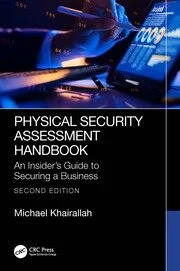
    Physical Security Assessment Handbook An Insider’s Guide to Securing a Business

See More Products
×

Sign-up to receive top management & result-driven techniques in the industry.

Join over 20,000+ industry leaders who receive our premium content.

SIGN UP TODAY!
  • RESOURCES
    • Advertise
    • Contact Us
    • Store
    • Want More
  • SIGN UP TODAY
    • Create Account
    • eMagazine
    • Newsletter
    • Customer Service
    • Manage Preferences
  • SERVICES
    • Marketing Services
    • Reprints
    • Market Research
    • List Rental
    • Survey/Respondent Access
  • STAY CONNECTED
    • LinkedIn
    • Facebook
    • YouTube
    • X (Twitter)
  • PRIVACY
    • PRIVACY POLICY
    • TERMS & CONDITIONS
    • DO NOT SELL MY PERSONAL INFORMATION
    • PRIVACY REQUEST
    • ACCESSIBILITY

Copyright ©2025. All Rights Reserved BNP Media.

Design, CMS, Hosting & Web Development :: ePublishing