Security Magazine logo
search
cart
facebook twitter linkedin youtube
  • Sign In
  • Create Account
  • Sign Out
  • My Account
Security Magazine logo
  • NEWS
    • Security Newswire
    • Technologies & Solutions
  • MANAGEMENT
    • Leadership Management
    • Enterprise Services
    • Security Education & Training
    • Logical Security
    • Security & Business Resilience
    • Profiles in Excellence
  • PHYSICAL
    • Access Management
    • Fire & Life Safety
    • Identity Management
    • Physical Security
    • Video Surveillance
    • Case Studies (Physical)
  • CYBER
    • Cybersecurity News
    • More
  • BLOG
  • COLUMNS
    • Career Intelligence
    • Cyber Tactics
    • Cybersecurity Education & Training
    • Leadership & Management
    • Security Talk
  • EXCLUSIVES
    • Annual Guarding Report
    • Most Influential People in Security
    • The Security Benchmark Report
    • Top Guard and Security Officer Companies
    • Top Cybersecurity Leaders
    • Women in Security
  • SECTORS
    • Arenas / Stadiums / Leagues / Entertainment
    • Banking/Finance/Insurance
    • Construction, Real Estate, Property Management
    • Education: K-12
    • Education: University
    • Government: Federal, State and Local
    • Hospitality & Casinos
    • Hospitals & Medical Centers
    • Infrastructure:Electric,Gas & Water
    • Ports: Sea, Land, & Air
    • Retail/Restaurants/Convenience
    • Transportation/Logistics/Supply Chain/Distribution/ Warehousing
  • EVENTS
    • Industry Events
    • Webinars
    • Solutions by Sector
    • Security 500 Conference
  • MEDIA
    • Interactive Spotlight
    • Photo Galleries
    • Podcasts
    • Polls
    • Videos
      • Cybersecurity & Geopolitical Discussion
      • Ask Me Anything (AMA) Series
  • MORE
    • Call for Entries
    • Classifieds & Job Listings
    • Continuing Education
    • Newsletter
    • Sponsor Insights
    • Store
    • White Papers
  • EMAG
    • eMagazine
    • This Month's Content
    • Advertise
  • SIGN UP!
ColumnsSecurity & Business Resilience

Despite Global Upset, CSOs Secure Business, As Usual

Protecting and supporting stakeholders on a global scale through investments in security operations centers (SOCs), intelligence services and travel support companies has become a best practice for leading security programs.

By Mark McCourt
September 1, 2014

While most CSOs tell me what they love most about their jobs is that something different happens each day and it never becomes boring, recent events on the world stage are sure to challenge that notion. Protecting and supporting stakeholders on a global scale through investments in security operations centers (SOCs), intelligence services and travel support companies has become a best practice for leading security programs.

Proof that leading security programs are identifying and mitigating risks is the “business as usual” approach during the recent Ebola outbreaks in West Africa; Malaysian Airlines flight MH17; and the Israel/Gaza conflict. These events are not forcing security to become the voice of “No” in most organizations.

Perhaps the best example of politics, war and risk not standing in the way of business was ExxonMobil’s announcement on August 9, as reported by Reuters, that they would start digging in Russia’s Arctic that weekend, despite Western sanctions imposed on its Russian partner Rosneft. Hailed by Vladimir Putin as a model of “cooperation” Putin appeared in a photo opp with ExxonMobil CEO Rex Tillerson. Glenn Waller, ExxonMobil’s lead manager in Russia, stated, “Our cooperation is a long-term one.”

While U.S. sanctions are designed to ban Russian companies, like Rosneft, from access to financing and modern technology, they are not meant to halt joint projects between U.S. and Russian companies. The business and human risks can be (and have been, one would assume) understood, weighed and evaluated to assure and enable business.

A recent article in Haraatz, Israel’s oldest daily newspaper, titled, “Business as usual with Gaza, despite war and blockade,” noted that despite the conflict, “Gaza is big business for Israel, and Hamas has to allow it to take place.” An Israeli customs agent was quoted: “We’ve been working with exporters from Gaza continuously since Operation Protective Edge began, even during the shelling. We’re releasing all the goods that arrive for them at Israeli ports, we’re conducting money transfers and have even paid some of the customs fees ourselves, because we know they’ll pay us back when things calm down.” Ironically, the repeated conflicts and property destruction result in strong demand for building products in Gaza, which are imported from Israel. The article notes that at least 50 percent of all products entering Gaza are produced in Israel.

Hardest to see, measure and mitigate, for any enterprise or government are pandemics. SARS (severe acute respiratory syndrome) first appeared in China in late 2002, at a time when U.S. companies were eager to do business with Asia, requiring frequent travel to and from the region. Within a few months, SARS spread worldwide, carried by unsuspecting travelers and travel restrictions became the norm. Today, Ebola is devastating to those in West African countries fighting the disease. But how businesses and governments are responding to the outbreak is mixed. The Center for Disease Control issued a high alert, but stopped there.

Some businesses, such as airlines, have either suspended service or increased passenger screening in the area. British Airways suspended service to both Liberia and Sierra Leone. Air France and Brussels Airlines increased screening procedures and warned that service could be cut at any time.

None of the above scenarios give security leaders a hard and fast recommendation or policy to point to or adopt. Navigating these organizational challenges is perhaps the most daunting aspect of the leadership role. In a business as usual culture, being seen as the voice of “No” might result in recommendations being ignored. And placing the responsibility on one’s own shoulders with an overzealously promised “Yes” might not be realistic. Rather, the key is to appropriately present the risk scenarios to business leaders so they can manage their own risk/benefit decisions. And it would appear that is exactly what is happening. Making appropriate recommendations as the “trusted advisor” so those that own the risks can decide the best course.

As Steve Hunt recently wrote in his post, Security’s New Focus on Value, not Risk: “Upper management thinks in terms of business development, not security. What people will be needed? What headcount can we reduce? How much will it cost? How much will we save? What new revenue can we earn as a result of this investment? And they think not in terms of security risks, but in terms of credit risk, market risks and operational risks. That’s where security professionals can shine.”

And Exxon Mobil is not the only organization shining. Taglit-Birthright, a Jerusalem-based organization that offers free 10-day trips to Jews ages 18–26, is continuing its program during the conflict, and very few participants have canceled their participation. Enabling the mission is becoming business as usual.   

KEYWORDS: business continuity C-suite security emergency management international security security crisis security leadership

Share This Story

Looking for a reprint of this article?
From high-res PDFs to custom plaques, order your copy today!

Mark McCourt was once the publisher of Security magazine.

Recommended Content

JOIN TODAY
To unlock your recommendations.

Already have an account? Sign In

  • Iintegration and use of emerging tools

    Future Proof Your Security Career with AI Skills

    AI’s evolution demands security leaders master...
    Security Leadership and Management
    By: Jerry J. Brennan and Joanne R. Pollock
  • The 2025 Security Benchmark Report

    The 2025 Security Benchmark Report

    The 2025 Security Benchmark Report surveys enterprise...
    The Security Benchmark Report
    By: Rachelle Blair-Frasier
  • The Most Influential People in Security 2025

    Security’s Most Influential People in Security 2025

    Security Magazine’s 2025 Most Influential People in...
    Most Influential People in Security
    By: Security Staff
Manage My Account
  • Security Newsletter
  • eMagazine Subscriptions
  • Manage My Preferences
  • Online Registration
  • Mobile App
  • Subscription Customer Service

More Videos

Sponsored Content

Sponsored Content is a special paid section where industry companies provide high quality, objective, non-commercial content around topics of interest to the Security audience. All Sponsored Content is supplied by the advertising company and any opinions expressed in this article are those of the author and not necessarily reflect the views of Security or its parent company, BNP Media. Interested in participating in our Sponsored Content section? Contact your local rep!

close
  • critical event management
    Sponsored byEverbridge

    Why a Unified View Across IT, Continuity, and Security Makes or Breaks Crisis Response

  • Charlotte Star Room
    Sponsored byAMAROK

    In an Uncertain Economy, Security Is a Necessity - Not an Afterthought

  • Sureview screen
    Sponsored bySureView Systems

    The Evolution of Automation in the Command Center

Popular Stories

Red laptop

Security Leaders Discuss SitusAMC Cyberattack

Cybersecurity trends of 2025

3 Top Cybersecurity Trends from 2025

Green code

Logitech Confirms Data Breach, Security Leaders Respond

Neon human and android hands

65% of the Forbes AI 50 List Leaked Sensitive Information

The Louvre

After the Theft: Why Camera Upgrades Should Begin With a Risk Assessment

Top Cybersecurity Leaders

Events

September 18, 2025

Security Under Fire: Insights on Active Shooter Preparedness and Recovery

ON DEMAND: In today’s complex threat environment, active shooter incidents demand swift, coordinated and well-informed responses.

December 11, 2025

Responding to Evolving Threats in Retail Environments

Retail security professionals are facing an increasingly complex array of security challenges — everything from organized retail crime to evolving cyber-physical threats and public safety concerns.

View All Submit An Event

Products

Security Culture: A How-to Guide for Improving Security Culture and Dealing with People Risk in Your Organisation

Security Culture: A How-to Guide for Improving Security Culture and Dealing with People Risk in Your Organisation

See More Products

Related Articles

  • How to Prepare for ‘Business not as Usual’

    See More
  • Business as Usual?

    See More
  • football stadium

    Keeping stadiums secure despite staffing shortages

    See More

Related Products

See More Products
  • physical security.webp

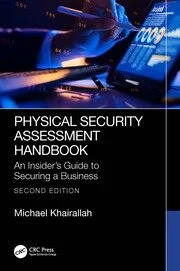
    Physical Security Assessment Handbook An Insider’s Guide to Securing a Business

  • Security of Information and Communication Networks

See More Products
×

Sign-up to receive top management & result-driven techniques in the industry.

Join over 20,000+ industry leaders who receive our premium content.

SIGN UP TODAY!
  • RESOURCES
    • Advertise
    • Contact Us
    • Store
    • Want More
  • SIGN UP TODAY
    • Create Account
    • eMagazine
    • Newsletter
    • Customer Service
    • Manage Preferences
  • SERVICES
    • Marketing Services
    • Reprints
    • Market Research
    • List Rental
    • Survey/Respondent Access
  • STAY CONNECTED
    • LinkedIn
    • Facebook
    • YouTube
    • X (Twitter)
  • PRIVACY
    • PRIVACY POLICY
    • TERMS & CONDITIONS
    • DO NOT SELL MY PERSONAL INFORMATION
    • PRIVACY REQUEST
    • ACCESSIBILITY

Copyright ©2025. All Rights Reserved BNP Media.

Design, CMS, Hosting & Web Development :: ePublishing