Security Magazine logo
search
cart
facebook twitter linkedin youtube
  • Sign In
  • Create Account
  • Sign Out
  • My Account
Security Magazine logo
  • NEWS
    • Security Newswire
    • Technologies & Solutions
  • MANAGEMENT
    • Leadership Management
    • Enterprise Services
    • Security Education & Training
    • Logical Security
    • Security & Business Resilience
    • Profiles in Excellence
  • PHYSICAL
    • Access Management
    • Fire & Life Safety
    • Identity Management
    • Physical Security
    • Video Surveillance
    • Case Studies (Physical)
  • CYBER
    • Cybersecurity News
    • More
  • BLOG
  • COLUMNS
    • Career Intelligence
    • Cyber Tactics
    • Cybersecurity Education & Training
    • Leadership & Management
    • Security Talk
  • EXCLUSIVES
    • Annual Guarding Report
    • Most Influential People in Security
    • The Security Benchmark Report
    • Top Guard and Security Officer Companies
    • Top Cybersecurity Leaders
    • Women in Security
  • SECTORS
    • Arenas / Stadiums / Leagues / Entertainment
    • Banking/Finance/Insurance
    • Construction, Real Estate, Property Management
    • Education: K-12
    • Education: University
    • Government: Federal, State and Local
    • Hospitality & Casinos
    • Hospitals & Medical Centers
    • Infrastructure:Electric,Gas & Water
    • Ports: Sea, Land, & Air
    • Retail/Restaurants/Convenience
    • Transportation/Logistics/Supply Chain/Distribution/ Warehousing
  • EVENTS
    • Industry Events
    • Webinars
    • Solutions by Sector
    • Security 500 Conference
  • MEDIA
    • Interactive Spotlight
    • Photo Galleries
    • Podcasts
    • Polls
    • Videos
      • Cybersecurity & Geopolitical Discussion
      • Ask Me Anything (AMA) Series
  • MORE
    • Call for Entries
    • Classifieds & Job Listings
    • Continuing Education
    • Newsletter
    • Sponsor Insights
    • Store
    • White Papers
  • EMAG
    • eMagazine
    • This Month's Content
    • Advertise
  • SIGN UP!

Biometric Fills Security Niches

By Bill Zalud
May 7, 2003
Whether to better identify people handling cash or to make international shipping safer, biometrics technology continues to fill specific, essential security niches.

One example: prompted by growing security concerns, Kaiser-Permanente, America's largest health plan provider, has begun installing NKL Cash Handling, New Albany, Ind., systems equipped with Bioscrypt Inc., Van Nuys, Calif., fingerprint access readers in its California facilities.
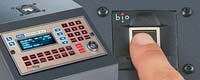
A fingerprint reader is easily retrofit into a cash handling system.

The design cuts down on potential employee theft.

Meets Changing Needs

The rollout reflects the emerging attraction of biometrics, biometrics' ability to easily integrate with other security equipment as well as the changing face of healthcare.

Patient co-payments to health insurance plans are on the rise and physician practices now collect increasingly larger sums of cash. The situation creates a growing security concern in healthcare facilities. So Kaiser-Permanente made a decision to invest $3 million dollars in FKI Security Group's NKL Cash Handling systems.

"We made the decision to replace existing drop safes with intelligent safes that offer cash dispensing and biometrics entry," says project manager Jeri Bennett of Patient Business Services for Kaiser Foundation Health Plan, Inc. "Our primary goal: decrease the distance an employee has to travel in a building to make deposits. We see this as a very real life safety issue for employees."

The cash-handling system uses Bioscrypt's self-contained fingerprint verification module, the MV1200. About the size of a business card, the MV1200 includes a small circuit board, sensor and software.

"We believe that biometrics is an important part of employee safety and loss prevention because it offers positive authentication with a fingerprint. PINs, encryption keys and passwords typically need to be changed often and are easily forgotten," says Steve Aronson of NKL Cash Handling. "All NKL Auditlok XLV products can upgrade with a biometrics reader in less than an hour, resulting in minimal disruption to the daily operations at the installation site. With a retail cost estimated at under $1,000, it is a very cost effective way to increase security."

Rollout During Year

Kaiser-Permanente's Folsom facility in Capital-Sacramento Valley, Calif., went live last October. A rollout of 234 Autobank D8C units with Auditlok XLV and biometrics is anticipated through the second quarter 2003 at the majority of California-based Kaiser-Permanente facilities.

The Kaiser Permanente southern and northern California operations serve more than 6.3 million members and employ close to 100,000 people including 8,000 physicians. The region is served by 11 major medical centers.

The cash-handling network will cover participating medical office buildings and hospitals. "This is very exciting technology and will make a big difference in our operations," Bennett added. "We feel we have addressed a life safety issue and eliminated any employee theft concerns as well. There is no way to cheat the system-it offers better accountability and a complete audit trail. Currently, we are using both biometrics and PINs numbers, but expect that by the end of 2003 we will just be using biometrics," Bennett concluded.

Maritime Security

Another expanding biometrics niche is the transportation industry. Travelers and industry workers both are involved in personal identification experiments that involve various types of biometrics and access cards.

One recent innovation covers seafarers working for the Liberian International Ship and Corporate Registry (LISCR).

The organization is now using Datastrip, Exton, Penn., 2D Superscript two-dimensional barcode as the core technology on the world's first biometrics-based seafarer's identity card. LISCR is the second largest shipping registry in the world, with approximately 2,000 vessels and 500,000 active seafarers on its docket. The initiative is intended to help improve maritime security by providing a counterfeit-proof identity document.

Each LISCR seafarer's card will include a tiny Datastrip barcode containing either one or two fingerprint templates, a digitized version of the cardholder's photograph and several pages of encoded personal information. Identity verification will be performed on vessels and at ports of entry with Datastrip's DSVerify2D, a portable biometric ID card reader capable of decoding fingerprints, text and photographs with one swipe.

Finger, Picture, Records

The reader includes an optical fingerprint scanner that can match the stored fingerprint template with the cardholder's live fingerprint on the spot, preventing identity fraud.

The initial six-month production phase of LISCR's implementation, which began earlier this year, will cover 2,000 seafarers around the globe. It will be used to ensure the smooth operation of the data collection, design, printing and identity verification processes associated with the new ID card. LISCR expects to introduce the card system-wide after the six-month testing period. Possible future enhancements include the addition of information on special seafarer's qualifications on the card.

"Given our size and the rising concerns about maritime security in today's terrorist-conscious environment, we decided to take a leadership role on the security issue by demonstrating the benefits of biometrics for identity verification," says Scott Bergeron, LISCR's chief operating officer for maritime services. "It is our hope that this card will become an industry standard for identifying seafarers from all registries and eventually serve as a kind of passport that can be carried at all times, both for identification purposes and as a certification of the seaman's competency."

LISCR selected Datastrip's technology in part because it has been recognized by the International Civil Aviation Organization (ICAO) for use on machine-readable travel documents such as passports and visas. This will help ensure consistency within the transportation industry as a whole.

Other factors in LISCR's decision to use the technology included a production cost of less than $1 per card, the ability of the reader to function in standalone mode without connection to a computer network and an open architecture that will permit interchangeability with other biometric standards that may be established in the future by the International Maritime Organization (IMO) or the International Labor Organization (ILO).

Card printing and supplementary project management comes from Datacard Group of Minneapolis, Minn. Datacard's ID Works platform will be used to produce the cards.

Share This Story

Looking for a reprint of this article?
From high-res PDFs to custom plaques, order your copy today!


Zalud 2016 200px

Bill was the editor emeritus of Security Magazine, and he can be reached at (773) 929-6859.

Recommended Content

JOIN TODAY
To unlock your recommendations.

Already have an account? Sign In

  • Iintegration and use of emerging tools

    Future Proof Your Security Career with AI Skills

    AI’s evolution demands security leaders master...
    Security Leadership and Management
    By: Jerry J. Brennan and Joanne R. Pollock
  • The 2025 Security Benchmark Report

    The 2025 Security Benchmark Report

    The 2025 Security Benchmark Report surveys enterprise...
    The Security Benchmark Report
    By: Rachelle Blair-Frasier
  • The Most Influential People in Security 2025

    Security’s Most Influential People in Security 2025

    Security Magazine’s 2025 Most Influential People in...
    Most Influential People in Security
    By: Security Staff
Manage My Account
  • Security Newsletter
  • eMagazine Subscriptions
  • Manage My Preferences
  • Online Registration
  • Mobile App
  • Subscription Customer Service

More Videos

Sponsored Content

Sponsored Content is a special paid section where industry companies provide high quality, objective, non-commercial content around topics of interest to the Security audience. All Sponsored Content is supplied by the advertising company and any opinions expressed in this article are those of the author and not necessarily reflect the views of Security or its parent company, BNP Media. Interested in participating in our Sponsored Content section? Contact your local rep!

close
  • critical event management
    Sponsored byEverbridge

    Why a Unified View Across IT, Continuity, and Security Makes or Breaks Crisis Response

  • Charlotte Star Room
    Sponsored byAMAROK

    In an Uncertain Economy, Security Is a Necessity - Not an Afterthought

  • Sureview screen
    Sponsored bySureView Systems

    The Evolution of Automation in the Command Center

Popular Stories

Digital, tablet and hands

The 2025 Annual Guarding Report: Unrest Inspires Upgrades in Training, Technology

Red laptop

Security Leaders Discuss SitusAMC Cyberattack

Cybersecurity predictions of 2026

5 Cybersecurity Predictions for 2026

Code

Security Leaders Discuss the Marquis Data Breach

Digital human mind

Should Organizations Block AI Browsers? Security Leaders Discuss

Top Cybersecurity Leaders

Events

September 18, 2025

Security Under Fire: Insights on Active Shooter Preparedness and Recovery

ON DEMAND: In today’s complex threat environment, active shooter incidents demand swift, coordinated and well-informed responses.

January 14, 2026

Is Your Organization Prepared to Navigate Interconnected Threats in 2026?

The 2026 threat environment will be louder, faster, and more interconnected. The most pressing risks, from global political volatility to emerging tech disruptions, will challenge organizations to act amid ambiguity and protect credibility in an era of accelerating uncertainty.

View All Submit An Event

Products

Security Culture: A How-to Guide for Improving Security Culture and Dealing with People Risk in Your Organisation

Security Culture: A How-to Guide for Improving Security Culture and Dealing with People Risk in Your Organisation

See More Products

Related Articles

  • cruise ship

    Port of Baltimore adds biometric security for cruise travel

    See More
  • Encryption Future - Security Magazine

    Security Trial: Are Biometric Authentication Systems Fulfilling Encryption Standards?

    See More
  • biometrics

    Biometric Data: Increased Security and Risks

    See More

Related Products

See More Products
  • Hospitality Security: Managing Security in Today's Hotel, Lodging, Entertainment, and Tourism Environment

  • 9780367259044.jpg

    Understanding Homeland Security: Foundations of Security Policy

  • security culture.webp

    Security Culture: A How-to Guide for Improving Security Culture and Dealing with People Risk in Your Organisation

See More Products
×

Sign-up to receive top management & result-driven techniques in the industry.

Join over 20,000+ industry leaders who receive our premium content.

SIGN UP TODAY!
  • RESOURCES
    • Advertise
    • Contact Us
    • Store
    • Want More
  • SIGN UP TODAY
    • Create Account
    • eMagazine
    • Newsletter
    • Customer Service
    • Manage Preferences
  • SERVICES
    • Marketing Services
    • Reprints
    • Market Research
    • List Rental
    • Survey/Respondent Access
  • STAY CONNECTED
    • LinkedIn
    • Facebook
    • YouTube
    • X (Twitter)
  • PRIVACY
    • PRIVACY POLICY
    • TERMS & CONDITIONS
    • DO NOT SELL MY PERSONAL INFORMATION
    • PRIVACY REQUEST
    • ACCESSIBILITY

Copyright ©2025. All Rights Reserved BNP Media.

Design, CMS, Hosting & Web Development :: ePublishing