Security Magazine logo
search
cart
facebook twitter linkedin youtube
  • Sign In
  • Create Account
  • Sign Out
  • My Account
Security Magazine logo
  • NEWS
    • Security Newswire
    • Technologies & Solutions
  • MANAGEMENT
    • Leadership Management
    • Enterprise Services
    • Security Education & Training
    • Logical Security
    • Security & Business Resilience
    • Profiles in Excellence
  • PHYSICAL
    • Access Management
    • Fire & Life Safety
    • Identity Management
    • Physical Security
    • Video Surveillance
    • Case Studies (Physical)
  • CYBER
    • Cybersecurity News
    • More
  • BLOG
  • COLUMNS
    • Career Intelligence
    • Cyber Tactics
    • Cybersecurity Education & Training
    • Leadership & Management
    • Security Talk
  • EXCLUSIVES
    • Annual Guarding Report
    • Most Influential People in Security
    • The Security Benchmark Report
    • Top Guard and Security Officer Companies
    • Top Cybersecurity Leaders
    • Women in Security
  • SECTORS
    • Arenas / Stadiums / Leagues / Entertainment
    • Banking/Finance/Insurance
    • Construction, Real Estate, Property Management
    • Education: K-12
    • Education: University
    • Government: Federal, State and Local
    • Hospitality & Casinos
    • Hospitals & Medical Centers
    • Infrastructure:Electric,Gas & Water
    • Ports: Sea, Land, & Air
    • Retail/Restaurants/Convenience
    • Transportation/Logistics/Supply Chain/Distribution/ Warehousing
  • EVENTS
    • Industry Events
    • Webinars
    • Solutions by Sector
    • Security 500 Conference
  • MEDIA
    • Interactive Spotlight
    • Photo Galleries
    • Podcasts
    • Polls
    • Videos
      • Cybersecurity & Geopolitical Discussion
      • Ask Me Anything (AMA) Series
  • MORE
    • Call for Entries
    • Classifieds & Job Listings
    • Newsletter
    • Sponsor Insights
    • Store
    • White Papers
  • EMAG
    • eMagazine
    • This Month's Content
    • Advertise
  • SIGN UP!
CybersecuritySecurity NewswireCybersecurity News

Avoid “PR Spin” in IT/OT Outages, CISA Advises

By Jordyn Alger, Managing Editor
Orange megaphone
Oleg Laptev via Unsplash
September 9, 2026

The Cybersecurity Infrastructure & Security Agency (CISA) and the Federal Bureau of Investigation (FBI) released best practices for organizations needing to communicate under the pressure of an outage or other disrupting event. 

In this guide, the agencies recommend organizations prioritize transparency and avoid marketing language. 

“Effective communication begins with a factual summary tailored to predefined audiences, avoids PR spin, and adheres to regulatory requirements,” the guide states. “Service providers should be transparent by sharing what is known, unknown, and under investigation, while providing frequent, iterative updates as new information emerges or circumstances change.”

Security Leaders Weigh In

Joshua Marpet, Senior Product Security Consultant, Finite State:

Agencies advocating clear communication with timely updates, and avoiding PR style language is great! Useless, but great. Companies will use whatever language their crisis communications firm advocates for, because that is how they avoid liability. Firms with the backbone to be open, honest, and transparent are not exactly the majority out there. Unless you have communication strategies mandated, you have an perfect example of Marpet’s law: “Unless it’s mandated, or someone is paying for it, ain’t gonna happen.”

The EU CRA is a great example of mandating that type of communication. 24 hours, 72 hours, and 14 days, after an incident, there are specific types of communications with defined pieces of data you MUST give to the public and stakeholders. This is what we need, not best wishes and prayers.

Denis Calderone, CTO, Suzu Labs:

Let’s be honest, at a high level, none of this is new. Cross-functional incident teams, designated spokespeople, escalation paths, time-stamped updates, practice transparency. All of that has been in every incident response framework going back to NIST 800-61. Where this guidance actually adds value is in the operational specifics and the timing. It explicitly tells organizations to assume that their own telecommunications and primary communication channels may be disrupted or unreliable during a crisis. That means establishing and testing backup methods like radios, SMS phone trees, and out-of-band channels before you need them. When I run tabletop exercises for clients, one of the first things I do is take their communications down. Email is gone, Teams is gone, your status page is offline. Now coordinate your response and communicate with your customers. Most organizations completely fall apart at that point, and that is exactly the scenario this guidance is built for.

The timing also matters. This drops alongside CISA’s CI Fortify initiative, which tells critical infrastructure operators to prepare to deliberately disconnect OT systems from third-party networks during a geopolitical crisis. If you’re a water utility or a power plant making a real-time decision about whether to isolate, you need your service providers telling you exactly what is happening and what is not happening. The guidance specifically calls for articulating “what it is and what it is not” to prevent misattribution. After the year we’ve had with attacks against water utilities, ports, power generation, and PLC suppliers, CISA clearly does not want the next big CI outage to trigger days of “was this a nation-state attack?” speculation while downstream operators are making blind isolation decisions.

What gives this more weight than a typical government advisory is who helped write it. Microsoft, Sophos, Cloudflare, and American Water all contributed. Cloudflare’s November 2025 outage is explicitly cited as an informing event, and for good reason. Their status page went down during the incident, their own response team initially misidentified the root cause partly because of the communication breakdown, and the whole thing spiraled. The organizations that have been through it are helping write the playbook, and that gives the operational details real credibility.

John Strand, Owner, Black Hills Information Security, Inc.:

I think everything in this plan is great. There’s just one area I wish they would address more directly. When the decision is made to shut down network access, there need to be very clear lines defining who is authorized to make that decision and what political protections exist for the people making those calls.

During a breach of this nature, one of the biggest communication problems is often figuring out who’s on first and who’s on second. Who can actually make the call? Who has the authority to shut down access?

What often happens is that the decision gets escalated again and again and again until it eventually reaches a director, CEO, commissioner, or some other senior official who has enough authority to make the call. Meanwhile, valuable time is being lost.

Incident response plans need to go deeper than motherhood and apple pie statements about communicating with customers, coordinating between organizations, and keeping everyone informed. That’s all important, but the plan needs to explicitly identify who has the authority to make the really hard decisions during an incident.

Just as importantly, there needs to be political cover for the people who make those decisions.

Hindsight is always 20/20. After an incident, everyone gets to sit around and analyze whether shutting something down was absolutely necessary. The person making that decision in the middle of an active breach doesn’t have that luxury.

KEYWORDS: communications cyber incident cyber incident response Cyber response

Share This Story

Looking for a reprint of this article?
From high-res PDFs to custom plaques, order your copy today!


Jordynalger

Jordyn Alger is the managing editor for Security magazine. Alger writes for topics such as physical security and cyber security and publishes online news stories about leaders in the security industry. She is also responsible for multimedia content and social media posts. Alger graduated in 2021 with a BA in English – Specialization in Writing from the University of Michigan. Image courtesy of Alger

Recommended Content

JOIN TODAY
To unlock your recommendations.

Already have an account? Sign In

  • Cyber tech background

    Security’s Top Cybersecurity Leaders 2026

    Security magazine’s Top Cybersecurity Leaders 2026 award...
    Security Leadership and Management
  • Iintegration and use of emerging tools

    Future Proof Your Security Career with AI Skills

    AI’s evolution demands security leaders master...
    Columns
    By: Jerry J. Brennan and Joanne R. Pollock
  • The 2025 Security Benchmark Report

    The 2025 Security Benchmark Report

    The 2025 Security Benchmark Report surveys enterprise...
    The Security Benchmark Report
    By: Rachelle Blair-Frasier
Manage My Account
  • Security Newsletter
  • eMagazine Subscriptions
  • Manage My Preferences
  • Online Registration
  • Mobile App
  • Subscription Customer Service

More Videos

Sponsored Content

Sponsored Content is a special paid section where industry companies provide high quality, objective, non-commercial content around topics of interest to the Security audience. All Sponsored Content is supplied by the advertising company and any opinions expressed in this article are those of the author and not necessarily reflect the views of Security or its parent company, BNP Media. Interested in participating in our Sponsored Content section? Contact your local rep!

close
  • Northland Controls sponsored content
    Sponsored byNorthland Controls

    The Execution Gap: Why Great Security Design Doesn't Always Deliver Great Security

Popular Stories

Man in suit looking out window at city

Why GSOCs and Protective Intelligence Are the Cornerstone of Executive Protection

Photograph of apartment complex patios

Enhancing Residential Building Security

Security's Most Influential people 2026

Security’s Most Influential People in Security 2026

Person working on laptop

When Cyber Meets Physical: Rethinking Data Management for a New Threat Landscape

5 Minutes with Johnson

Can Organizations Trust Their Own AI?

Events

September 10, 2026

So, You Have an Emergency Management Plan… Now What?

LIVE: September 10, 2026 at 2 PM EDT Turning an emergency management plan into an actionable program that prepares staff, students, and partners to respond effectively is a challenge. Learn to move beyond compliance and build a resilient school safety program.
September 22, 2026

How to Detect, Verify, and Respond to AI-Driven Disinformation

LIVE: September 22, 2026 at 2 PM EDT Identify emerging threats, validate information with confidence, and coordinate an effective response across your organization. Learn how to build the people, processes, and technology needed to improve speed-to-truth.

View All Submit An Event

Products

Security Culture: A How-to Guide for Improving Security Culture and Dealing with People Risk in Your Organisation

Security Culture: A How-to Guide for Improving Security Culture and Dealing with People Risk in Your Organisation

See More Products

Related Articles

  • Code

    OT Networks Targeted in Vulnerability Exploitation

    See More
  • 100 dollar bill

    OT Disruptions Could Cost $330B Globally

    See More
  • Iranian flag

    Iranian Cyber Actors May Target “Entities of Interest” in US, Warns CISA

    See More

Related Products

See More Products
  • 150952519X.jpg

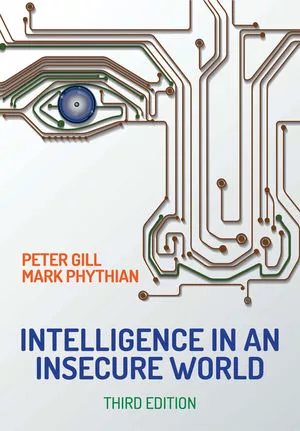
    Intelligence in An Insecure World, 3rd Edition

  • s in europe.jpg

    Surveillance in Europe

  • Physical Layer Security in Wireless Communications

See More Products
×

Sign-up to receive top management & result-driven techniques in the industry.

Join over 20,000+ industry leaders who receive our premium content.

SIGN UP TODAY!
  • RESOURCES
    • Advertise
    • Contact Us
    • Store
    • Want More
  • SIGN UP TODAY
    • Create Account
    • eMagazine
    • Newsletter
    • Customer Service
    • Manage Preferences
  • SERVICES
    • Marketing Services
    • Reprints
    • Market Research
    • List Rental
    • Survey/Respondent Access
  • STAY CONNECTED
    • LinkedIn
    • Facebook
    • YouTube
    • X (Twitter)
  • PRIVACY
    • PRIVACY POLICY
    • TERMS & CONDITIONS
    • DO NOT SELL MY PERSONAL INFORMATION
    • PRIVACY REQUEST
    • ACCESSIBILITY

Copyright ©2026. All Rights Reserved BNP Media, Inc. and BNP Media II, LLC.

Design, CMS, Hosting & Web Development :: ePublishing