Security Magazine logo
search
cart
facebook twitter linkedin youtube
  • Sign In
  • Create Account
  • Sign Out
  • My Account
Security Magazine logo
  • NEWS
    • Security Newswire
    • Technologies & Solutions
  • MANAGEMENT
    • Leadership Management
    • Enterprise Services
    • Security Education & Training
    • Logical Security
    • Security & Business Resilience
    • Profiles in Excellence
  • PHYSICAL
    • Access Management
    • Fire & Life Safety
    • Identity Management
    • Physical Security
    • Video Surveillance
    • Case Studies (Physical)
  • CYBER
    • Cybersecurity News
    • More
  • BLOG
  • COLUMNS
    • Career Intelligence
    • Cyber Tactics
    • Cybersecurity Education & Training
    • Leadership & Management
    • Security Talk
  • EXCLUSIVES
    • Annual Guarding Report
    • Most Influential People in Security
    • The Security Benchmark Report
    • Top Guard and Security Officer Companies
    • Top Cybersecurity Leaders
    • Women in Security
  • SECTORS
    • Arenas / Stadiums / Leagues / Entertainment
    • Banking/Finance/Insurance
    • Construction, Real Estate, Property Management
    • Education: K-12
    • Education: University
    • Government: Federal, State and Local
    • Hospitality & Casinos
    • Hospitals & Medical Centers
    • Infrastructure:Electric,Gas & Water
    • Ports: Sea, Land, & Air
    • Retail/Restaurants/Convenience
    • Transportation/Logistics/Supply Chain/Distribution/ Warehousing
  • EVENTS
    • Industry Events
    • Webinars
    • Solutions by Sector
    • Security 500 Conference
  • MEDIA
    • Interactive Spotlight
    • Photo Galleries
    • Podcasts
    • Polls
    • Videos
      • Cybersecurity & Geopolitical Discussion
      • Ask Me Anything (AMA) Series
  • MORE
    • Call for Entries
    • Classifieds & Job Listings
    • Newsletter
    • Sponsor Insights
    • Store
    • White Papers
  • EMAG
    • eMagazine
    • This Month's Content
    • Advertise
  • SIGN UP!
PhysicalPhysical Security

Integrated Solutions

The Crime Began Well Before the Breach

Sophisticated adversaries already treat your perimeter as a source of intelligence. The defenders who win must learn to do the same.
By Mark Landry, Contributing Writer
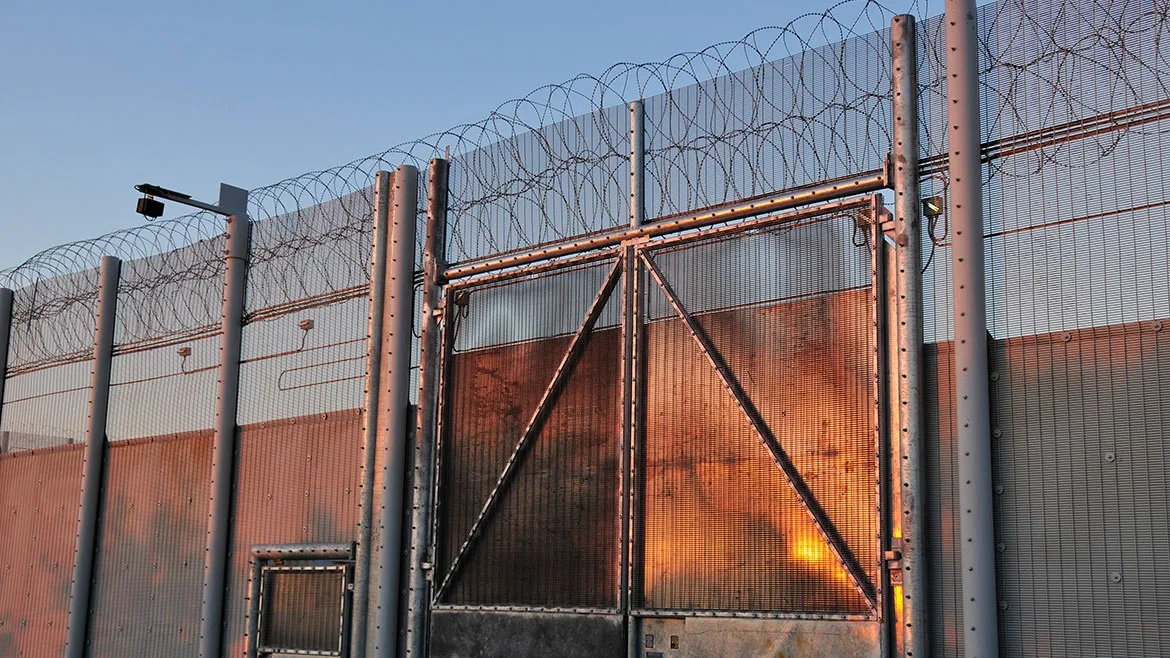
security fence with barbed wire
Image: Alan_Lagadu / E+ / Via Getty Images
August 10, 2026

The image most security professionals still carry of perimeter crime is the opportunist: the actor who spots an open gate, grabs what is within reach, and flees. While that type of criminal certainly still exists, the sophisticated adversary keeping us practitioners awake at night looks nothing like them.

The adversary that matters today plans. They surveil, rehearse, and study a facility the way an engineer studies a blueprint. By the time this opponent executes a physical breach, they have already answered every operational question that would have stopped an amateur.


The Hardening Trap

We have historically responded to this tactical shift by layered hardening: installing more sophisticated security assets, taller barriers, sharper cameras, and demanding faster alerts at the exact moment of contact. While these measures are undeniably useful, they all share one quiet, flawed assumption. They assume the security incident begins when the adversary touches the perimeter.

For a sophisticated adversary, that assumption is wrong by days, sometimes weeks. The breach is not the beginning of the crime. It is the final step of preparation.

That preparation happens at your perimeter, which is exactly the vulnerability we tend to miss. We naturally think of the boundary line as our instrument, the tool we deploy to keep intruders out. To a capable adversary, however, the perimeter is their instrument, and arguably the more valuable one.

The perimeter is where they learn how on-site leadership responds and how long it takes. It is where they map gaps in camera coverage, identify when the yard is busy, observe when the lights cycle, track how a guard moves, time how quickly you will respond, determine how many times they will respond to that “false alarm” until they either bypass or turn off security monitoring equipment. Every approach is a question; every quiet response is an answer. The perimeter is the adversary’s first and best source of intelligence, and they exploit it long before you have any reason to suspect them.

This is why we must treat the perimeter as a dynamic threat vector rather than a static barrier. Information flows across it in both directions, and right now, the sophisticated adversary is winning that exchange. They leave the fence line with a working operational model of your site. We are left with, at most, a cleared alarm.


Applying the Physical "Kill Chain"

To fix this imbalance, physical security leaders should borrow a proven concept from cybersecurity colleagues: the intrusion kill chain. Cyber defenders view an attack as a linear sequence of steps, beginning with initial reconnaissance and ending, much later, with data exfiltration or disruption. The entire cyber discipline has shifted toward detecting the earliest links in that chain, because neutralizing an adversary during the reconnaissance phase is cheaper, safer, and far more decisive than catching them mid-breach.

Physical security has a kill chain too. Unfortunately, we have trained our operations to watch only the final link. The reconnaissance, the probing, and the rehearsal all play out at our perimeter in plain view, yet we routinely let them pass.

The reality is that the signals of this reconnaissance are already arriving at our security operations centers. We are not blind to them; we are actively discarding them.

“Physical security has a kill chain too. Unfortunately, we have trained our operations to watch only the final link.”


Turning Noise into Intelligence

Consider what a mature physical security program currently treats as noise:

  • The nuisance alarm cleared before verification.
  • The vehicle that idled at the fence line for ten minutes and drove off.
  • The trespasser who tripped a perimeter sensor but vanished before a guard arrived.
  • The third consecutive night a particular sensor activated without an obvious cause.

Our operational instinct is to suppress these events, report them (if we are lucky), and forget them because, individually, each one appears to be a non-event. But to the adversary who generated them, not one of those actions was meaningless. Each was a controlled test of your system, and each produced exactly the data it was meant to collect.

Your false alarms are the adversary’s field notes.

We have been discarding our richest early-warning data stream simply because we filed it under "nuisance."

The novel move for physical security leadership is not to buy a better wall or a faster alert system. It is to invert the fundamental purpose of the perimeter. We must stop treating it solely as the place where physical attacks are stopped and start treating it as the place where adversary preparation is observed.


Rewriting the Security Equation

In practical terms, this means making the detection of reconnaissance, not the breach itself, the primary objective of boundary sensors. It requires building data memory across scattered, seemingly unrelated events. When we connect those dots, the same vehicle appearing on three different nights or the same probe occurring at a known blind spot no longer reads as three isolated nuisances. Instead, it reveals itself as a single, coordinated pattern.

Ultimately, the most valuable output of a modern perimeter is no longer physical deterrence, nor is it a breach alarm. It is actionable intelligence about who is preparing to attack your facility, gathered while they are still planning, and while you still have the time to counter the adversary.

None of this implies abandoning physical barriers. Layered security at your perimeter remains one of the most effective approaches to stopping an attack when it finally arrives. But a wall or a simple chain-link fence will never stop planning, and planning is where sophisticated adversaries earn their edge. They already understand that your perimeter is a fountain of intelligence, and they have been reading it for years.

The only real question left for security leadership is whether we start reading it back, and whether we start before they finish.

KEYWORDS: barrier layered security perimeter protection perimeter security

Share This Story

Looking for a reprint of this article?
From high-res PDFs to custom plaques, order your copy today!


Landry headshot background

Mark Landry has spent 25 years in the security industry. He spent 20 years at FedEx in the investigations organization, with his last 7 years at the Corporate Strategic Security Organization. Under his leadership, he developed enterprise-level solutions to evaluate, develop and test new security technologies to mitigate constricting manpower resources. This organization was paramount in bringing security analytics, robotics and automation to protect the people, assets and brand of FedEx. Mark received the prestigious FedEx Five Star award during his tenure and achieved Expert level for Quality Driven Management. He also served as the Senior Director of Global Security Transformation at CEVA Logistics. He was responsible for all strategic security initiatives, including developing standards, evolving enterprise risk metrics, retrofitting existing and developing new technology. He is currently a National Accounts Director at AMAROK.  In this role, he specializes in perimeter security initiatives across the transportation sector.  He is also leading AMAROK’s efforts to leverage diverse variables to better visualize risk for AMAROK customers. Bio image courtesy of Landry 

Recommended Content

JOIN TODAY
To unlock your recommendations.

Already have an account? Sign In

  • Cyber tech background

    Security’s Top Cybersecurity Leaders 2026

    Security magazine’s Top Cybersecurity Leaders 2026 award...
    Cybersecurity
  • Iintegration and use of emerging tools

    Future Proof Your Security Career with AI Skills

    AI’s evolution demands security leaders master...
    Security Education & Training
    By: Jerry J. Brennan and Joanne R. Pollock
  • The 2025 Security Benchmark Report

    The 2025 Security Benchmark Report

    The 2025 Security Benchmark Report surveys enterprise...
    The Security Benchmark Report
    By: Rachelle Blair-Frasier
Manage My Account
  • Security Newsletter
  • eMagazine Subscriptions
  • Manage My Preferences
  • Online Registration
  • Mobile App
  • Subscription Customer Service

More Videos

Sponsored Content

Sponsored Content is a special paid section where industry companies provide high quality, objective, non-commercial content around topics of interest to the Security audience. All Sponsored Content is supplied by the advertising company and any opinions expressed in this article are those of the author and not necessarily reflect the views of Security or its parent company, BNP Media. Interested in participating in our Sponsored Content section? Contact your local rep!

close
  • Northland Controls sponsored content
    Sponsored byNorthland Controls

    The Execution Gap: Why Great Security Design Doesn't Always Deliver Great Security

Popular Stories

Cargo ship sailing

You Can’t Secure a Ship Like a Laptop

2026 Women in Security

Security’s 2026 Women in Security

Denise Platon. Image courtesy of Platon

Denise Platon — Women in Security 2026

Women in Security: Julia Stuyt

Julia Stuyt — Women in Security 2026

Glowing AI square

Security Experts Discuss the Hugging Face, OpenAI Incident

Kaseware sponsored webinar
Schneider Electric sponsored webinar

Events

August 19, 2026

From Investigative Question to Defensible Answer: AI in Digital Forensics and Incident Response

LIVE: August 19, 2026 at 2 PM EDT We'll examine where AI can deliver meaningful value, where incomplete context or black-box reasoning can introduce risk, and what governance, validation, and evidence-traceability controls organizations should establish.

August 25, 2026

Critical Infrastructure Security Is National Security: Protecting Essential Operations in an Era of Escalating Risk

LIVE: August 25, 2026 at 2 PM EDT Learn why critical infrastructure security has become a national security imperative, and the strategies organizations can adopt to improve visibility, collaboration, and response across their security operations.

View All Submit An Event

Products

Security Culture: A How-to Guide for Improving Security Culture and Dealing with People Risk in Your Organisation

Security Culture: A How-to Guide for Improving Security Culture and Dealing with People Risk in Your Organisation

See More Products


Alertmedia sponsored webinar

Related Articles

  • perimeter security

    The 6 challenges of securing large perimeters

    See More
  • Medicine and medical equipment

    Beyond the breach: The ongoing fragility of healthcare cybersecurity

    See More

Related Products

See More Products
  • 9780815378068.jpg.jpg

    Biometrics, Crime and Security

  • 9781138378339.jpg

    Surveillance, Crime and Social Control

  • Physical Security and Safety: A Field Guide for the Practitioner

See More Products
×

Sign-up to receive top management & result-driven techniques in the industry.

Join over 20,000+ industry leaders who receive our premium content.

SIGN UP TODAY!
  • RESOURCES
    • Advertise
    • Contact Us
    • Store
    • Want More
  • SIGN UP TODAY
    • Create Account
    • eMagazine
    • Newsletter
    • Customer Service
    • Manage Preferences
  • SERVICES
    • Marketing Services
    • Reprints
    • Market Research
    • List Rental
    • Survey/Respondent Access
  • STAY CONNECTED
    • LinkedIn
    • Facebook
    • YouTube
    • X (Twitter)
  • PRIVACY
    • PRIVACY POLICY
    • TERMS & CONDITIONS
    • DO NOT SELL MY PERSONAL INFORMATION
    • PRIVACY REQUEST
    • ACCESSIBILITY

Copyright ©2026. All Rights Reserved BNP Media, Inc. and BNP Media II, LLC.

Design, CMS, Hosting & Web Development :: ePublishing