Security Magazine logo
search
cart
facebook twitter linkedin youtube
  • Sign In
  • Create Account
  • Sign Out
  • My Account
Security Magazine logo
  • NEWS
    • Security Newswire
    • Technologies & Solutions
  • MANAGEMENT
    • Leadership Management
    • Enterprise Services
    • Security Education & Training
    • Logical Security
    • Security & Business Resilience
    • Profiles in Excellence
  • PHYSICAL
    • Access Management
    • Fire & Life Safety
    • Identity Management
    • Physical Security
    • Video Surveillance
    • Case Studies (Physical)
  • CYBER
    • Cybersecurity News
    • More
  • BLOG
  • COLUMNS
    • Career Intelligence
    • Cyber Tactics
    • Cybersecurity Education & Training
    • Leadership & Management
    • Security Talk
  • EXCLUSIVES
    • Annual Guarding Report
    • Most Influential People in Security
    • The Security Benchmark Report
    • Top Guard and Security Officer Companies
    • Top Cybersecurity Leaders
    • Women in Security
  • SECTORS
    • Arenas / Stadiums / Leagues / Entertainment
    • Banking/Finance/Insurance
    • Construction, Real Estate, Property Management
    • Education: K-12
    • Education: University
    • Government: Federal, State and Local
    • Hospitality & Casinos
    • Hospitals & Medical Centers
    • Infrastructure:Electric,Gas & Water
    • Ports: Sea, Land, & Air
    • Retail/Restaurants/Convenience
    • Transportation/Logistics/Supply Chain/Distribution/ Warehousing
  • EVENTS
    • Industry Events
    • Webinars
    • Solutions by Sector
    • Security 500 Conference
  • MEDIA
    • Interactive Spotlight
    • Photo Galleries
    • Podcasts
    • Polls
    • Videos
      • Cybersecurity & Geopolitical Discussion
      • Ask Me Anything (AMA) Series
  • MORE
    • Call for Entries
    • Classifieds & Job Listings
    • Newsletter
    • Sponsor Insights
    • Store
    • White Papers
  • EMAG
    • eMagazine
    • This Month's Content
    • Advertise
  • SIGN UP!
CybersecuritySecurity & Business Resilience

As AI Outpaces Regulation, Trust is at Risk

By Jack Cherkas
Golden lights
Joshua Sortino
August 7, 2026

Artificial intelligence (AI) is a double-edged sword. In capable hands, it sharpens decisions, accelerates transformation, and strengthens defense. In the wrong hands, or in well-intentioned hands without oversight, it scales risk faster than any organization can absorb. The capability is not the problem, the governance is. And right now, governance is losing the race.

The same models that help defenders detect threats faster also help attackers run reconnaissance, craft convincing phishing, and probe enterprise systems at machine speed. That is not a future risk. It is happening now, in production environments, often inside organizations that have not yet decided who owns AI risk on their executive team.

The result is a quiet erosion of trust. Customers, regulators, and partners are starting to ask a question that compliance frameworks were never built to answer: can I trust your intelligence?

Regulation Is Lagging Reality

Regulators understand the stakes and are not standing still. Around the world, governments are introducing frameworks and legislation to establish guardrails for AI development and deployment. The EU AI Act is in force, with prohibitions live since February 2025, general-purpose AI obligations live since August 2025, and high-risk system requirements from August 2026. ISO/IEC 42001 has given us an AI management system standard that sits naturally alongside ISO 27001. NIST has published its AI Risk Management Framework. Every major jurisdiction is moving.

But regulation moves at legislative speed: deliberate, methodical, and slow. AI, and the innovation that powers it, moves at machine speed. New models, new agents, and new use cases land every week. By the time a regulator publishes guidance, the technology it regulates has changed, sometimes beyond recognition.

That gap is not closing. Organizations cannot wait for it to close, because the risk does not pause for regulators to catch up. The companies leading on AI are not the ones reading every new directive, they are the ones building governance fast enough to keep up with their own deployments.

Without defined policies, oversight mechanisms, and accountability structures, AI deployments can quickly drift into unsafe or non-compliant territory.

The Trust Question Is the Real Question

Most companies still treat AI risk as a compliance problem. It is not. It is a trust problem.

When AI is deployed without clear guardrails, the risk extends far beyond technical vulnerabilities. It introduces compliance, privacy, and reputational exposure.

Trust is the foundation of every digital business relationship. Customers trust you to handle their data responsibly. Partners trust you to operate within agreed terms. Regulators trust you to follow the rules. AI introduces a new question into that relationship, and it is the one that frameworks struggle to answer: can I trust your intelligence?

If you cannot explain how your AI systems work, where their training data came from, how decisions are made, or how bias and misuse are prevented, the answer is no. And once trust starts to erode, it cascades. One biased outcome, one data leak, one explainability failure, and you are not managing a security incident, you are managing a credibility incident.

Compliance gives you a floor. Trust is the ceiling. Most organizations still build only as high as the floor.

Secure and Responsible AI by Design

Forward-thinking security leaders are building AI governance now, before regulators force the question. They are not writing policies in isolation, they are embedding security, privacy, and accountability into AI systems from the first design decision. That principle has a name: secure and responsible AI by design.

This is not a checklist or a one-time exercise. It's an operating principle: controls built in from the outset, not retrofitted after deployment. It requires systems that are explainable, auditable, and aligned with human intent.

It also requires visibility and oversight. Organizations must understand what data their AI models are trained on, how outputs are generated, and where potential risks or biases may emerge. Without that visibility, control is an illusion.

In the SAP and Oracle ERP environments, this translates into specific controls: data lineage from source system to model, separation of training and production data, agent identity bound to least privilege, and monitoring that treats every AI agent as an insider threat by default. Because operationally, that is what it is.

The end goal is to engineer trust by balancing innovation with integrity. This means building systems that deliver powerful capabilities while maintaining accountability, transparency, and security. Because ultimately, intelligence without trust has limited value.

From Constraint to Competitive Advantage

For years, security and compliance were viewed as business blockers, necessary but often at odds with speed and innovation.

That mindset is shifting. Security and compliance are becoming differentiators.

Customers no longer ask whether your AI is fast. They ask whether it is governed. Regulators no longer ask whether you have a policy. They ask whether you can prove how it operates. Partners no longer accept “we are working on it” as a substitute for documented controls.

The organizations winning this market are the ones that can demonstrate not only what their AI does, but how responsibly it does it. That demonstration becomes a sales asset, an audit asset, and a board asset all at once. Trust accelerates adoption, badly governed AI slows it.

Simply put, responsible AI is not a brake on innovation, it’s what lets innovation scale.

Closing the Gap Before It Widens

AI will continue to outpace regulation. The question is not whether the gap exists, every CISO already knows it does. The question is who owns it.

If you wait for regulators, you will be late. If you wait for industry consensus, you will be late. If you wait for a trust failure to teach you the lesson, you will be too late.

By prioritizing trust, embedding responsibility into design, and taking ownership of governance, organizations can start closing that gap themselves. In doing so, they build trust and protect their operations while building the foundation for sustainable, scalable innovation in an AI-driven world.

The double-edged nature of AI is not going away, the difference will be in how you wield it. And when something goes wrong, “I didn't know” will not be a defense.

KEYWORDS: artificial intelligence (AI) governance governance risk regulations

Share This Story

Looking for a reprint of this article?
From high-res PDFs to custom plaques, order your copy today!


Jack cherkas headshot

Jack Cherkas is Global CISO at Syntax.

Recommended Content

JOIN TODAY
To unlock your recommendations.

Already have an account? Sign In

  • Cyber tech background

    Security’s Top Cybersecurity Leaders 2026

    Security magazine’s Top Cybersecurity Leaders 2026 award...
    Top Cybersecurity Leaders
  • Iintegration and use of emerging tools

    Future Proof Your Security Career with AI Skills

    AI’s evolution demands security leaders master...
    Security Leadership and Management
    By: Jerry J. Brennan and Joanne R. Pollock
  • The 2025 Security Benchmark Report

    The 2025 Security Benchmark Report

    The 2025 Security Benchmark Report surveys enterprise...
    The Security Benchmark Report
    By: Rachelle Blair-Frasier
Manage My Account
  • Security Newsletter
  • eMagazine Subscriptions
  • Manage My Preferences
  • Online Registration
  • Mobile App
  • Subscription Customer Service

More Videos

Sponsored Content

Sponsored Content is a special paid section where industry companies provide high quality, objective, non-commercial content around topics of interest to the Security audience. All Sponsored Content is supplied by the advertising company and any opinions expressed in this article are those of the author and not necessarily reflect the views of Security or its parent company, BNP Media. Interested in participating in our Sponsored Content section? Contact your local rep!

close
  • Northland Controls sponsored content
    Sponsored byNorthland Controls

    The Execution Gap: Why Great Security Design Doesn't Always Deliver Great Security

Popular Stories

Cargo ship sailing

You Can’t Secure a Ship Like a Laptop

Glasses in front of coding on screen

The Good Hackers Security Leaders Can’t Afford to Ignore

Coding

6 Data Breaches to Know About (June 2026)

Computer in darkness

Accenture Confirms Breach After Hackers Claim Source Code Theft

2026 Women in Security

Security’s 2026 Women in Security

Kaseware sponsored webinar
Schneider Electric sponsored webinar

Events

August 19, 2026

From Investigative Question to Defensible Answer: AI in Digital Forensics and Incident Response

LIVE: August 19, 2026 at 2 PM EDT We'll examine where AI can deliver meaningful value, where incomplete context or black-box reasoning can introduce risk, and what governance, validation, and evidence-traceability controls organizations should establish.

August 25, 2026

Critical Infrastructure Security Is National Security: Protecting Essential Operations in an Era of Escalating Risk

LIVE: August 25, 2026 at 2 PM EDT Learn why critical infrastructure security has become a national security imperative, and the strategies organizations can adopt to improve visibility, collaboration, and response across their security operations.

View All Submit An Event

Products

Security Culture: A How-to Guide for Improving Security Culture and Dealing with People Risk in Your Organisation

Security Culture: A How-to Guide for Improving Security Culture and Dealing with People Risk in Your Organisation

See More Products


Alertmedia sponsored webinar

Related Articles

  • SEC1019-career-Feat-slide1_900px

    As Cyber Attacks Become More Prevalent, Here’s Why Your Small Business is at Risk

    See More
  • Flooding in New Orleans, Louisiana

    Roughly 25% of U.S. critical infrastructure is at risk of flooding

    See More
  • Puzzle with missing piece

    Incomplete NVIDIA patch could leave AI infrastructure and data at risk

    See More

Related Products

See More Products
  • Risk Analysis and the Security Survey, 4th Edition

  • security culture.webp

    Security Culture: A How-to Guide for Improving Security Culture and Dealing with People Risk in Your Organisation

  • 1119490936.jpg

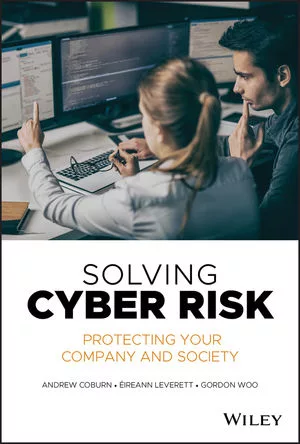
    Solving Cyber Risk: Protecting Your Company and Society

See More Products

Events

View AllSubmit An Event
  • April 15, 2026

    How AI is Closing the Decision Gap in Leading GSOCs

    ON DEMAND: Learn how modern security teams are evolving from alert-driven workflows to outcome-driven operations and how AI is enabling faster, more confident decisions at every stage of the incident response lifecycle.
View AllSubmit An Event
×

Sign-up to receive top management & result-driven techniques in the industry.

Join over 20,000+ industry leaders who receive our premium content.

SIGN UP TODAY!
  • RESOURCES
    • Advertise
    • Contact Us
    • Store
    • Want More
  • SIGN UP TODAY
    • Create Account
    • eMagazine
    • Newsletter
    • Customer Service
    • Manage Preferences
  • SERVICES
    • Marketing Services
    • Reprints
    • Market Research
    • List Rental
    • Survey/Respondent Access
  • STAY CONNECTED
    • LinkedIn
    • Facebook
    • YouTube
    • X (Twitter)
  • PRIVACY
    • PRIVACY POLICY
    • TERMS & CONDITIONS
    • DO NOT SELL MY PERSONAL INFORMATION
    • PRIVACY REQUEST
    • ACCESSIBILITY

Copyright ©2026. All Rights Reserved BNP Media, Inc. and BNP Media II, LLC.

Design, CMS, Hosting & Web Development :: ePublishing