Security Talk
Stop, Drop, and Roll
Insights from national fire prevention standards for active shooter prevention.
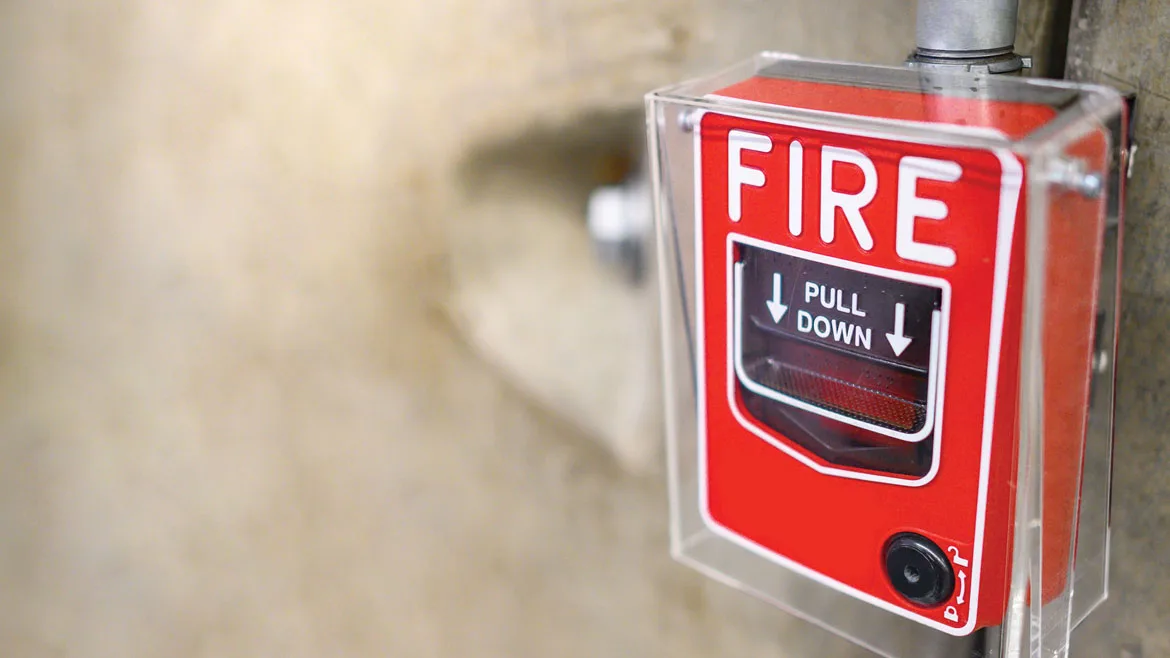
What do you do if you’re on fire? Ask anyone that question and no matter their age you’ll more than likely get the same answer. Say it with me: STOP, DROP, and ROLL!
Very good class! That famous phrase taught to countless school children since the 1970s has drastically reduced the number of children (and adults) who are injured by fire. All thanks to national standards for fire protection.
Recently, I had the opportunity to attend the IMRON Corporation Security & Safety Summit held in Detroit where Chris Grollnek, M.S., Founder and Managing Principal of the Active Shooter Prevention Project (ASPP), shared his experiences and insights on preventing and responding to active shooter incidents. During his presentation, he raised a good point — if national standards worked for fire protection, maybe those lessons can be used for active shooter protection.
“What do you do during an active shooter… the National standard for the public is absent,” Grollnek said. “One mother lost one child in a drunk driving incident, and we ended up with MAD (Mothers Against Drunk Drivers). That changed the course of history in the ‘70s all the way till now. One father named Adam Walsh who had his son abducted and tragically killed, and now we have code Adam every time you go into one of the big box retail stores.”
While there isn’t currently a mandatory national standard for active shooter prevention, there are several recognized frameworks that function as general guidelines. In his presentation, Grollnek said there are currently 22 different active shooter response programs (such as ALICE and Run, Hide, Fight) which are being taught to children today, and that can create confusion for schools and organizations.
“Preparedness works best when people know what to do before the crisis starts.”
Since the public service announcements and national standards for fire protection of the ‘70s, it has been years since a child was lost in a K-12 fire. However, according to the National Center for Education Statistics, from 2000 through 2022, elementary and secondary schools experienced 50 FBI-designated active shooter incidents resulting in 131 deaths and 197 injuries (excluding the shooters).
Whether a single national standard is the answer remains up to debate (and I welcome the thoughts of our readers on the subject), but one thing seems to be clear — preparedness works best when people know what to do before the crisis starts.
Looking for a reprint of this article?
From high-res PDFs to custom plaques, order your copy today!