New Trump Administration Budget Cuts $707M from CISA Funding
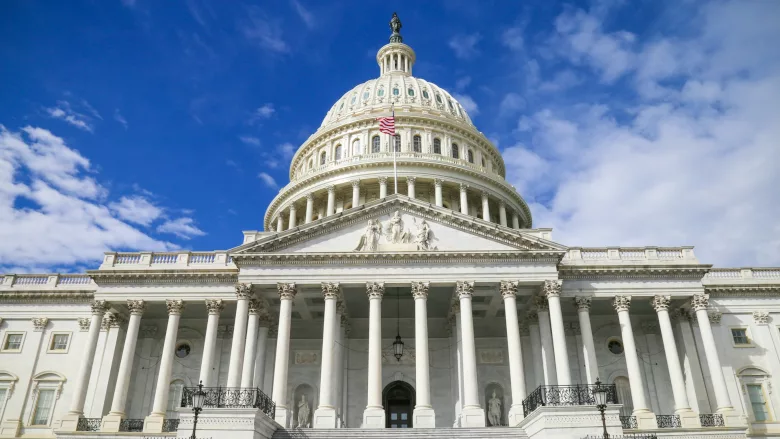
The White House released the 2027 budget, outlining the government’s fiscal plan for the upcoming year. This overview includes fundings shifts for the Department of Homeland Security (DHS).
Investments
- Working Families Tax Cut Act (WFTC): $190 billion
- Customs and Border Protection (CBP): $18.5 billion
- Immigration and Customs Enforcement (ICE): $10 billion
- U.S. Coast Guard Operations (USCG): $12.5 billion
- U.S. Secret Service (USSS): $3.5 billion
Funding Cuts
- FEMA Non-Disaster Grant Programs: –$1.3 billion
- CISA: –$707 million
- TSA privatization: –$52 million
- DHS headquarters consolidation: –$53 million
- Office of Countering Weapons of Mass Destruction (CWMD) reorganization: –$40 million
CISA Funding Cut, Explained
According to the fiscal budget released, the funding cut to CISA is intended to reorient the agency on its central mission of defending networks and critical infrastructure, doing so by “eliminating weaponization and waste.”
Budget cuts to CISA include:
- Duplicate programs at the Federal and State level, such as certain school safety programs
- External engagement offices like stakeholder engagement, council management and international affairs.
- Programs targeting “so-called” misinformation and propaganda
These cuts were necessary, the budget argues, because “CISA was more focused on censorship than on protecting the Nation’s critical systems,” and the cut programs were chosen because the budget asserts they were “used as a key hub in the Censorship Industrial Complex to violate the First Amendment, target Americans for their protected speech, and target the president.”
Implications of Cutting CISA Funding
“The proposed $707 million reduction to CISA signals a retreat from the public-private partnership model, effectively ending the agency’s role as a primary intelligence collaborator for the commercial sector,” states John Carberry, Solution Sleuth at Xcape, Inc. “By eliminating the Stakeholder Engagement Division and the Joint Cyber Defense Collaborative (JCDC), the administration is forcing enterprise security teams to manage nation-state threats without a centralized federal clearinghouse. This shift places the entire burden of national collective defense onto individual firms at a time of unprecedented geopolitical volatility.”
Rather than tighten CISA’s budget, some argue this is a pivotal time to invest.
Matthew Hartman, Chief Strategy Officer at Merlin Group and former Deputy Executive Assistant Director for Cybersecurity at CISA, states, “Cutting $707 million from CISA would be a strategic mistake at exactly the wrong moment. CISA is the connective tissue for federal civilian cyber defense and a key partner to critical infrastructure owners and operators. Weakening CISA weakens the entire ecosystem. Among other threats, we are facing PRC pre-positioning on critical infrastructure and a growing use of AI to accelerate zero-day discovery and exploitation. That’s not an environment for belt-tightening — it’s a call to invest.”
Experts warn that this budget cut could have national security consequences, as Seemant Sehgal, Founder & CEO at BreachLock, adds:
“You don’t cut the fire department and then wonder why buildings burn. CISA isn’t the bureaucratic overhead, for practitioners it’s the lifeline between government intelligence and the private sector running the infrastructure this country depends on. Cutting its budget by $707 million, on top of what’s already been cut, is a gift to every nation-state actor that’s been quietly targeting U.S. critical infrastructure.”
How Should Security Leaders Should Respond?
Carberry advises, “Security leaders must immediately de-risk their dependency on CISA for threat telemetry and sector-specific alerts, instead prioritizing deeper involvement in private Information Sharing and Analysis Centers (ISACs) and direct vendor partnerships. Since CISA will pivot its remaining resources almost exclusively toward federal network defense, organizations should also prepare for more aggressive compliance enforcement on federal contractors rather than collaborative support.”
Congress will be reviewing the budget for approval. In the previous year, lawmakers refused the Trump administration’s initial CISA cuts, only approving a modified, lesser budget cut later. Nevertheless, security leaders should be prepared for any outcome — especially if the trend of CISA budget cuts continues in the years to come.
“It turns out ‘Shields Up’ was a limited-time offer,” Carberry concludes.
Looking for a reprint of this article?
From high-res PDFs to custom plaques, order your copy today!