Security Magazine logo
search
cart
facebook twitter linkedin youtube
  • Sign In
  • Create Account
  • Sign Out
  • My Account
Security Magazine logo
  • NEWS
    • Security Newswire
    • Technologies & Solutions
  • MANAGEMENT
    • Leadership Management
    • Enterprise Services
    • Security Education & Training
    • Logical Security
    • Security & Business Resilience
    • Profiles in Excellence
  • PHYSICAL
    • Access Management
    • Fire & Life Safety
    • Identity Management
    • Physical Security
    • Video Surveillance
    • Case Studies (Physical)
  • CYBER
    • Cybersecurity News
    • More
  • BLOG
  • COLUMNS
    • Career Intelligence
    • Cyber Tactics
    • Cybersecurity Education & Training
    • Leadership & Management
    • Security Talk
  • EXCLUSIVES
    • Annual Guarding Report
    • Most Influential People in Security
    • The Security Benchmark Report
    • Top Guard and Security Officer Companies
    • Top Cybersecurity Leaders
    • Women in Security
  • SECTORS
    • Arenas / Stadiums / Leagues / Entertainment
    • Banking/Finance/Insurance
    • Construction, Real Estate, Property Management
    • Education: K-12
    • Education: University
    • Government: Federal, State and Local
    • Hospitality & Casinos
    • Hospitals & Medical Centers
    • Infrastructure:Electric,Gas & Water
    • Ports: Sea, Land, & Air
    • Retail/Restaurants/Convenience
    • Transportation/Logistics/Supply Chain/Distribution/ Warehousing
  • EVENTS
    • Industry Events
    • Webinars
    • Solutions by Sector
    • Security 500 Conference
  • MEDIA
    • Interactive Spotlight
    • Photo Galleries
    • Podcasts
    • Polls
    • Videos
      • Cybersecurity & Geopolitical Discussion
      • Ask Me Anything (AMA) Series
  • MORE
    • Call for Entries
    • Classifieds & Job Listings
    • Newsletter
    • Sponsor Insights
    • Store
    • White Papers
  • EMAG
    • eMagazine
    • This Month's Content
    • Advertise
  • SIGN UP!
CybersecurityManagementSecurity & Business Resilience

In an Age of Cyber Risk, Digital Transformation is No Longer Optional

By Neha Singh
Person wearing headphones working at the computer
Jefferson Santos via Unsplash
September 15, 2025

Concerns that outdated legacy systems could be leaving firms vulnerable to mounting cyber risks are driving a wave of technology spending in the financial services industry. 

Cybersecurity and operational resilience have become top-of-mind priorities for financial services professionals amid a sharp uptick in high-profile data breaches, ransomware attacks, and system failures. The threat landscape is becoming more sophisticated, with bad actors sharing knowledge, growing funding, and using artificial intelligence and other new tools to automate attacks. 

With risks evolving and multiplying, senior leadership and technology experts at financial services firms realize it’s no longer a question of if an attack will happen, but whether their organization will be ready when it does. In making that assessment, many firms are coming to the conclusion that their reliance on legacy technology platforms could be leaving them at risk. Approximately 45% of the more than 500 financial services technology and operations executives participating in Broadridge’s 2025 Digital Transformation & Next-Gen Technology Study say legacy technology and systems are limiting their resiliency strategy.

Firms are planning substantial investments to shore up resulting vulnerabilities. Almost 90% of financial services firms in that study are planning to make moderate to large investments in cybersecurity this year. Now the question becomes: How can organizations spend that money most effectively to enhance cybersecurity and operational resilience? 

Outdated Systems and Data Silos: Risks and Remedies 

Firms looking for security and resilience can achieve some of the highest returns on investment by directing resources to digital transformation efforts that modernize the overall technology stack, in addition to investing in cyber resilience. More than a third of financial services firms still do not have cybersecurity technologies built into their core operational infrastructure. That lack of built-in security often stems from the fact that organizations are running on outdated technology platforms, instead of modern, secure-by-default applications, and have not invested in cyber recovery preparedness or regular penetration testing.

From a security standpoint, firms that find themselves in this situation will have to make both short-term and long-term plans to remedy the issue. In the short term, these firms must invest in cybersecurity technology that can deliver immediate protection. Firms should also ensure they are meeting minimum levels of security and resilience by creating cyber recovery playbooks and conducting regular resilience testing and compliance audits for the Digital Operational Resilience Act (DORA) and other regulations.

These short-term fixes, while necessary, won’t be enough. To truly drive resilience in tandem with transformation, firms need a resilience-first mindset in their technology and operations transformation. That means understanding that organizations will not be able to achieve the level of cybersecurity and operational resilience needed today with outdated legacy systems that keep operational processes and data fragmented across the organization. According to the Broadridge Study, nearly half (47%) of financial services firms are wrestling with the challenge of data “silos.” When critical data is fragmented across disparate systems, business units, or applications, it creates both operational inefficiencies and potential cyber risks. From a cybersecurity perspective, it results in inconsistent access controls, reduced visibility into vulnerabilities and threats, and inconsistent data classification. From a cyber resilience and recovery perspective, it fragments and weakens the ability to respond and recover in real time. These shortcomings are driven by a combination of a fragmented view of the threat landscape across systems, an inability to map the true business impact of cyber incidents, uncertainty regarding data integrity, fragmented incident response playbooks across systems, and weaker resiliency testing.

Transforming outdated platforms, breaking down silos, harmonizing data across systems, and achieving true interoperability — through unified architectures, governance, and controls — enhances cybersecurity defenses, resilience against disruptions, and the ability to recover confidently and quickly when incidents happen. While it is not an easy undertaking, the benefits make the effort more than worthwhile. An unimpeded data flow simultaneously enables both improved business decision-making and operational resilience, while also allowing for the integration of new technologies like AI and machine learning (ML). For that reason, cybersecurity and resilience strategies should be part of broader, long-term digital transformation efforts that modernize technology infrastructure and data management in pursuit of a much wider range of business goals. 

Preparing for an AI-Driven Future

Over the next three to five years, emerging technologies such as AI, ML, Generative AI (GenAI), and Distributed Ledger Technologies (DLT) will transform both operations and data security.  Approximately 80% of financial services firms are investing in AI this year, and 72% are investing in GenAI. These investments will enhance data security by providing advanced analytics and predictive capabilities to identify and mitigate potential threats. Approximately 70% of financial services firms are investing in DLT projects that have the potential to deliver secure and transparent data management solutions, reducing the risk of data breaches and enhancing trust in data transactions. 

Financial services firms will need all these new technologies to protect themselves against threat actors who are themselves adopting every new innovation. For most firms, the first step in unleashing the power of these novel defenses will be modernizing the legacy technology systems that are holding back their digital transformations and could be leaving them at risk. Think of emerging technologies like AI as the new state-of-the-art engine in your Transformation car, and Cybersecurity and Resilience as the brakes. You need reliable brakes to have the confidence to go fast — without it your state-of-the-art engine is of little use. The more conviction firms have in their cyber resilience posture, the faster they will be able experiment, transform and differentiate.

KEYWORDS: artificial intelligence (AI) cyber resilience data analysis data concerns data regulation

Share This Story

Looking for a reprint of this article?
From high-res PDFs to custom plaques, order your copy today!

Neha Singh is Head of Post Trade Transformation and Strategic Products at Broadridge.

Recommended Content

JOIN TODAY
To unlock your recommendations.

Already have an account? Sign In

  • Cyber tech background

    Security’s Top Cybersecurity Leaders 2026

    Security magazine’s Top Cybersecurity Leaders 2026 award...
    Security Leadership and Management
  • Iintegration and use of emerging tools

    Future Proof Your Security Career with AI Skills

    AI’s evolution demands security leaders master...
    Columns
    By: Jerry J. Brennan and Joanne R. Pollock
  • The 2025 Security Benchmark Report

    The 2025 Security Benchmark Report

    The 2025 Security Benchmark Report surveys enterprise...
    The Security Benchmark Report
    By: Rachelle Blair-Frasier
Manage My Account
  • Security Newsletter
  • eMagazine Subscriptions
  • Manage My Preferences
  • Online Registration
  • Mobile App
  • Subscription Customer Service

More Videos

Sponsored Content

Sponsored Content is a special paid section where industry companies provide high quality, objective, non-commercial content around topics of interest to the Security audience. All Sponsored Content is supplied by the advertising company and any opinions expressed in this article are those of the author and not necessarily reflect the views of Security or its parent company, BNP Media. Interested in participating in our Sponsored Content section? Contact your local rep!

close
  • Northland Controls sponsored content
    Sponsored byNorthland Controls

    The Execution Gap: Why Great Security Design Doesn't Always Deliver Great Security

Popular Stories

Cargo ship sailing

You Can’t Secure a Ship Like a Laptop

2026 Women in Security

Security’s 2026 Women in Security

Denise Platon. Image courtesy of Platon

Denise Platon — Women in Security 2026

Women in Security: Julia Stuyt

Julia Stuyt — Women in Security 2026

Glowing AI square

Security Experts Discuss the Hugging Face, OpenAI Incident

Kaseware sponsored webinar
Schneider Electric sponsored webinar

Events

August 19, 2026

From Investigative Question to Defensible Answer: AI in Digital Forensics and Incident Response

LIVE: August 19, 2026 at 2 PM EDT We'll examine where AI can deliver meaningful value, where incomplete context or black-box reasoning can introduce risk, and what governance, validation, and evidence-traceability controls organizations should establish.

August 25, 2026

Critical Infrastructure Security Is National Security: Protecting Essential Operations in an Era of Escalating Risk

LIVE: August 25, 2026 at 2 PM EDT Learn why critical infrastructure security has become a national security imperative, and the strategies organizations can adopt to improve visibility, collaboration, and response across their security operations.

View All Submit An Event

Products

Security Culture: A How-to Guide for Improving Security Culture and Dealing with People Risk in Your Organisation

Security Culture: A How-to Guide for Improving Security Culture and Dealing with People Risk in Your Organisation

See More Products


Alertmedia sponsored webinar

Related Articles

  • Monitors with symbols

    The New Real-Time Crime Center in an Age of Agentic AI

    See More
  • Glowing fibers

    Cybersecurity Is No Longer a Gatekeeper, But the Engine of Delivery Across Digital Economy

    See More
  • business man automation

    Automation is no longer the future of cybersecurity: It’s the present

    See More

Related Products

See More Products
  • 1119490936.jpg

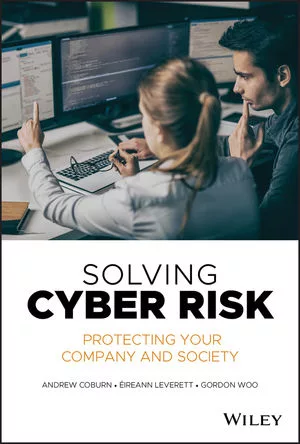
    Solving Cyber Risk: Protecting Your Company and Society

  • 150952519X.jpg

    Intelligence in An Insecure World, 3rd Edition

  • 9780367339456.jpg.jpg.jpg

    Cyber Strategy: Risk-Driven Security and Resiliency

See More Products

Events

View AllSubmit An Event
  • August 25, 2026

    Critical Infrastructure Security Is National Security: Protecting Essential Operations in an Era of Escalating Risk

    LIVE: August 25, 2026 at 2 PM EDT Learn why critical infrastructure security has become a national security imperative, and the strategies organizations can adopt to improve visibility, collaboration, and response across their security operations.
View AllSubmit An Event
×

Sign-up to receive top management & result-driven techniques in the industry.

Join over 20,000+ industry leaders who receive our premium content.

SIGN UP TODAY!
  • RESOURCES
    • Advertise
    • Contact Us
    • Store
    • Want More
  • SIGN UP TODAY
    • Create Account
    • eMagazine
    • Newsletter
    • Customer Service
    • Manage Preferences
  • SERVICES
    • Marketing Services
    • Reprints
    • Market Research
    • List Rental
    • Survey/Respondent Access
  • STAY CONNECTED
    • LinkedIn
    • Facebook
    • YouTube
    • X (Twitter)
  • PRIVACY
    • PRIVACY POLICY
    • TERMS & CONDITIONS
    • DO NOT SELL MY PERSONAL INFORMATION
    • PRIVACY REQUEST
    • ACCESSIBILITY

Copyright ©2026. All Rights Reserved BNP Media, Inc. and BNP Media II, LLC.

Design, CMS, Hosting & Web Development :: ePublishing