Security Magazine logo
search
cart
facebook twitter linkedin youtube
  • Sign In
  • Create Account
  • Sign Out
  • My Account
Security Magazine logo
  • NEWS
    • Security Newswire
    • Technologies & Solutions
  • MANAGEMENT
    • Leadership Management
    • Enterprise Services
    • Security Education & Training
    • Logical Security
    • Security & Business Resilience
    • Profiles in Excellence
  • PHYSICAL
    • Access Management
    • Fire & Life Safety
    • Identity Management
    • Physical Security
    • Video Surveillance
    • Case Studies (Physical)
  • CYBER
    • Cybersecurity News
    • More
  • BLOG
  • COLUMNS
    • Career Intelligence
    • Cyber Tactics
    • Cybersecurity Education & Training
    • Leadership & Management
    • Security Talk
  • EXCLUSIVES
    • Annual Guarding Report
    • Most Influential People in Security
    • The Security Benchmark Report
    • Top Guard and Security Officer Companies
    • Top Cybersecurity Leaders
    • Women in Security
  • SECTORS
    • Arenas / Stadiums / Leagues / Entertainment
    • Banking/Finance/Insurance
    • Construction, Real Estate, Property Management
    • Education: K-12
    • Education: University
    • Government: Federal, State and Local
    • Hospitality & Casinos
    • Hospitals & Medical Centers
    • Infrastructure:Electric,Gas & Water
    • Ports: Sea, Land, & Air
    • Retail/Restaurants/Convenience
    • Transportation/Logistics/Supply Chain/Distribution/ Warehousing
  • EVENTS
    • Industry Events
    • Webinars
    • Solutions by Sector
    • Security 500 Conference
  • MEDIA
    • Interactive Spotlight
    • Photo Galleries
    • Podcasts
    • Polls
    • Videos
      • Cybersecurity & Geopolitical Discussion
      • Ask Me Anything (AMA) Series
  • MORE
    • Call for Entries
    • Classifieds & Job Listings
    • Newsletter
    • Sponsor Insights
    • Store
    • White Papers
  • EMAG
    • eMagazine
    • This Month's Content
    • Advertise
  • SIGN UP!
ManagementSecurity & Business ResiliencePhysical SecurityInfrastructure:Electric,Gas & Water

Enterprise Services

Physical Security Measures That Respect Constitutional Rights

Learn how organizations can protect premises without overstepping legal boundaries — ensuring security while upholding constitutional rights.

By Joshua Rolls PSP, CSSM, CPD
Electrical engineer and inspection
Sean Anthony Eddy / E+ via Getty Images

Sean Anthony Eddy / E+ via Getty Images

July 7, 2025

A First Amendment auditor is a person who seeks to test whether their Constitutional rights will be wrongfully infringed. A trend by these self-appointed auditors is to record videos in public and semipublic places. The First Amendment of the United States Constitution protects the right to record public activities in public spaces with certain limitations. One such limitation is if the action is prohibiting legitimate business activity. Laws vary between states and local areas, and it is recommended that you seek legal advice specific to your area.

Auditors often target facilities and personnel associated with public services, including utility providers and workers at critical infrastructure sites. Quite often two or more self-appointed auditors work together to vehemently question personnel and attempt to cause irritation. Their goal is to instigate and record a response that is unprofessional and violates their rights.

YouTube and other media outlets contain numerous videos with people conducting themselves unprofessionally during encounters with auditors. Resulting in court battles, payment of monetary damages, exposure of sensitive information, and a negative impact on the affected organization’s public image. Additionally, these auditors receive monetary payments based on their video subscribers. The more eventful the video the more views it will garner, and the more money the auditor makes. If the test is uneventful and the auditor is allowed to legally exercise their rights appropriately then the site or organization “passes” their test.

Inadvertent Consequences

Spillage of sensitive information may be an inadvertent consequence from an encounter with a First Amendment auditor. Not only can the auditor utilize social engineering to garner information and additional access from unsuspecting personnel, but they can also record pertinent information such as access processes, employee badge details, detection device locations, and security response times. This information is then widely distributed online to every viewer. The viewers who see this information could be a thrill-seeking local teenager interested in sneaking into a power plant, a local criminal interested in stealing copper for monetary gain, or a more heinous adversary such as a domestic violent extremist whose ideologies are motivating them to cause a prolonged electricity outage.

Legal Protection

Critical infrastructure refers to the systems and assets that are crucial for the functioning of our modern society, such as water treatment plants, transit services, and electric generating plants. Due to the importance of critical infrastructure, and in the interest of security and reliability, the Homeland Security Act of 2002 was enacted. This Act provides a basis for critical infrastructure physical security protections such as restricting public access.

Effective physical security measures can ensure safety and security without infringing on the legal activities of First Amendment auditors.

The Critical Infrastructure Information Act of 2002 protects sensitive information related to the security of critical infrastructure and protected systems from being released in the public domain.

Additionally, several states have laws that are specific to the protection of critical infrastructure and related information.

Physical Security Measures and First Amendment Auditors

Effective physical security measures can ensure safety and security without infringing on the legal activities of First Amendment auditors. Some simple physical security measures can greatly mitigate the occurrence of an unwanted incident.

  • Deter: Effectively placed “No Trespassing” signage demonstrates territorial reinforcement and property boundaries. Some areas have specifications regarding spacing, dimension, as well as height placement requirements that must be met to facilitate legal charges. Interior and exterior building signage that reads “Authorized Access Only” is also effective at demonstrating areas not available to the public. Landscaping and structural design can also create transition zones indicating a change from public to semipublic and restricted areas.
  • Detect: A person video recording around a critical infrastructure site should be observed and reported by employees and contractors. A failure to do so warrants additional security awareness training or a reassessment of video surveillance systems and operations.
  • Deny: Barriers such as walls, fences, and locked doors designate areas that are not open to the public without permission and escort according to policies and procedures.
  • Respond: Depending on the situation a response by security personnel may be warranted. The interaction should remain professional, and the request for law enforcement should be considered if: the auditor attempts entry into unauthorized areas, makes it impossible to conduct business, makes harassing or discriminatory statements. Training regarding First Amendment auditor interaction should be included in security awareness programs as well as policies and procedures to raise awareness and prepare employees to manage these occurrences appropriately.

General tips for dealing with First Amendment auditors:

  • Remain professional.
  • Act according to the law.
  • Don’t provide unnecessary sensitive information.
  • Enforce legally supported boundaries to protect employees and assets.
  • Document the incident and collect any evidence that may be useful in legal matters.

It is likely that a First Amendment auditor will visit a critical infrastructure site and contact personnel. This probability emphasizes the need for stakeholders to take proactive measures. When an occurrence does happen, leaders should utilize the opportunity to assess the functions of the physical security system and improve the organization’s security program.

KEYWORDS: critical infrastructure security Homeland Security physical security assessment security awareness training

Share This Story

Looking for a reprint of this article?
From high-res PDFs to custom plaques, order your copy today!


Joshua rolls

Joshua Rolls, PSP, CSSM, CPD is a Physical Security Specialist at City Utilities of Springfield, Missouri, a multiple commodity provider including electric, natural gas, water, transit, and broadband services. Rolls has a background in law enforcement and served in the United States Army Special Forces. Image courtesy of Rolls 

Recommended Content

JOIN TODAY
To unlock your recommendations.

Already have an account? Sign In

  • Cyber tech background

    Security’s Top Cybersecurity Leaders 2026

    Security magazine’s Top Cybersecurity Leaders 2026 award...
    Security Leadership and Management
  • Iintegration and use of emerging tools

    Future Proof Your Security Career with AI Skills

    AI’s evolution demands security leaders master...
    Security Education & Training
    By: Jerry J. Brennan and Joanne R. Pollock
  • The 2025 Security Benchmark Report

    The 2025 Security Benchmark Report

    The 2025 Security Benchmark Report surveys enterprise...
    The Security Benchmark Report
    By: Rachelle Blair-Frasier
Manage My Account
  • Security Newsletter
  • eMagazine Subscriptions
  • Manage My Preferences
  • Online Registration
  • Mobile App
  • Subscription Customer Service

More Videos

Popular Stories

Person in red hoodie

When Metal Theft Becomes a Life Safety Crisis

Stacked books

Safe Learning 101 Program Supports Schools in Strengthening Campus Security

Diverse Team Collaborating on Business Analysis

12 Tips for Building an Effective Security Budget

Nurse

Why De-Escalation Must Be Part of a Layered Safety Strategy in Healthcare

Security guard

Connected Security: How Proactive Real-Time Tech Keeps Security Workers Safe

SEC 2026 Benchmark Banner

Events

May 21, 2026

From Referral to Response: Managing Domestic Violence Threats in the Workplace

Domestic violence remains a complex driver of workplace violence, creating high-risk scenarios that require coordination across departments without clear ownership. Learn how threat management teams can manage domestic violence referrals from the start.

June 3, 2026

The Role of AI and Video in Measuring Health, Safety, and Security Standards

OSHA fines grab headlines, but most compliance issues start with everyday operational gaps: missed protocols, unsecured areas, or slow response. Learn how emerging technologies & AI can be leveraged towards a more proactive model of compliance.

View All Submit An Event

Products

Security Culture: A How-to Guide for Improving Security Culture and Dealing with People Risk in Your Organisation

Security Culture: A How-to Guide for Improving Security Culture and Dealing with People Risk in Your Organisation

See More Products
Solutions by Sector webinar promo


The Role of AI and Video - Free Webinar - June 3, 2026

Related Articles

  • Police crime scene tape

    Militia group that planned to kidnap Michigan governor used operational security measures to avoid detection

    See More
  • Touchless access control of interest to americans

    Americans surveyed say touchless physical security measures will make them feel safer

    See More
  • Erickson Senior Living

    Erickson Senior Living updates physical security measures

    See More

Related Products

See More Products
  • The Complete Guide to Physical Security

  • physical security.webp

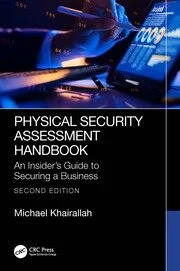
    Physical Security Assessment Handbook An Insider’s Guide to Securing a Business

  • effective.jpg

    Effective Physical Security, 5th Edition

See More Products
×

Sign-up to receive top management & result-driven techniques in the industry.

Join over 20,000+ industry leaders who receive our premium content.

SIGN UP TODAY!
  • RESOURCES
    • Advertise
    • Contact Us
    • Store
    • Want More
  • SIGN UP TODAY
    • Create Account
    • eMagazine
    • Newsletter
    • Customer Service
    • Manage Preferences
  • SERVICES
    • Marketing Services
    • Reprints
    • Market Research
    • List Rental
    • Survey/Respondent Access
  • STAY CONNECTED
    • LinkedIn
    • Facebook
    • YouTube
    • X (Twitter)
  • PRIVACY
    • PRIVACY POLICY
    • TERMS & CONDITIONS
    • DO NOT SELL MY PERSONAL INFORMATION
    • PRIVACY REQUEST
    • ACCESSIBILITY

Copyright ©2026. All Rights Reserved BNP Media, Inc. and BNP Media II, LLC.

Design, CMS, Hosting & Web Development :: ePublishing