Security Magazine logo
search
cart
facebook twitter linkedin youtube
  • Sign In
  • Create Account
  • Sign Out
  • My Account
Security Magazine logo
  • NEWS
    • Security Newswire
    • Technologies & Solutions
  • MANAGEMENT
    • Leadership Management
    • Enterprise Services
    • Security Education & Training
    • Logical Security
    • Security & Business Resilience
    • Profiles in Excellence
  • PHYSICAL
    • Access Management
    • Fire & Life Safety
    • Identity Management
    • Physical Security
    • Video Surveillance
    • Case Studies (Physical)
  • CYBER
    • Cybersecurity News
    • More
  • BLOG
  • COLUMNS
    • Career Intelligence
    • Cyber Tactics
    • Cybersecurity Education & Training
    • Leadership & Management
    • Security Talk
  • EXCLUSIVES
    • Annual Guarding Report
    • Most Influential People in Security
    • The Security Benchmark Report
    • Top Guard and Security Officer Companies
    • Top Cybersecurity Leaders
    • Women in Security
  • SECTORS
    • Arenas / Stadiums / Leagues / Entertainment
    • Banking/Finance/Insurance
    • Construction, Real Estate, Property Management
    • Education: K-12
    • Education: University
    • Government: Federal, State and Local
    • Hospitality & Casinos
    • Hospitals & Medical Centers
    • Infrastructure:Electric,Gas & Water
    • Ports: Sea, Land, & Air
    • Retail/Restaurants/Convenience
    • Transportation/Logistics/Supply Chain/Distribution/ Warehousing
  • EVENTS
    • Industry Events
    • Webinars
    • Solutions by Sector
    • Security 500 Conference
  • MEDIA
    • Interactive Spotlight
    • Photo Galleries
    • Podcasts
    • Polls
    • Videos
      • Cybersecurity & Geopolitical Discussion
      • Ask Me Anything (AMA) Series
  • MORE
    • Call for Entries
    • Classifieds & Job Listings
    • Newsletter
    • Sponsor Insights
    • Store
    • White Papers
  • EMAG
    • eMagazine
    • This Month's Content
    • Advertise
  • SIGN UP!
PhysicalSecurity Enterprise ServicesSecurity & Business ResiliencePhysical Security

An era of conflict: Navigating a ‘fragmenting world’ in 2025

By James Robertson
Painted Earth

Elena Mozhvilo via Unsplash

January 6, 2025

As the world enters 2025, the world is increasingly fragmenting, a theme which cuts through the International SOS annual Risk Outlook report, where security experts have identified the top risks for organizations in the coming year.

Last year’s International SOS Risk Outlook report warned of deepening global instability, which has become regrettably accurate. This year’s report highlights ‘a fragmenting world,’ which is more anarchic, divided and surprising, amidst a breaking down of norms, relationships and taboos. 

New world disorder

There is a global, or geopolitical fragmenting: while the United States-China competition will remain an important dynamic, there is growing multipolarity as relative power is shifting to a wider range of countries which are becoming more active and opportunistic, like Turkey and Saudi Arabia. This reflects longer term trends, like the notion of ‘Bigger Yards and Higher Fences’ — nativism is on the rise in many countries which are turning inwards amidst populism and protectionism. On-shoring, resource nationalism and border control will shape immigration, trade and industrial policies. The world is also becoming ‘blocced up,’ and organizations will need to navigate shifting alliances and new partnerships. NATO’s future is uncertain, the Sahelian countries have withdrawn from ECOWAS, and emerging ‘blocs’ like BRICS+, AUKUS, and the QUAD are gaining relevance. 

In 2025 emerging ‘rogue actors’ will operate with more impunity. The UN Security Council is trapped by the vetoes of the P5 members; sanctioned countries like Iran subvert these through new trade and financial links; and civil wars in Myanmar, Libya and Sudan endure as outsiders support their local proxies. Also, non-state actors like militias and mercenaries have growing freedom of action to disrupt trade, civilian aviation and local security. These actors will increasingly shape the new world disorder, and risk managers with finite sources and capabilities will need to monitor a greater number, range and variety of threat actors. For decision-makers, previously stable locations for investment, trade, and assignments are now more vulnerable in this changing international landscape.

Home fronts

Countries are fragmenting internally, too — geographically, ethnically and ideologically, and this will happen more in 2025. Established political parties on the left and right are in systemic decline and steadily losing primary vote shares — from Australia to the UK, France to Japan — to insurgent candidates and parties across the political spectrum. There is also the ‘blowback,’ where politicians and populations push back against the apparent costs of the energy transition and where foreign policies like on Israel-Palestine blow back home in the form of protests. All politics may be local, but so is all risk management, and acute social and political issues make it more difficult and sensitive for organizations to reduce and avoid risks for their local staff in their own countries. 

Conflict, connections & confusion

‘Conflict, Connections and Confusion’ amplify the friction, uncertainty, chaos and danger of a fragmenting world. Firstly there is ‘conflict’ between and within countries for influence, resources and opportunity. Climate change amplifies the impacts of human conflict by accelerating internal migration and refugee flows, and competition for apparently or actually scarce resources make immigration seem existential. There is generational conflict within countries, especially for opportunities in kleptocracies or autocracies with a combination of ageing leadership and young and educated but unemployed populations as we saw in Kenya and Nigeria.

Secondly, new or changing ‘connections’ are being generated by, or happening during, a fragmenting world. There are new relationships with the opening of Saudi Arabia to major foreign direct investment and the deployment of North Korean troops to Ukraine. There are real commercial opportunities, however nefarious actors exploit new connections, like in the Pacific where Fiji and Tonga are used by drug cartels as pathways.

Lastly, there is ‘confusion’ driven by the rise of synthetic reporting. AI amplifies the apparent authenticity, volume and sophistication of both accidentally and deliberately erroneous misinformation, which amplify other risks as problematic online material is prompting or accelerating real-world violence. At the country level ideological differences are amplified by a fragmented consumption of news. Organizations with staff across different generations, locations and political orientations increasingly have staff living in different information environments. It will be important to understand how your workforce accesses and consumes information — ask, ‘what are the sources and pathways for misinformation and disinformation to spread amongst my people?’

Business resilience

In 2025, organizations will be more vulnerable to the second and third order effects of seemingly esoteric, distant or unrelated phenomena. Those who don’t systematically track local risks and analyze emerging scenarios will miss key signals in an increasingly complex world, making them too slow to detect indicators of risks and less able to capitalize on fleeting opportunities. Intelligence and response capabilities must be better integrated, though this will be harder for risk teams facing budget and staffing constraints.

For security professionals, the message is clear: the landscape is more complex, but with the right tools and strategies, it is possible to treat risks and seize opportunities. Technology will help identify incidents, deliver personalized risk information, and support the fieldwork, local knowledge, and analysis of risk professionals. The most resilient organizations in a fragmenting world in 2025 will combine advanced technology with ‘human-in-the-loop’ strategies for better decision-making.

KEYWORDS: business resilience planning geopolitical risk global security threats political unrest social unrest

Share This Story

Looking for a reprint of this article?
From high-res PDFs to custom plaques, order your copy today!


James robertson headshot

James Robertson is Security Director, Australasia at International SOS. Image courtesy of Robertson 

Recommended Content

JOIN TODAY
To unlock your recommendations.

Already have an account? Sign In

  • Cyber tech background

    Security’s Top Cybersecurity Leaders 2026

    Security magazine’s Top Cybersecurity Leaders 2026 award...
    Security Leadership and Management
  • Iintegration and use of emerging tools

    Future Proof Your Security Career with AI Skills

    AI’s evolution demands security leaders master...
    Career Intelligence
    By: Jerry J. Brennan and Joanne R. Pollock
  • The 2025 Security Benchmark Report

    The 2025 Security Benchmark Report

    The 2025 Security Benchmark Report surveys enterprise...
    The Security Benchmark Report
    By: Rachelle Blair-Frasier
Manage My Account
  • Security Newsletter
  • eMagazine Subscriptions
  • Manage My Preferences
  • Online Registration
  • Mobile App
  • Subscription Customer Service

More Videos

Popular Stories

Man on laptop

Healthcare Executives Face a New Era of Personal Risk

Police lights

Security Team Member Dies in Standoff with Dallas Police

Stadium

Physical Security in Global Arenas: How AI Improves Security at Scale

Four people in suits

Mexico Security Crisis: Never Waste a Crisis

Product Spotlight

ISC West 2026 Product Preview

SEC 2026 Benchmark Banner

Events

April 15, 2026

How AI is Closing the Decision Gap in Leading GSOCs

Learn how modern security teams are evolving from alert-driven workflows to outcome-driven operations and how AI is enabling faster, more confident decisions at every stage of the incident response lifecycle.

April 21, 2026

The Blind Spot in Enterprise Security: Managing Workforce Risk Post-Hire

Organizations continuously monitor their networks and systems for risk, yet the people with legitimate access are often the least monitored part of the model. Discover a Workforce Risk Intelligence Framework that adds a dedicated layer focused on workforce risk.

View All Submit An Event

Products

Security Culture: A How-to Guide for Improving Security Culture and Dealing with People Risk in Your Organisation

Security Culture: A How-to Guide for Improving Security Culture and Dealing with People Risk in Your Organisation

See More Products
SEC 2026 Top Cybersecurity Leaders

Related Articles

  • Tariffs in block letters with China and USA behind

    Cyber as a Pressure Valve: Why Economic Conflict Is Fueling a New Era of Cyber Escalation

    See More
  • Lightbulb on blue background

    The Great Security Culture Shift: Building a Proactive Defense in an Era of Advanced Threats and Social Engineering

    See More
  • Man walking with briefcase

    The Rising Tide of Executive Protection: Corporations Ramp Up Security in an Era of Heightened Threats

    See More

Related Products

See More Products
  • 150952519X.jpg

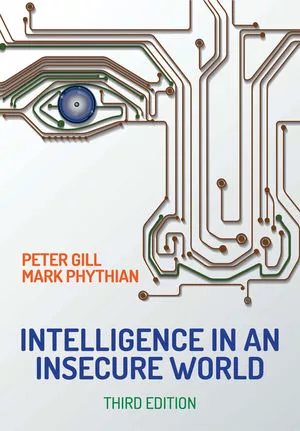
    Intelligence in An Insecure World, 3rd Edition

  • physical security.webp

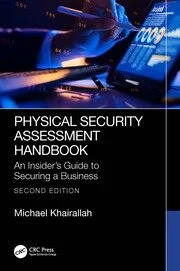
    Physical Security Assessment Handbook An Insider’s Guide to Securing a Business

  • A Leaders Guide Book Cover_Nicholson_29Sept2023.jpg

    A Leader’s Guide to Evaluating an Executive Protection Program

See More Products
×

Sign-up to receive top management & result-driven techniques in the industry.

Join over 20,000+ industry leaders who receive our premium content.

SIGN UP TODAY!
  • RESOURCES
    • Advertise
    • Contact Us
    • Store
    • Want More
  • SIGN UP TODAY
    • Create Account
    • eMagazine
    • Newsletter
    • Customer Service
    • Manage Preferences
  • SERVICES
    • Marketing Services
    • Reprints
    • Market Research
    • List Rental
    • Survey/Respondent Access
  • STAY CONNECTED
    • LinkedIn
    • Facebook
    • YouTube
    • X (Twitter)
  • PRIVACY
    • PRIVACY POLICY
    • TERMS & CONDITIONS
    • DO NOT SELL MY PERSONAL INFORMATION
    • PRIVACY REQUEST
    • ACCESSIBILITY

Copyright ©2026. All Rights Reserved BNP Media, Inc. and BNP Media II, LLC.

Design, CMS, Hosting & Web Development :: ePublishing