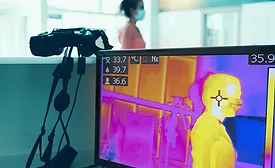
To limit the spread of the highly contagious COVID-19 virus, many businesses across the globe have deployed social distancing requirements, stringent cleaning protocols and capacity limitations as part of their plan to safely reopen. Even with these measures in place, retailers, office complexes and educational facilities are recognizing that technology will also play a critical role to help identify individuals who may have the virus even before that person enters the premises. This is where thermal imaging camera systems play a pivotal role.
A new Balbix report revealed that 9 out of 10 security professionals cite phishing and ransomware as top risks, yet only half report sufficient visibility into such threats
As companies begin to strategize how their employee office structure will look over the next several months – be it phasing in a portion of the workforce into the office or considering a fully remote workforce - top of mind will be the organization’s security posture and that IT teams can support the needs of employees and the business in a capacity that ensures a smooth, secure transition.
Organizations and their employees have always faced cyber vulnerabilities. However, with remote working, companies need to address the many layers of cybersecurity risks. The recent number of 'zoom bombing' incidents is a perfect example showing that the use of remote technologies at scale is causing new headaches and challenges for IT.
A new VIAVI study revealed that 73 percent of respondents said security professionals need comprehensive visibility into network infrastructure to enhance cybersecurity efforts and speed remediation.
Purdue University’s Cyber Apprenticeship Program (P-CAP) has launched at Naval Surface Warfare Center Crane Division (NSWC Crane) to advance cybersecurity capabilities.
The current COVID-19 pandemic is changing the business landscape. The most immediate being the sudden increase in the amount of people working from home. It is no surprise that this change has significantly increased the attack surface, forcing companies to strengthen their cybersecurity measures to ensure they do not become the next victim of cybercriminals.
 RSS
RSS