The Office of Management and Budget issued draft guidance ordering agencies to improve identity management security practices by designating teams of officials from their offices of the chief information officer and chief security officer to tackle the issue.
Help us recognize the unsung heroes of the security industry – nominate a security leader to be named one of Security magazine’s 2018 Most Influential People in Security!
The 2018 IBM X-Force Threat Intelligence Index has found the number of records breached dropped nearly 25 percent in 2017, as cybercriminals shifted their focus on launching ransomware and destructive attacks that lock or destruct data unless the victim pays a ransom.
A new McAfee report finds that concerted efforts to increase job satisfaction, automation in the Security Operations Center (SOC) and gamification in the workplace are key to beating cybercriminals at their own game.
ShotSpotter's National Gunfire Index (NGI) study reports that the western region of the U.S. saw the most significant decrease in gunfire activity in 2017.
Hackers are outpacing and adapting their techniques at a faster pace than defenders, and nearly half of all cyberattacks are resulting in financial damages over $500,000, including lost revenue, customers, opportunities and out-of-pocket costs.
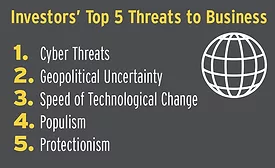
Forty-one percent of investors and analysts are now extremely concerned about cyber threats, ranking it as the largest threat to business, according to the PwC Global Investor Survey 2018.
 RSS
RSS