Code42 pulled some anonymized, aggregated data from Incydr, a SaaS data risk detection and response solution, showing how users move and exfiltrate data and files. The most exposed type? Business documents.
Kroll, a division of Duff & Phelps, announced the hiring of three seasoned cyber experts in North America: John (Jack) Bennett, a managing director in the San Francisco office; Steve Bergman, a managing director in the Washington D.C. office; and John deCraen, an associate managing director in the Dallas office.
Allied Universal acquires SecurAmerica -- a privately held, Atlanta, Georgia-based security company with 49 offices located throughout the United States.
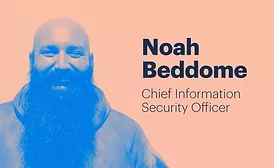
Noah Beddome will join Opendoor as Chief Information Security Officer (CISO). Beddome will be responsible for protecting the data and technology infrastructure that is core to Opendoor business. He will oversee Opendoor’s information security program and IT, and will help to maintain trust with customers by ensuring the integrity of data systems.
Iowa Governor Kim Reynolds has appointed Paul Trombino as Director of the Iowa Department of Homeland Security and Emergency Management. Paul was serving as interim director of the Department of Administrative Services as well as the Governor’s Chief Operating Officer. His appointment is effective January 22, 2021.
Symantec's Threat Hunter Team, a group of security experts, have uncovered an additional piece of malware used in the SolarWinds attacks which was used against a select number of victims that were of interest to the attackers.
According to Symantec, the malware, Raindrop is a loader which delivers a payload of Cobalt Strike. Raindrop is very similar to the already documented Teardrop tool, but there are some key differences between the two.
Radware's new 2020-2021 State of Web Application Security Report revealed that global organizations are struggling to maintain consistent application security across multiple platforms, and they are also losing visibility with the emergence of new architectures and the adoption of Application Program Interfaces (APIs).
The 10th Allianz Risk Barometer 2021 survey reports potential disruption and loss scenarios companies are facing; this year's top three business risks all relate to the coronavirus pandemic: business interruption (#1 with 41% responses); pandemic outbreak (#2 with 40%) and cyber incidents (#3 with 40%).
 RSS
RSS