Security leaders looking to mitigate risk of black swan events in their critical infrastructure organizations can follow some steps to emergency-proof their organization, including looking outside their firm for perspective.
Enterprise security executives generally don’t plan for nation-state-level cyberattacks on their businesses. That may change going forward, when analyzing new trends in hacking and cybersecurity.
Stolen credentials and orphaned accounts can be abused to perform all manner of malicious activity online. Security professionals can enact many strategies to combat this situation.
The Cybersecurity and Infrastructure Security Agency (CISA) will be hosting the final Chemical Security Seminar of 2021 on December 15, featuring panel discussions on supply chain disruptions, emergency management collaboration, and a workshop to assist chemical industry members in designing their own chemical security exercises.
The Critical Infrastructure Protection and Resilience North America conference and exhibition is set to take place in New Orleans from February 1, 2022 to February 3, 2022.
The Federal Bureau of Investigation (FBI) has issued an alert on "Cuba" ransomware, which has launched cyberattacks against 49 critical infrastructure organizations.
As Infrastructure Security Month comes to a close, the Cybersecurity and Infrastructure Security Agency (CISA) discusses its free counter-IED training programs.
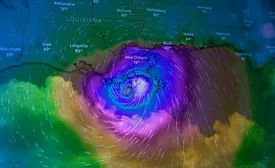
Disaster recovery experts can learn many lessons from the events of Hurricane Ida, including focusing on preparation, infrastructure and far-reaching effects of storms.
Water and wastewater (WWS) facilities are under attack, along with the recent increase in critical infrastructure cyberattacks. A joint statement from the Federal Bureau of Investigation (FBI), the Cybersecurity and Infrastructure Agency (CISA), the Environmental Protection Agency (EPA) and the National Security Agency (NSA) details recent attacks and what WWS systems can do to bolster their cyber defense.
 RSS
RSS

.webp?t=1641333555)




.webp?height=168&t=1638201156&width=275 "Screenshot-(117).png")