Hall County, Ga. confirmed it experienced a network outage as a result of a ransomware attack. The cyberattack impacted critical systems within the Hall County Government networks, including phone services. While some applications are disabled as the County works to resolve this incident, business continuity measures have been implemented.
The Cybersecurity and Infrastructure Security Agency (CISA) and the Federal Bureau of Investigation (FBI) have released two joint cybersecurity advisories on widespread advanced persistent threat (APT) activity.
Joint Cybersecurity Advisory: AA20-296A Russian State-Sponsored Advanced Persistent Threat Actor Compromises U.S. Government Targets
Joint Cybersecurity Advisory: AA20-296B Iranian State-Sponsored Advanced Persistent Threat Actors Threaten Election-Related Systems
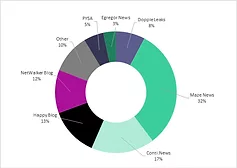
Digital Shadows released its quarterly research report focusing on the latest trends in ransomware. Unfortunately, for vulnerable organizations everywhere, Digital Shadows Photon Research team found that ransomware as a market and community on the dark web has expanded since Q2.
During a press conference on election security at FBI Headquarters with FBI Director Christopher Wray, Director of National Intelligence John Ratcliffe confirmed that some voter registration information has been obtained by Iran, and separately, by Russia.
The National Association of Regulatory Utility Commissioners Center for Partnerships and Innovation today announced the release of a series of Smart Grid Interoperability Learning Modules.
U.S. Department of Homeland Security (DHS) Acting Secretary Chad Wolf announced Tuesday the opening of the DHS Center for Countering Human Trafficking, the U.S. government’s first-ever integrated law enforcement operations center directly supporting federal criminal investigations, victim assistance efforts, intelligence analysis, and outreach and training activities related to human trafficking and forced labor.
Defending against insider threats is one of the biggest challenges an organization can face, and the COVID-19 pandemic has only made detection more challenging as remote employees continue to use virtual private networks (VPNs) to access sensitive company files and information. Here, we talk to Carolyn Crandall, Chief Deception Officer at Attivo Networks, to discuss how security teams can use deception technology to detect and prevent insider threat attacks.
There are few discussions in the physical security business that don’t at some point focus on the topic of cybersecurity. One area frequently missing from these conversations is the importance of a trusted supply chain for manufacturers. Since a product is only as good as the hardware and software inside it, examining how something is built can give us rapid insight into its potential vulnerabilities and overall cyber worthiness. The NDAA (National Defense Authorization Act) ban is particularly focused on the subject of component sourcing for security devices. What is inside that device that could be exploited? Where did it come from? What do we know about the manufacturing process? These are all important questions about the manufacturing supply chain that need to be considered by anyone who cares about cybersecurity.
According to the Center for Internet Security (CIS), in September 2020, three malware returned to the Top 10: CoinMiner, CryptoWall, and Emotet. The Top 10 Malware variants composed 87% of Total Malware activity in September 2020, up from 78% in August 2020.
Following a global consultation, the Forum of Incident Response and Security Teams (FIRST) is launching new ethics guidelines for incident response and security teams on Global Ethics Day. ethicsfIRST provides guidance for cybersecurity professionals on how to conduct themselves professionally and ethically during incidents. Inspired by Earth Day, Global Ethics Day provides an opportunity for organizations to explore the meaning of ethics in international affairs.
 RSS
RSS