Kia Motors America has allegedly suffered a ransomware attack by the DoppelPaymer gang. The gang is demanding $20 million for a decryptor and not to leak stolen data, according to news reports.
If the experiences of 2020 taught us anything, it’s that risk in the modern world cannot be understood or sufficiently mitigated with a siloed approach. Individual threats, such as regulatory risk and IT security, converge. Lacking a high-level view, it’s difficult to see the web of cause and effect – making it more difficult to anticipate, prepare, or mitigate the biggest risks. 2020 may be over, but the challenges remain in 2021. Compliance and risk management will need a shared umbrella of information and communication to tackle the complex, integrated risks of today’s landscape.
The acceleration of digitization initiatives was paramount to ensure business continuity during this global crisis. As we rebuild economic stability in 2021, technology – especially automation and security – will play a significant role in positioning enterprises to return to growth.
Ransomware attacks, phishing scams, fake news and several other cyberattacks made headlines in 2020. As millions of Americans shifted to remote work for business continuity, cybercriminals sprung into action, evolving their social engineering tactics. Smishing and vishing are new variants that are fast gaining traction, targeting mobile phones.
Virtual platforms are a great tool to bring people together. And at least initially, virtual backgrounds were fun. Many of us used virtual backgrounds to redecorate our homes, try out new styles and show off some of our personal interests. But the trend now seems to be shifting. My experience is that people are now increasingly using real backgrounds for virtual meetings. Both virtual and actual backgrounds are acceptable during online meetings. However, there are at least four important things that work-from-home warriors should consider when choosing to share their real backgrounds given that many of us are still working from home offices.
Every week there seems to be a news story about another massive data breach with millions—and sometimes billions—of records containing personal data lost or stolen. We regularly hear about cyberattacks involving brute-forcing secure logins or exploiting software flaws, but there’s a new segment of the cybercriminal economy that’s growing fast: attackers who target companies that have unintentionally left data out in the open via misconfigured databases.
Risk assessment is a key element of any discussion around security and the cloud. Security is measured in terms of how much risk there is of something happening – and nothing is without risk. So, when it comes to evaluating a move to cloud desktops, companies are really looking at how it will reduce risk.
With work from home becoming the norm, employees are likely letting their guards down, allowing people in the same household, whether family or visitors, to have access to work-related content. That is why a good cybersecurity strategy starts with people—and a zero trust approach.
As organizations look to strengthen their enterprise data security and privacy programs, they must consider the new risks that remote work has uncovered. More specifically, how legacy business applications and ERP systems may be exposing organizations to new levels of risk because these applications were not designed for user access from unmanaged networks and devices.
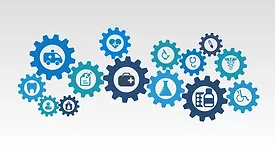
Healthcare Delivery Organizations (HDOs) are arguably the most pressured organizations in 2020, not only needing to treat the many patients infected by coronavirus, but also defend themselves against a growing number of cyberattacks targeted at their industry. Here are five cybersecurity challenges researchers found facing Healthcare Delivery Organizations today:
 RSS
RSS