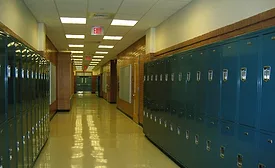
With reduced in-person attendance through the remainder of this school year, the Chicago Public Schools' Chief of Security Jadine Chou said that full-time uniformed Chicago police officers is "not necessary."
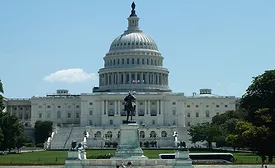
After a lifetime in the protection business, the one constant in Washington that I’ve learned is that it takes tragedy to force change. The January 6 Capitol riot is not an enigma. This was a clear protective intelligence failure. The key finding of Retired Army LTG. Russel Honore’s report reviewing how the pillar of U.S. democracy could have been so easily infiltrated is that the U.S. Capitol Police (USCP) must better integrate intelligence into its operations through improved awareness, assessment, sharing, and response capabilities. We can look at effective protective intelligence as a three-part story: Act I is identifying threats; Act II is building those threats into a cohesive profile; Act III is sharing and acting on that information in order to make nothing happen. Applying this framework to January 6 helps us understand how we can and must do better and provides important takeaways for corporations.
UAB Italiana LT needed to secure its Kaunas region factory, boosts access control, perimeter security and surveillance to protect employees and assets.
Attacks on water systems can come in various forms, not only from pure physical threats. Having a strong and diligent workforce that emphasizes security and basic methods of cyber protection is imperative.
As we continue into 2021, it's no secret we are still reeling from the aftermath and impacts that 2020 unleashed across the globe. That's why—now more than ever—it is critical that companies prioritize their duty of care plans, or risk falling behind for good. Below, we speak to Hugh Dunleavy, Senior Vice President, U.S. Operations and Chief Security Officer of Crisis24, a GardaWorld company, about crafting a robust duty of care program.
The last year has certainly shown businesses all around the world that they must be prepared for the unexpected. How they manage the unexpected is what separates those that sail through their challenges and those that let them significantly harm the institution. Being prepared starts with establishing an effective incident response program.
The Springfield School Board of Oregon, which covers more than 22 schools and close to 11,000 students, approved safety and security upgrades for two district elementary schools to include video surveillance.
The U.S. Department of Homeland Security Cybersecurity and Infrastructure Security Agency (CISA), Indianapolis Motor Speedway, state and local first responders, law enforcement officials, and local businesses held a tabletop exercise to test response plans around hypothetical public safety incidents on the day of the Indianapolis 500, scheduled for Sunday, May 30. Representatives from multiple government agencies and the community discussed their roles, shared best practices, and improved coordination mechanisms to help keep the public safe. The exercise is part of an ongoing public safety efforts surrounding the Indianapolis 500 and was not in response to any specific threat.
As we embark on the long-haul journey to distribute the COVID-19 vaccine to all Americans, addressing the communication challenges of this distribution has never been more vital for safety and coordination, says David Wiseman, Vice President of Secure Communications at BlackBerry. Here, we talk to Wiseman about the need for unified communications as states implement vaccine rollout strategies.
 RSS
RSS