Microsoft has addressed companies who have not yet updated their systems to address the critical Zerologon flaw, a vulnerability in the cryptography of Microsoft's Netlogon process that allows an attack against Microsoft Active Directory domain controllers, making it possible for a hacker to impersonate any computer, including the root domain controller.
President-elect Joe Biden has announced the American Rescue Plan to "build a bridge towards economic recovery," during the coronavirus pandemic. The $1.9 trillion plan also aims to modernize federal information technology to protect against future cyberattacks.
In 2020, we adapted. So did bad guys. The FBI saw a 400% increase in cyberattacks as adversaries probed the new landscape for vulnerabilities. We haven’t even begun to see the results of these attacks. 2020 blew up expectations, and we should expect more of the same in the coming years.
In the age of heightened public cloud adoption and widespread cloud Software-as-a-Service (SaaS) usage, cybercriminals are making use of OAuth – a permissions delegation and authorization protocol – to compromise cloud environments. As such, controlling which applications users interact with has become a business imperative. Let’s take a closer look at what OAuth is, the role it plays in allowing users to access resources across environments, the ways attackers are abusing OAuth and what organizations can do to better protect their cloud data.
Finding and implementing a cybersecurity risk framework is a challenge every organization faces. Time has shown that this endeavor almost always calls for the heavy lifting to be carried by chief information security officers (CISOs) and their staff. So where do you start?
What are some current trends in cybersecurity threat research? To get some insight, we spoke to Aamir Lakhani, cybersecurity researcher and practitioner with FortiGuard Labs.
Vitaliy Panych has officially been appointed CISO to the state of California after spending the past two years as California’s acting chief information security officer.
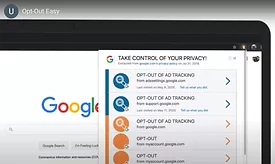
Consumers can easily identify opportunities to opt out of sharing personal data through the first-of-its-kind “Opt-Out Easy” browser plug-in developed by researchers from Carnegie Mellon’s CyLab Security and Privacy Institute. The plug-in makes opt-out choices more accessible to users, automatically extracting privacy information from websites’ policies and presenting it in a user-friendly way.
Telehealth was an unexpected technology bright spot in 2020, as the Office for Civil Rights (OCR) relaxed enforcement of certain aspects of HIPAA, helping to reduce COVID exposure via virtual rounding and virtual visits. The following three high-level recommendations provide a basis for defense in depth for healthcare organizations in 2021.
The Cybersecurity and Infrastructure Security Agency (CISA) has launched a new cybersecurity effort: The Systemic Cyber Risk Reduction Venture on developing actionable metrics to quantify cyber risk. This information will be used to reduce shared risk to the nation's security.