Data breach and privacy incidents occur daily at organizations of all sizes. It happens all too frequently. And while it is obvious that breaches continue impacting hundreds of thousands of lives, legal and compliance teams are not always brought in to manage each breach. With increased focus from regulators and law enforcement agencies to ensure organizations fulfill their obligations for post-breach notifications, legal teams can help quickly coordinate internal processes, and take swift action to begin the process of remediating damage and initiate immediate legal steps to protect the enterprise, and comply fully with all regulatory obligations. Here, we talk to AJ Samuel, co-Founder and Chief Product Officer at Exterro, about the many benefits of retaining legal counsel, who can better protect the integrity and confidentiality of the incident response.
Many companies are struggling to adapt their security strategy to accommodate the new normal. With remote working now an ongoing reality, there has been a rush to adopt and integrate a slew of new tools and cloud platforms to facilitate collaboration and maintain productivity. However, in the race to connect everyone, security implications are often overlooked. This, coupled with the fact that relying solely on a corporate firewall is no longer a sound security strategy, puts many organizations at risk.
So, what should companies do now to adjust their security strategy? Here are five factors to adhere to that will prevent cybercriminals from taking advantage of the virtual business environment.
Technological innovations representing new, advanced solutions to a previously unforeseen problem. Advancements that, even once the pandemic is finally dealt with, will continue to change not only their respective industries but also the world. The fields in which such innovation is most prevalent are, not surprisingly, healthcare and the public sector. Here are just a few ways in which this has manifested.
Kaspersky recently conducted a study based on anonymized OS metadata provided by consenting Kaspersky Security Network users. The survey found that almost one quarter (22%) of PC users are still using the end-of-life OS Windows 7, which stopped receiving mainstream support in January 2020 by way of the vendor no longer sending software updates including critical security fixes.
The Federal Bureau of Investigation (FBI), Department of Homeland Security, and CISA have released a Joint Cybersecurity Advisory (CSA) addressing Russian Foreign Intelligence Service (SVR) cyber actors—also known as Advanced Persistent Threat 29 (APT 29), the Dukes, CozyBear, and Yttrium—continued targeting of U.S and foreign entities. The SVR activity—which includes the recent SolarWinds Orion supply chain compromise—primarily targets government networks, think tank and policy analysis organizations, and information technology companies and seeks to gather intelligence information.
The Justice Department announced that the Office of Community Oriented Policing Services (COPS Office) has released approximately $58 million in three grant solicitations that will advance community policing, help combat the dual scourges of opioid and methamphetamine use, and promote the health and safety of our nation’s law enforcement officers.
Comparitech researchers set up honeypots on the web to lure in attackers and record their actions. They recorded 73,000 attacks in 24 hours. The honeypots were left unsecured so that no authentication was required to access and attack it. Using this method, Comparitech researchers sought to find out which types of attacks would occur, at what frequency, and where they come from.
While COVID-19 paused many activities in 2020, cybercriminals continued to keep busy evolving their arsenal of weapons for more lucrative cyberattacks. While companies adopted remote work models and third parties experienced heightened disruption, cyber risk skyrocketed with increased ransomware, credential stuffing, malware, and Virtual Private Network (VPN) exploitation. As a result, the number of data breaches in the U.S. reached 1001 cases last year, with over 155.8 million individuals affected. Now following the SolarWinds hack, President Biden is set to sign off on an executive action to address gaps in national cybersecurity. The move is causing many CSOs to look for ways to evolve beyond the reactive model to an “always-on” approach -- one that proactively mitigates potential threats and risks before they disrupt business.
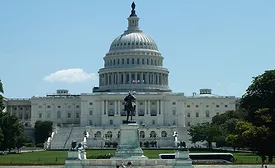
After a lifetime in the protection business, the one constant in Washington that I’ve learned is that it takes tragedy to force change. The January 6 Capitol riot is not an enigma. This was a clear protective intelligence failure. The key finding of Retired Army LTG. Russel Honore’s report reviewing how the pillar of U.S. democracy could have been so easily infiltrated is that the U.S. Capitol Police (USCP) must better integrate intelligence into its operations through improved awareness, assessment, sharing, and response capabilities. We can look at effective protective intelligence as a three-part story: Act I is identifying threats; Act II is building those threats into a cohesive profile; Act III is sharing and acting on that information in order to make nothing happen. Applying this framework to January 6 helps us understand how we can and must do better and provides important takeaways for corporations.
Proposed research at Purdue University is developing innovative solutions using artificial intelligence to enhance the security of current and future Rolls-Royce platforms powered by the company’s propulsion systems.